
For students living in dorms and frequent travelers, a good night’s sleep often hinges on something as simple as a pillow. But when space and budget are limited, the question arises: should you invest in both a dormitory pillow and a travel pillow, or can one versatile option cover all your needs? The answer depends on your lifestyle, sleeping habits, and priorities. While both types serve essential roles, they’re designed for very different purposes—understanding these differences is key to making a smart decision.
Understanding the Core Functions
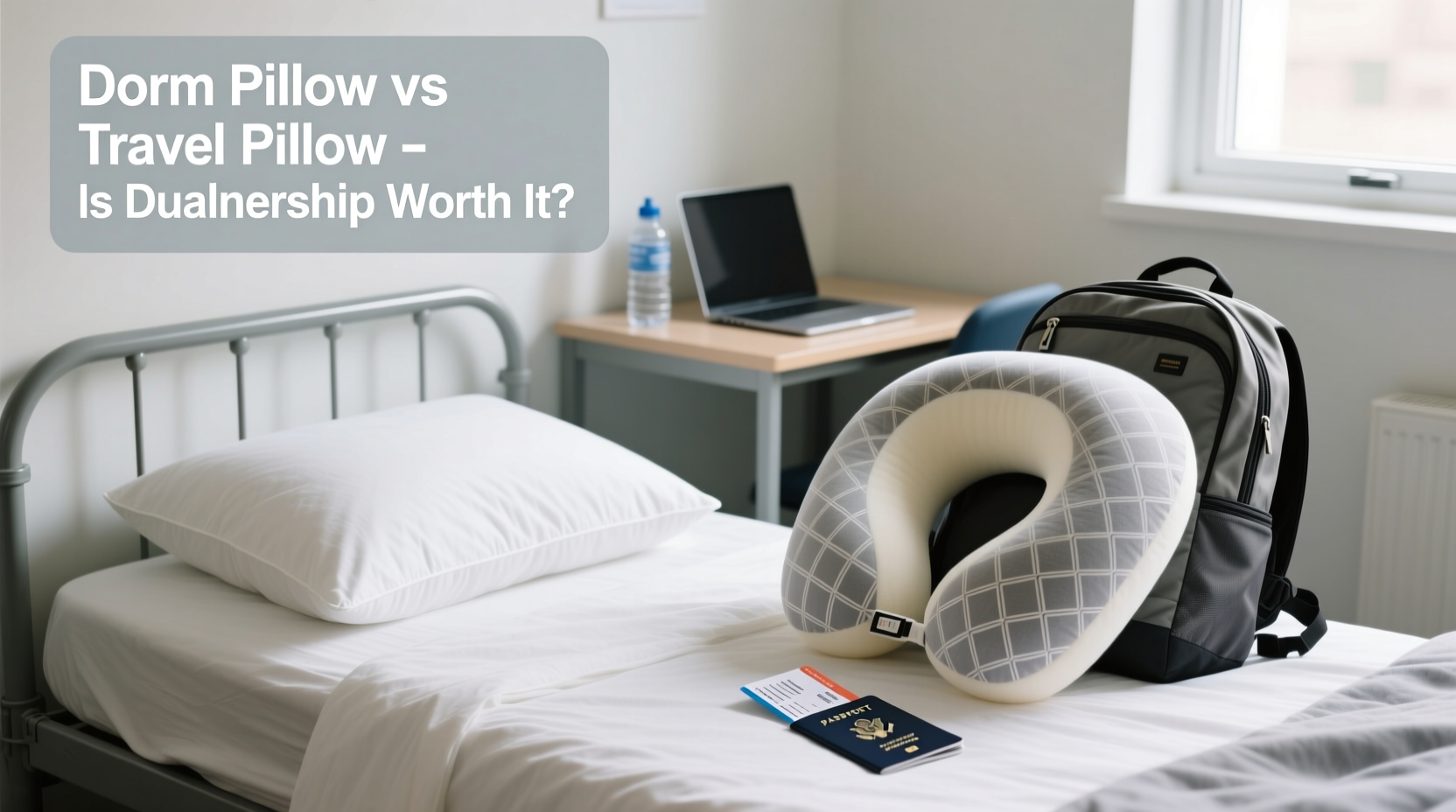
A dormitory pillow is built for regular, nightly use. It typically follows standard bedding dimensions—like 20x26 inches—and provides consistent support for side, back, or stomach sleepers. Most are filled with down alternative, memory foam, or polyester fibers, offering softness and structure over long-term use. These pillows are meant to stay in one place, usually on a bed, and contribute to overall sleep hygiene in a shared or compact living environment.
In contrast, a travel pillow is designed for portability and short-term comfort. Whether inflatable, U-shaped, or compressible, its primary function is to support your neck during transit—on planes, trains, buses, or car rides. Travel pillows prevent head bobbing, reduce stiffness, and help maintain spinal alignment when lying upright. They’re not intended for full-night sleep but rather for managing fatigue during movement.
Key Differences at a Glance
| Feature | Dormitory Pillow | Travel Pillow |
|---|---|---|
| Purpose | Nightly sleep support | Short-term neck stabilization during transit |
| Size & Shape | Rectangular, standard size | U-shaped, wrap-around, or compact roll |
| Filling Material | Memory foam, down alternative, polyester | Microbeads, inflatable air, foam |
| Portability | Bulky; requires storage space | Lightweight; packable or compressible |
| Lifespan | 1–3 years with regular use | Varies; inflatable models may degrade faster |
| Best For | Dorm rooms, apartments, hostels (stationary use) | Airports, road trips, layovers, public transport |
Can One Pillow Do Both Jobs?
The idea of a dual-purpose pillow is appealing—especially for minimalist packers or students trying to save money. Some modern designs blur the line between dorm and travel use. For example, compressible memory foam pillows can be used nightly in a dorm and squeezed into a backpack for weekend trips. Similarly, some U-shaped travel pillows now come with removable inserts that convert them into flat sleeping pillows.
However, compromises exist. A compressed travel pillow may lack the loft and support needed for healthy spinal alignment over eight hours. Conversely, a bulky dorm pillow won’t fit easily into a carry-on and offers no ergonomic neck cradle during transit. As Dr. Lena Patel, a sleep posture specialist, explains:
“While multifunctional pillows are improving, they rarely match the performance of specialized ones. Your neck and head have different biomechanical needs when lying flat versus sitting upright.”
If you're a light sleeper or prone to morning stiffness, sacrificing proper support—even occasionally—can lead to headaches, poor concentration, and long-term discomfort.
Real-Life Scenario: Maya’s Dorm-to-Departure Routine
Maya is a sophomore studying in Chicago who visits her family in Atlanta every six weeks. She initially tried using her dorm pillow on flights by stuffing it into a packing cube. While it was more comfortable than airplane-provided options, it took up half her bag space, leaving little room for clothes. On longer flights, she still struggled with neck strain because the rectangular shape didn’t provide lateral support.
After two uncomfortable trips, she invested in a lightweight memory foam travel pillow with a washable cover. She kept her original dorm pillow for nightly use and now packs the travel version in a compression sack. Though she spent more upfront, she reported better rest during transit and improved focus upon arrival. Her experience illustrates that while substitution is possible, dedicated tools often yield better outcomes.
When You Can Get Away With One
There are scenarios where owning just one pillow makes sense:
- You rarely travel—fewer than 2–3 trips per year.
- You stay overnight at friends’ places rather than endure long transit.
- You already own a high-quality, compressible pillow that supports your sleep style.
- Budget constraints force prioritization, and nightly comfort is more critical than travel convenience.
In such cases, opt for a medium-loft, hypoallergenic dorm pillow made from shredded memory foam—it molds well to different positions and can be rolled tightly for occasional trips. Pair it with a compact inflatable neck cushion if you face extended journeys.
Step-by-Step Guide: Choosing What’s Right for You
- Assess your travel frequency: More than once a month? Prioritize a travel pillow.
- Evaluate your sleep position: Side sleepers need firm support; stomach sleepers benefit from softer options.
- Measure your space: Dorm drawers are small—ensure your pillow fits without crowding essentials.
- Test packability: Try rolling or compressing your current pillow. Does it rebound well?
- Set a combined budget: Instead of buying two low-quality pillows, invest in one excellent dorm model and a durable, compact travel option.
FAQ
Can I use a travel pillow every night in my dorm?
Not recommended. Most travel pillows don’t provide adequate head elevation or support for full-night use. Prolonged use may lead to neck pain or misalignment.
Are there pillows designed for both dorm and travel use?
Yes—some brands offer “dorm-to-go” styles: rectangular pillows made with compressible memory foam that come with carrying straps. They’re bulkier than traditional travel pillows but far more practical than bringing a full-sized bed pillow.
How much should I spend on each type?
Aim for $25–$45 for a quality dorm pillow and $20–$40 for a reliable travel pillow. Avoid ultra-cheap versions filled with low-density foam—they lose shape quickly.
Final Recommendation: Own Both, Strategically
For most people balancing academic life and personal travel, having both a dormitory pillow and a travel pillow is worthwhile—not because either is luxurious, but because each serves a distinct physiological need. Think of them like footwear: you wouldn’t wear hiking boots to a formal event, nor dress shoes on a trail. Similarly, your body benefits from context-specific support.
You don’t need the most expensive models. Focus instead on functionality: a supportive, breathable dorm pillow for recovery and cognitive performance, and a compact, adjustable travel pillow to minimize fatigue on the move. Together, they form a complete sleep-support system tailored to modern student and traveler lifestyles.




 浙公网安备
33010002000092号
浙公网安备
33010002000092号 浙B2-20120091-4
Comments
No comments yet. Why don't you start the discussion?