
When it comes to protecting your iPhone, the market offers countless options—slim, rugged, transparent, or shock-absorbing. Among the most common distinctions is between single-layer and double-layer cases. While many assume that a thicker, heavier case automatically provides superior protection, the reality is more nuanced. Design, material composition, structural engineering, and real-world impact dynamics all play critical roles. Understanding these factors helps you make an informed decision based not on marketing claims, but on actual performance.
The Anatomy of iPhone Case Layers
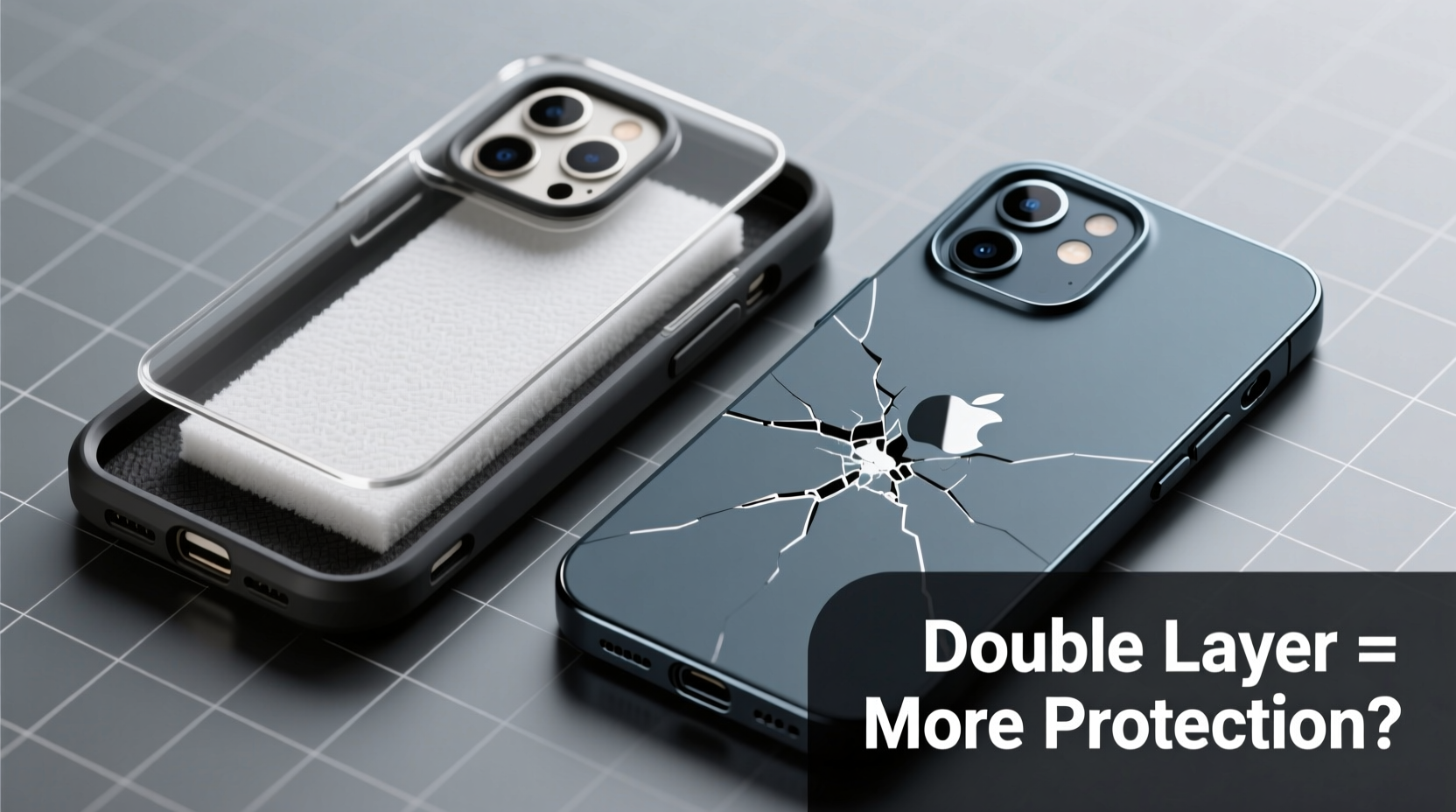
Before comparing protection levels, it’s essential to understand what defines a single-layer versus a double-layer case.
Single-layer cases are typically made from one continuous material—often flexible TPU (thermoplastic polyurethane) or hard polycarbonate. These cases wrap around the phone with uniform thickness, offering basic scratch resistance and moderate drop protection. They’re lightweight and maintain the phone’s original profile.
Double-layer cases, also known as hybrid or dual-material cases, combine two distinct components: a rigid outer shell (usually polycarbonate) and a soft, shock-absorbing inner liner (typically TPU or silicone). The two layers work together—the outer resists scratches and deformation, while the inner compresses during impact to absorb kinetic energy.
Does Thickness Equal Better Protection?
At first glance, bulkier cases seem inherently safer. However, protection isn’t solely determined by thickness. It depends on how well the case manages energy during impact. A poorly designed thick case may transfer force directly to the phone, while a thinner, intelligently engineered one can dissipate it more effectively.
Independent lab tests show that some slim, single-layer cases with advanced materials like D3O—a non-Newtonian polymer—outperform much thicker traditional cases in high-impact scenarios. These materials remain flexible under normal conditions but instantly stiffen upon impact, absorbing and spreading energy across a wider area.
In contrast, a thick double-layer case without proper internal geometry (like air pockets or corner reinforcements) might add weight and size without meaningful safety gains. The key is not volume, but intelligent energy management.
“Case thickness alone is misleading. What matters is how the structure channels and absorbs force during a fall.” — Dr. Lena Torres, Materials Engineer at Mobile Safety Labs
Comparing Performance: Single vs Double Layer
To evaluate real-world effectiveness, let’s compare key aspects of both types:
| Feature | Single-Layer Case | Double-Layer Case |
|---|---|---|
| Drop Protection | Moderate; best for low-height drops (e.g., waist-level) | Superior; enhanced shock absorption due to layered design |
| Weight & Bulk | Lightweight, minimal added thickness | Heavier and thicker, but often within acceptable limits |
| Scratch Resistance | Varies; softer TPU prone to scuffs | Better; rigid outer shell protects against abrasions |
| Heat Dissipation | Better airflow; less heat retention | Slightly reduced; insulation from dual materials |
| Material Innovation | Some use advanced polymers (e.g., D3O, liquid silicone) | Often standard TPU + PC; fewer cutting-edge integrations |
| Price Range | $10–$35 | $20–$50+ |
The data suggests that double-layer cases generally offer better physical defense, especially in repeated or high-impact drops. However, innovation in single-layer designs is closing the gap, particularly in premium models used by professionals who prioritize both safety and aesthetics.
Real-World Example: Office vs Outdoor Use
Consider Sarah, a freelance photographer who frequently travels for shoots. She initially used a sleek single-layer silicone case because it felt good in hand and didn’t add bulk. After dropping her iPhone from chest height onto concrete during a location shoot, the screen cracked despite the case.
She switched to a MIL-STD-810G certified double-layer case with reinforced corners and internal air cushions. Three months later, she accidentally dropped the same model iPhone from nearly the same height—but this time, the phone survived unscathed. The structured design and layered materials absorbed the impact far more effectively than the flexible single layer.
In contrast, Mark, a corporate lawyer, uses his phone mostly indoors. He values discretion and comfort. His single-layer ultra-thin TPU case has protected his device through several desk-to-carpet drops with no issues. For his usage pattern, the added thickness of a double-layer case would be unnecessary overkill.
This illustrates a crucial point: protection needs are context-dependent. Not every user requires military-grade durability.
What to Look for in a Protective Case
Instead of focusing only on layer count or thickness, consider these evidence-based features:
- Corner reinforcement: Over 70% of drops land on a corner. Cases with extra padding or elevated edges here perform significantly better.
- Certifications: Look for independent testing standards like MIL-STD-810G or IP ratings for dust/water resistance.
- Internal lining: Microfiber or soft coatings reduce micro-abrasions and protect finish integrity.
- Button coverage: Precision-cut button shields prevent dirt buildup and ensure tactile feedback.
- Ease of removal: A case should protect without making battery access or cleaning difficult.
Checklist: Choosing the Right Case for Your Lifestyle
- Assess your daily environment: Do you work outdoors, travel often, or handle heavy equipment?
- Determine your risk level: How frequently do you drop your phone?
- Prioritize features: Is slimness more important than maximum protection?
- Check compatibility: Ensure the case supports wireless charging and fits your accessories.
- Verify drop-test claims: Look for third-party lab results, not just manufacturer statements.
- Read user reviews focused on durability, not just appearance.
- Consider future resale value—some cases preserve device condition better than others.
Frequently Asked Questions
Do double-layer cases interfere with wireless charging?
Most modern double-layer cases are designed with wireless charging in mind. As long as the case isn’t excessively thick (over 3mm) and doesn’t contain metal components, charging should work seamlessly. Always verify compatibility before purchase.
Can a single-layer case be as protective as a double-layer one?
Yes—but only if it uses advanced impact-dissipating materials like D3O, Poron, or specialized elastomers. Standard TPU single-layer cases generally cannot match the protection of well-designed double-layer models in high-impact scenarios.
Are thicker cases harder to clean?
They can be. Double-layer cases sometimes have crevices between layers where dust and bacteria accumulate. Opt for seamless designs or those with smooth, wipeable surfaces. Avoid textured backs if hygiene is a concern.
Conclusion: Prioritize Smart Design Over Raw Size
More thickness does not automatically mean more protection. While double-layer cases generally offer superior defense due to their hybrid construction, the real differentiator is intelligent engineering—not sheer bulk. Features like corner cushioning, material responsiveness, and structural rigidity matter far more than millimeters added to your phone’s profile.
Your choice should align with how you use your device. If you're active, outdoorsy, or accident-prone, a well-built double-layer case is a wise investment. If you primarily use your phone in controlled environments, a high-quality single-layer option may offer sufficient protection without sacrificing elegance or convenience.




 浙公网安备
33010002000092号
浙公网安备
33010002000092号 浙B2-20120091-4
Comments
No comments yet. Why don't you start the discussion?