
When planning an outdoor adventure—especially in regions prone to rain, high humidity, or early morning dew—the choice between down and synthetic sleeping bags becomes critical. While both materials offer insulation, their behavior under damp conditions varies significantly. For backpackers, climbers, and campers who face unpredictable weather, understanding how each material reacts to moisture can mean the difference between a restful night and a cold, shivering ordeal.
This article dives deep into the science, real-world performance, and practical considerations behind down and synthetic sleeping bags in damp environments. From water resistance to drying times, we’ll explore what truly matters when your gear is exposed to moisture—and why one option often outperforms the other in wet climates.
How Insulation Works in Sleeping Bags
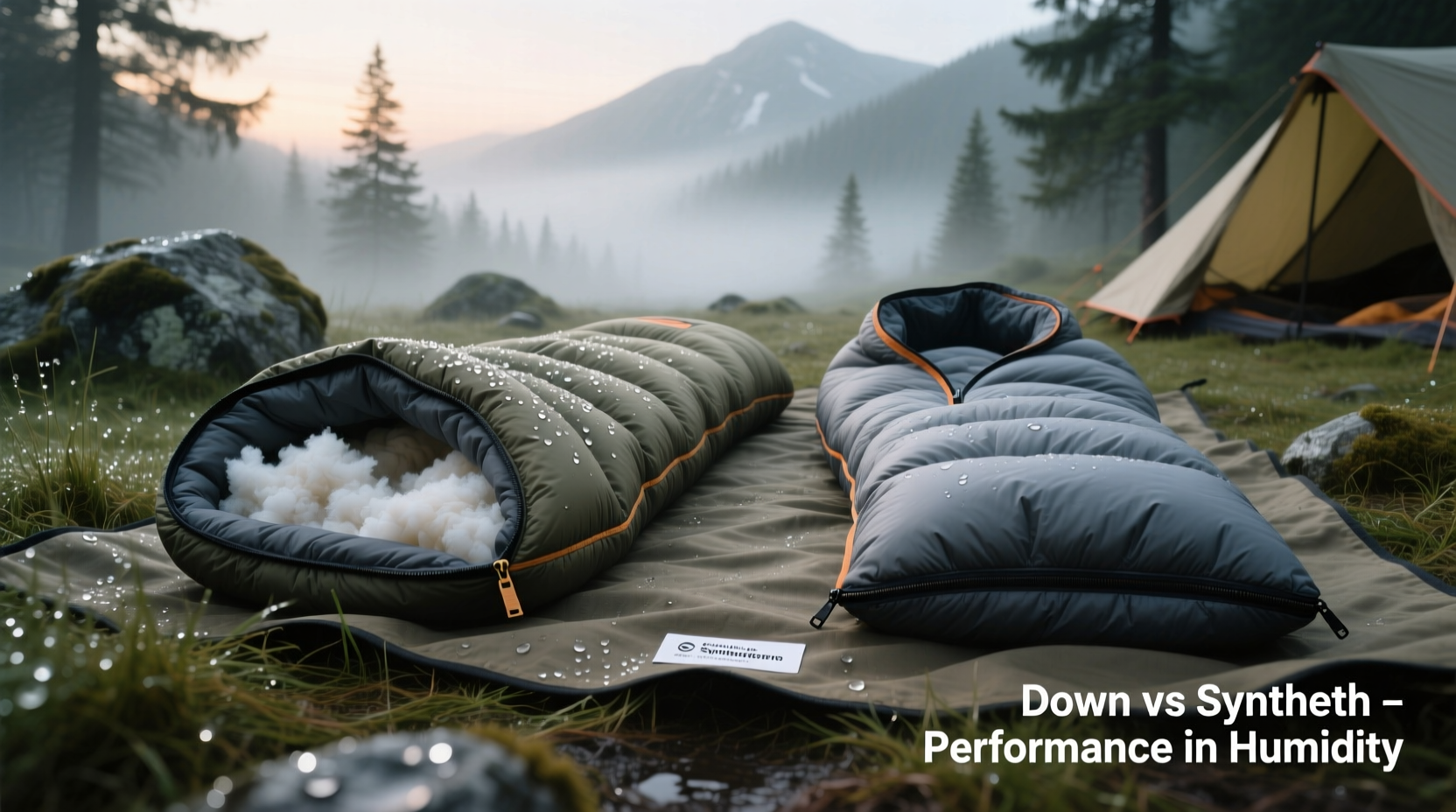
Sleeping bags keep you warm by trapping body heat within layers of insulating material. The effectiveness of this insulation depends on its ability to maintain loft—the fluffiness that creates air pockets. More loft means more trapped warm air and better thermal efficiency.
In dry conditions, both down and synthetic fibers excel at loft retention. However, moisture disrupts this balance. When insulation gets wet, it clumps, collapses, and loses its ability to trap heat. This degradation is not uniform across materials, leading to stark differences in performance when dampness enters the equation.
The Science of Moisture and Thermal Efficiency
Water conducts heat 25 times faster than air. When insulation absorbs moisture, it creates pathways for heat to escape rapidly from the body. Even slight dampness—such as condensation inside a tent or exposure to drizzle—can reduce a bag’s effective temperature rating by 10°F (6°C) or more if the insulation fails to resist moisture.
Additionally, wet insulation takes longer to warm up and may never fully recover its original loft without proper drying. This makes moisture resistance and recovery speed key metrics in evaluating sleeping bag performance in humid or rainy environments.
Down Sleeping Bags: Strengths and Limitations in Damp Conditions
Down insulation, derived from the soft underfeathers of ducks and geese, is renowned for its superior warmth-to-weight ratio, compressibility, and longevity. High-quality down bags can last decades with proper care. However, these advantages come with a major caveat: vulnerability to moisture.
Natural down fibers rely on their structure to trap air. When wet, the keratin proteins in down absorb water molecules, causing the clusters to stick together and collapse. Once compressed, down loses nearly all insulating capability until completely dried—a process that can take hours or even days in field conditions.
Modern advancements have introduced hydrophobic down treatments—chemical coatings that repel water and delay absorption. Brands like Nikwax and DownTek claim their treated down resists moisture up to three times longer than untreated down. While helpful, these treatments are not waterproof and eventually wear off after repeated washing or prolonged exposure.
“Hydrophobic down improves wet-weather resilience, but it doesn’t make down bags immune to dampness. In consistently humid environments, synthetic still holds the edge.” — Dr. Alan Reed, Outdoor Gear Materials Scientist
Real-World Example: Backpacking in the Pacific Northwest
A hiker embarks on a five-day trek through Washington’s Olympic Peninsula, where rainfall averages over 140 inches annually. Despite using a treated down sleeping bag rated to 20°F (-6°C), persistent drizzle soaks the tent floor during setup. Overnight, ground moisture seeps through the pad, dampening the lower half of the bag.
By morning, the footbox has lost all loft. Although the upper torso remains warm, circulation drops in the extremities due to poor insulation at the base. Over subsequent nights, the condition worsens. Without access to full sun or a dryer, the bag never fully recovers. By day four, the hiker reports feeling colder than expected—even in mild 45°F (7°C) temperatures.
This scenario illustrates a common pitfall: even with hydrophobic treatment, down struggles in sustained damp environments where drying opportunities are limited.
Synthetic Sleeping Bags: Built for Wet Weather Resilience
Synthetic insulation—typically made from polyester fibers engineered into hollow-core strands—was originally developed as a moisture-resistant alternative to down. Unlike natural feathers, synthetic fibers do not absorb water. Instead, they repel moisture and retain loft even when wet.
Modern synthetics like PrimaLoft, Thermolite, and Coreloft use ultra-fine filaments that mimic down’s softness while improving water resistance. These materials are specifically designed to maintain thermal performance in damp conditions, making them ideal for maritime climates, alpine regions, and three-season backpacking where rain is frequent.
One of synthetic’s greatest strengths is its ability to dry quickly. If a synthetic bag gets soaked, it can regain most of its insulating value within a few hours of air-drying—even without direct sunlight. This rapid recovery is invaluable in multi-day trips where gear maintenance time is minimal.
Performance Comparison Table: Down vs Synthetic in Damp Conditions
| Feature | Down (Untreated) | Down (Hydrophobic) | Synthetic (e.g., PrimaLoft) |
|---|---|---|---|
| Moisture Absorption | High – absorbs water quickly | Moderate – delays absorption | Low – repels water |
| Loft Retention When Wet | Poor – collapses rapidly | Fair – retains some loft briefly | Good – maintains structure |
| Drying Time (Field Conditions) | 12–24+ hours | 8–16 hours | 3–6 hours |
| Warmth Retention When Damp | Low – drops sharply | Moderate – gradual decline | High – consistent output |
| Lifespan with Moisture Exposure | Shortened by mold/mildew | Moderately extended | Long – resistant to degradation |
The data shows a clear trend: synthetic insulation maintains functionality in damp settings far better than even advanced down variants. While hydrophobic down narrows the gap, it does not close it entirely—especially over extended periods of humidity or repeated wetting cycles.
When Down Might Still Be the Right Choice
Despite its weaknesses in moisture, down remains a top pick for many adventurers. It excels in cold, dry environments such as high-altitude winter camping, desert climates, or well-ventilated tents in arid zones. Its unmatched warmth-to-weight ratio makes it ideal for ultralight backpackers prioritizing pack space and thermal efficiency.
Moreover, down bags typically last longer than synthetic ones when kept dry. With proper storage—loose in a large cotton sack, away from compression—they can remain effective for 15 years or more. Synthetic insulation, by contrast, tends to break down faster over time, losing loft and resilience after 5–8 years of regular use.
If you're hiking in predictable dry weather or have reliable shelter and drying options, down offers superior comfort and performance. But if your route includes rainforests, coastal trails, or spring melt seasons, synthetic provides greater peace of mind.
Checklist: Choosing the Right Bag for Damp Environments
- Evaluate your climate: Will you encounter frequent rain, fog, or high humidity?
- Assess drying capabilities: Do you have access to sunlight, airflow, or indoor drying?
- Consider trip length: Longer trips increase exposure risk and reduce recovery time.
- Check insulation type: Look for “hydrophobic” down or premium synthetics like PrimaLoft Silver.
- Use a vapor barrier: A liner or bivy sack can prevent sweat and condensation from reaching the bag.
- Pack protection: Always use a waterproof compression sack or dry bag.
Step-by-Step Guide to Maximizing Performance in Damp Conditions
- Pre-Trip Preparation: Inspect your sleeping bag for tears or worn areas. Apply a durable water repellent (DWR) spray to the shell fabric if recommended by the manufacturer.
- Pack Smart: Store the sleeping bag in a waterproof dry sack—not a compression sack—during transit to prevent accidental soaking.
- Campsite Selection: Pitch your tent on elevated, well-drained ground. Avoid low-lying areas where water pools overnight.
- Use a Quality Sleep System: Pair your bag with a sleeping pad with an R-value appropriate for the season. A good pad prevents ground moisture transfer and boosts overall warmth.
- Limit Interior Moisture: Ventilate your tent to reduce condensation. Remove wet clothing before entering the bag.
- Post-Night Routine: After waking, shake out the bag and hang it over a line or branch to air dry—even if only for 30 minutes.
- End-of-Trip Care: Once home, fully dry the bag before storing. Tumble dry on low with clean tennis balls to restore loft.
Frequently Asked Questions
Can I wash a wet down sleeping bag immediately?
Yes—but only if you can dry it thoroughly afterward. Washing a damp down bag without proper drying equipment risks mold development. Use a front-loading washer and specialized down cleaner. Dry on low heat with dryer balls, checking frequently until completely dry (may take several hours).
Are there hybrid sleeping bags that combine down and synthetic?
Yes. Some manufacturers produce hybrid bags that place synthetic insulation in high-moisture zones (like the footbox or back panel) and down in areas needing maximum warmth (such as the chest and hood). This design balances weight savings with improved damp resistance. Examples include models from Marmot and REI Co-op.
Does a waterproof shell make a down bag suitable for wet weather?
A waterproof-breathable outer fabric (like Pertex Shield) helps block external moisture but does nothing to prevent internal dampness from body sweat. Since humans emit about half a liter of water vapor per night, a non-breathable shell can trap humidity inside, creating a damp microclimate. Balance is key: look for shells with moisture-wicking properties rather than fully sealed membranes unless extreme weather demands it.
Conclusion: Making the Smart Choice for Your Environment
The debate between down and synthetic sleeping bags isn't about declaring one universally superior—it's about matching the right tool to the job. In damp conditions, synthetic insulation consistently outperforms down in moisture resistance, drying speed, and retained warmth. For anyone venturing into rainy forests, coastal mountains, or shoulder-season terrain, synthetic offers reliability that treated down cannot yet match.
That said, technology continues to evolve. Hydrophobic treatments, better shell fabrics, and hybrid constructions are narrowing the performance gap. Yet, until down becomes inherently water-resistant rather than just water-repellent, synthetic remains the safer bet for wet environments.
Your sleeping bag is not just gear—it’s your lifeline to warmth and safety in the wild. Choose based on where you’re going, not just what’s lightest or most expensive. Whether you opt for the resilience of synthetic or the luxury of dry-weather down, informed decisions lead to better sleep, safer adventures, and more enjoyable time outdoors.




 浙公网安备
33010002000092号
浙公网安备
33010002000092号 浙B2-20120091-4
Comments
No comments yet. Why don't you start the discussion?