
In a city as large and dynamic as Houston, Texas, access to dependable emergency medical services (EMS) can mean the difference between life and death. With over 2.3 million residents spread across more than 600 square miles, the demand for fast, professional, and trustworthy EMS is constant. Whether it's a sudden cardiac event, a traumatic injury, or a medical emergency requiring urgent transport, knowing which EMS providers operate reliably—and how they ensure patient safety—is critical for individuals, families, and healthcare facilities alike.
Houston’s EMS ecosystem includes municipal services, private ambulance companies, hospital-affiliated units, and specialty transport teams. While all are regulated by the Texas Department of State Health Services (DSHS), their levels of training, equipment, response times, and service quality vary significantly. This guide explores what defines reliable EMS care in Houston, highlights top-rated providers, and equips you with practical tools to make informed decisions during emergencies.
What Defines Reliable EMS Care?
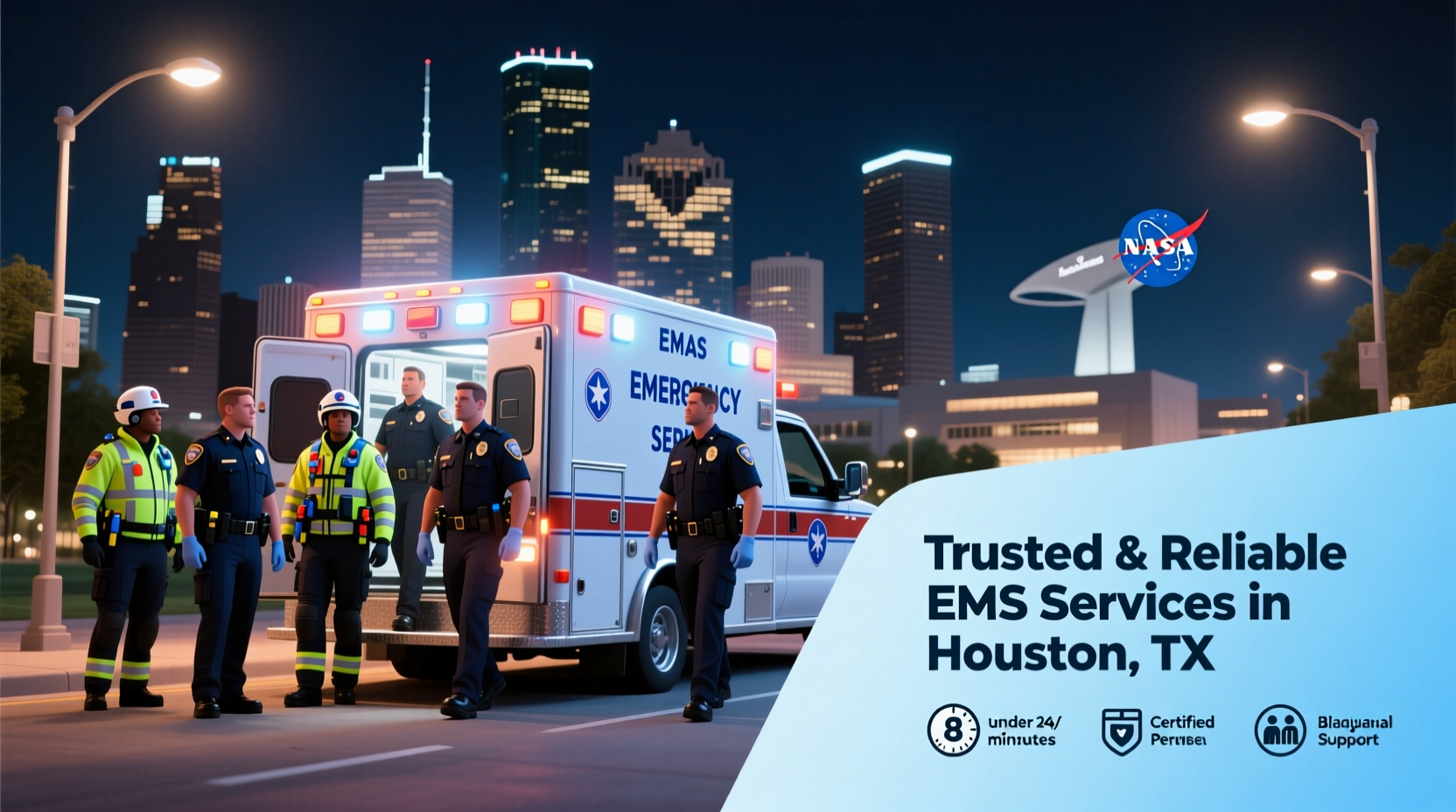
Reliability in emergency medical services goes beyond simply arriving on scene quickly. True reliability encompasses clinical competence, consistent availability, transparent communication, and adherence to national care standards. The National Highway Traffic Safety Administration (NHTSA) outlines core components of high-performing EMS systems: rapid response, proper triage, skilled personnel, effective treatment, and seamless handoff to receiving hospitals.
In Houston, these principles translate into real-world expectations:
- Response Time: For life-threatening emergencies, the target is typically under 8 minutes from dispatch to arrival.
- Certified Personnel: EMTs and paramedics must hold current Texas licensure and meet continuing education requirements.
- Advanced Life Support (ALS): Availability of medications, intubation, cardiac monitoring, and IV therapy when needed.
- Medical Oversight: Physicians provide protocol guidance and quality assurance.
- Data Transparency: Public reporting of performance metrics like survival rates and response benchmarks.
“Reliable EMS isn’t just about speed—it’s about delivering the right care at the right time, every time.” — Dr. Luis Sanchez, Medical Director, Harris County Emergency Services District 4
Top Trusted EMS Providers in Houston
The City of Houston operates one of the largest municipal EMS systems in the U.S.—Houston Fire Department EMS (HFD EMS). However, several private and regional providers also offer essential backup and specialized services. Below is a comparison of key players known for consistent performance and community trust.
| Provider | Type | Service Area | Key Features | Contact / Dispatch |
|---|---|---|---|---|
| Houston Fire Department EMS | Municipal | City of Houston | 911 response, ALS-capable units, physician oversight, public accountability | 911 |
| AmeriCare Ambulance | Private | Harris County & surrounding areas | ALS/BLS, insurance billing, wheelchair transport, non-emergency transfers | (713) 999-1911 |
| MedStar Mobile Health | Regional (Brazosport) | Southern Harris County | High ALS ratio, strong rural coverage, integrated with Baylor St. Luke’s | 911 or (800) 774-5855 |
| Acadian Ambulance | Private/National | Limited Houston operations | Nationally accredited, disaster response experience, bilingual staff | Contract-based; not 911 primary |
| Memorial Hermann Life Flight | Specialty Air & Ground | Greater Houston & East Texas | Trauma/critical care transport, helicopter units, Level I trauma center integration | Hospital-to-hospital only |
How to Choose the Right EMS Option
Not all emergencies require the same type of response. Understanding when to call 911 versus when to arrange scheduled transport helps prevent system overload and ensures appropriate care.
When to Call 911
- Chest pain, difficulty breathing, or suspected stroke
- Severe bleeding, head injury, or unconsciousness
- Pregnancy complications or pediatric distress
- Any situation where immediate medical intervention is uncertain
When to Use Non-Emergency Transport
- Dialysis appointments
- Discharge from hospital to home or rehab
- Doctor visits for mobility-limited patients
- Psychiatric evaluations requiring supervision
Checklist: Evaluating a Private EMS Company
- Verify state licensing through DSHS website
- Confirm if they offer BLS (Basic Life Support) or ALS (Advanced Life Support)
- Ask about staff certification and recertification frequency
- Check insurance network participation (e.g., Medicare, Medicaid, UnitedHealthcare)
- Review online reputation via BBB, Google Reviews, and CMS data
- Inquire about vehicle maintenance logs and cleanliness protocols
Real-World Example: A Stroke Response in Northwest Houston
At 7:15 AM, Maria R., a 68-year-old resident of Spring Branch, began slurring her words and experienced sudden weakness on her right side. Her husband called 911 immediately. Within six minutes, an HFD EMS paramedic unit arrived. They performed a Cincinnati Prehospital Stroke Scale, confirmed symptoms, established IV access, monitored vitals, and notified Memorial Hermann–Texas Medical Center en route.
Thanks to coordinated pre-arrival alerts, the stroke team was ready upon arrival. Maria received tPA within 42 minutes of symptom onset—well under the 60-minute benchmark. She regained full motor function after rehabilitation.
This case illustrates how reliability in EMS involves not just individual skill but system-wide coordination. Rapid recognition, accurate assessment, clear communication, and hospital readiness collectively saved Maria’s long-term independence.
Step-by-Step: What Happens During a 911 EMS Response in Houston
Understanding the process can reduce anxiety and improve cooperation during emergencies.
- Call 911: Provide location, nature of emergency, and patient condition clearly.
- Dispatch: HFD or contracted provider sends nearest available unit based on GPS tracking.
- En Route: Crew reviews protocols, prepares equipment (AED, oxygen, trauma kit).
- On Scene: Assess airway, breathing, circulation; perform interventions as needed.
- Treatment: Administer medications, stabilize injuries, manage pain.
- Transport Decision: Determine most appropriate receiving facility based on condition.
- Handoff: Deliver detailed report to ER staff including vital trends and treatments given.
- Documentation: Complete electronic patient care record (ePCR) for medical and billing purposes.
Frequently Asked Questions
Is Houston Fire Department EMS free?
No. While emergency response is provided regardless of ability to pay, ambulance transport incurs fees. As of 2024, basic life support transport costs approximately $1,200, with additional charges for advanced care. Most insurance plans cover a portion, and financial assistance programs are available for low-income residents.
Can I request a specific ambulance company?
During a 911 emergency, you cannot choose your provider—the closest qualified unit responds. For non-emergency medical transport, you may select a licensed private company that meets your needs and insurance criteria.
How do I verify if an EMS provider is legitimate?
All Texas ambulance services must be licensed by the DSHS. You can verify status at dshs.texas.gov/ems. Look for active certification, no recent disciplinary actions, and compliance with vehicle and staffing regulations.
Conclusion: Prioritizing Trust and Preparedness
Reliable EMS care in Houston isn't something to evaluate only when crisis strikes. Proactive awareness—knowing who serves your neighborhood, understanding your options, and preparing vulnerable family members—builds resilience. Whether relying on HFD’s robust 911 system or arranging dependable non-emergency transport, choosing trusted providers ensures dignity, safety, and continuity of care.
Emergencies don’t wait, but preparation does. Review your local resources today, keep emergency numbers accessible, and advocate for transparency in the services you use. Your knowledge could save a life.




 浙公网安备
33010002000092号
浙公网安备
33010002000092号 浙B2-20120091-4
Comments
No comments yet. Why don't you start the discussion?