
When you're unwell, dry, cracked lips are more than just uncomfortable—they can be painful and slow to heal. Whether battling a cold, flu, or recovering from a fever, many people notice their lips becoming flaky, sore, or even bleeding. This condition isn’t just a minor annoyance; it can interfere with eating, speaking, and sleeping. Understanding why dry lips occur during illness—and knowing how to treat them quickly—is essential for comfort and recovery.
The root causes are often linked to changes in hydration, breathing patterns, and immune response. While lip balms may offer temporary relief, addressing the underlying triggers leads to faster healing and long-term prevention.
Why Lips Crack When You’re Sick: The Science Behind It
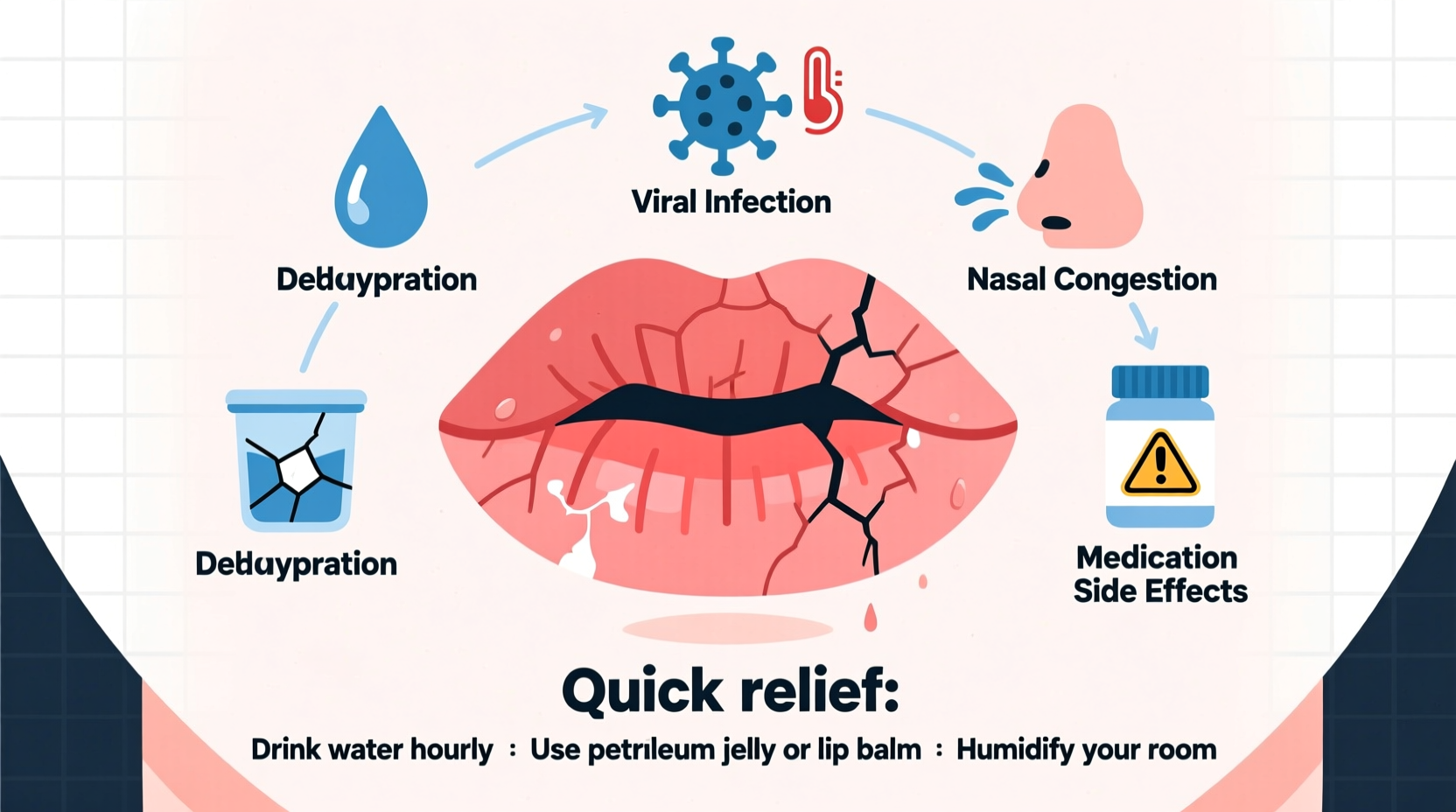
Lips lack sebaceous (oil) glands, making them naturally vulnerable to moisture loss. Unlike the rest of your skin, they can’t produce oils to form a protective barrier. During illness, several physiological changes accelerate this vulnerability:
- Dehydration: Fever, sweating, vomiting, or reduced fluid intake deplete the body’s water reserves. Even mild dehydration shows up first on the lips.
- Mouth Breathing: Congestion from colds or sinus infections forces you to breathe through your mouth, especially at night. This constant airflow dries out the delicate lip tissue.
- Medication Side Effects: Antihistamines, decongestants, and certain antibiotics reduce saliva production and overall moisture levels.
- Nutrient Deficiencies: Illness increases metabolic demand. Low levels of B vitamins (especially B2 and B6), iron, and zinc impair skin repair and mucous membrane health.
- Frequent Lip Licking: A subconscious habit that worsens dryness—saliva evaporates quickly, leaving lips more irritated.
“During acute illness, the body prioritizes vital organ function over skin integrity. That’s why mucosal tissues like lips and nasal passages become early indicators of systemic stress.” — Dr. Lena Torres, Internal Medicine Specialist
Quick Relief Strategies for Soothing Dry Lips
Immediate care focuses on restoring moisture, protecting tissue, and minimizing irritation. These steps can bring noticeable improvement within hours:
- Hydrate Aggressively: Sip water, herbal tea, or electrolyte drinks throughout the day. Aim for pale yellow urine as a sign of adequate hydration.
- Use an Occlusive Balm: Apply petroleum jelly or a thick ointment-based lip balm (like those with shea butter or ceramides) frequently—even overnight.
- Avoid Irritants: Skip flavored or scented lip products. Ingredients like menthol, camphor, and phenol may feel cooling but increase inflammation.
- Humidify Your Environment: Run a cool-mist humidifier in your bedroom, especially if using heating systems that dry the air.
- Stop the Lick Cycle: Be mindful of licking your lips. Keep balm nearby to reapply instead.
Do’s and Don’ts When Treating Sick-Related Chapped Lips
| Do’s | Don’ts |
|---|---|
| Drink warm fluids like broth or ginger tea | Use lip products with alcohol or fragrance |
| Apply balm after every hand wash or meal | Lick your lips to moisten them |
| Breathe through a saline-rinsed nasal passage | Pick or peel flaking skin |
| Use a soft-bristle toothbrush to avoid micro-abrasions | Share lip balm to prevent germ spread |
| Take a vitamin B-complex supplement if appetite is low | Ignore signs of infection (pus, swelling, worsening pain) |
A Real-Life Example: Recovering From Flu-Induced Lip Cracks
Samantha, a 34-year-old teacher, came down with the flu in January. After three days of high fever and congestion, she noticed her lower lip had split open and stung with every sip of water. She assumed it was from dehydration but kept licking her lips out of habit. By day five, the crack hadn’t healed and began bleeding slightly when she talked.
She switched tactics: stopped using her mint-flavored lip balm, started applying plain petroleum jelly every two hours, used a bedside humidifier, and set hourly phone reminders to drink water. Within 36 hours, the sharp pain faded, and by day seven, the fissure had closed. Her key insight? “I didn’t realize how much my nighttime mouth breathing was damaging my lips until I added the humidifier.”
Step-by-Step Healing Timeline (First 72 Hours)
Follow this timeline to maximize recovery speed when lips become severely dry during illness:
- Hour 0–6: Clean lips gently with lukewarm water. Pat dry—never rub. Apply a non-irritating ointment like white petrolatum.
- Hour 6–24: Reapply balm after any liquid intake. Begin using a humidifier. Start tracking fluid intake—aim for at least 6 cups of liquid.
- Day 2: Assess improvement. If cracking persists, consider a B-complex supplement. Avoid acidic foods (citrus, tomatoes) that sting broken skin.
- Day 3: If no improvement or signs of infection (increased redness, pus), consult a healthcare provider. Rule out angular cheilitis or yeast overgrowth.
Prevention Checklist for Future Illnesses
Stay ahead of dry lips during sickness with this actionable checklist:
- ✅ Keep a tube of fragrance-free lip ointment by your bed and favorite chair
- ✅ Set a phone reminder to drink water every 90 minutes when sick
- ✅ Use saline nasal spray to ease congestion and encourage nose breathing
- ✅ Run a humidifier in your room as soon as symptoms begin
- ✅ Stock up on soothing fluids: chamomile tea, broths, and oral rehydration solutions
- ✅ Take a daily multivitamin, especially during cold and flu season
Frequently Asked Questions
Can dry lips be a sign of something more serious?
Occasional dryness during illness is normal. However, persistent cracking—especially at the corners of the mouth—may indicate angular cheilitis, often caused by fungal or bacterial infection, vitamin deficiency, or poorly fitting dental appliances. If sores last longer than two weeks, see a doctor.
Is Vaseline good for dry lips when sick?
Yes. Petroleum jelly (Vaseline) is one of the most effective occlusive agents. It doesn’t add moisture but prevents existing moisture from escaping. It’s hypoallergenic, inexpensive, and safe for frequent use—even for children and sensitive skin.
Why do my lips stay dry even after I recover?
Prolonged dryness post-illness may result from lingering dehydration, continued mouth breathing, or habitual lip licking. It can also signal nutritional gaps. Focus on balanced meals rich in B vitamins (eggs, leafy greens, legumes) and continue moisturizing until the skin fully regenerates—usually within 5–7 days after recovery.
Take Control of Your Comfort During Illness
Dry lips may seem like a small issue compared to fever or fatigue, but they impact your daily comfort and healing process. By understanding the causes—dehydration, mouth breathing, medication effects, and nutrient shifts—you can take targeted steps to protect your lips before they crack.
Simple habits like using a humidifier, choosing the right lip protection, and staying hydrated make a significant difference. Most importantly, treat your lips with the same care you give the rest of your body during illness. They’re not just cosmetic—they’re a frontline defense for your oral health.




 浙公网安备
33010002000092号
浙公网安备
33010002000092号 浙B2-20120091-4
Comments
No comments yet. Why don't you start the discussion?