
Volume is a universal hair goal—especially when time is short, second-day hair lacks lift, or humidity flattens styles before they’ve had a chance to shine. Dry shampoo and texturizing sprays are both go-to solutions for instant refresh and body, but not all formulas deliver results without consequences. Buildup, dullness, and scalp irritation are common side effects of frequent use, particularly with products that rely on heavy starches, silicones, or alcohol. The real challenge isn’t just finding something that lifts roots or adds grit—it’s choosing a product that enhances texture without compromising hair health.
This guide breaks down the key differences between dry shampoo and texturizing spray, identifies what causes buildup, and provides actionable strategies to get volume that lasts—without residue weighing hair down.
Dry Shampoo vs. Texturizing Spray: Understanding the Core Differences
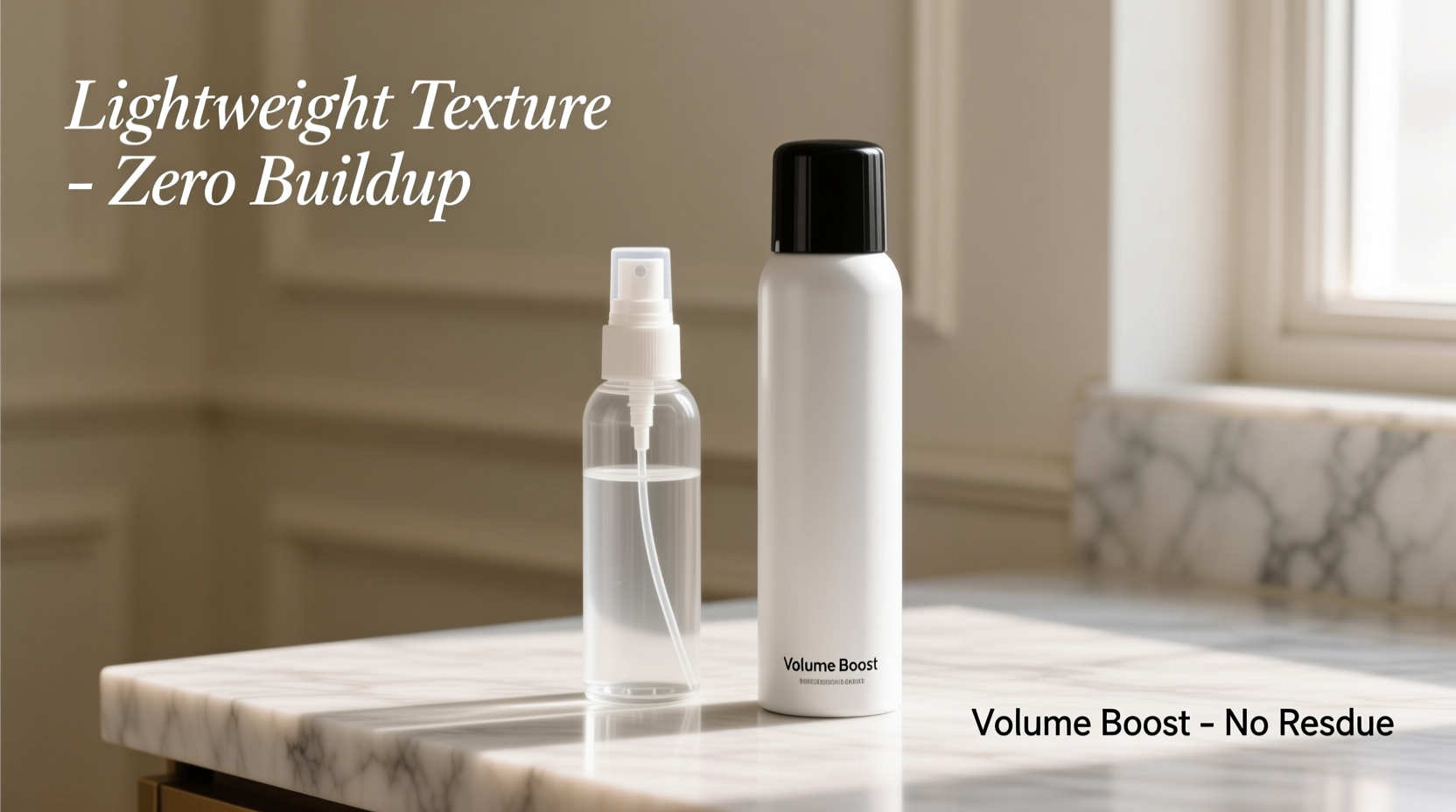
While often used interchangeably, dry shampoo and texturizing spray serve distinct purposes. Confusing the two can lead to ineffective styling or unintended buildup.
Dry shampoo primarily absorbs excess oil at the scalp. It extends time between washes by using absorbent ingredients like rice starch, silica, or alcohol to soak up sebum, making hair appear cleaner and feel lighter. Many dry shampoos also include lightening agents or fragrances to mask odors. Because it targets the roots, its volumizing effect is secondary—lifting occurs as oil is removed and strands regain natural separation.
Texturizing spray, on the other hand, is designed to enhance grip, separation, and fullness throughout the hair shaft. It typically contains polymers, sea salt, or lightweight waxes that coat strands to create friction and body. These sprays work best mid-length to ends but can be applied near roots if formulated for low-residue performance. Unlike dry shampoo, their purpose is not cleansing but shaping—adding “lived-in” texture to smooth or flat hair.
The confusion arises because many modern products blend both functions. Some dry shampoos now include texturizing agents, while certain sprays claim oil-absorbing benefits. However, combining these roles increases the risk of ingredient overload—especially when used daily.
Why Buildup Happens—and How to Prevent It
Buildup occurs when product residues accumulate on the scalp and hair shaft over time. Common culprits include:
- Starch-based dry shampoos: While effective at absorbing oil, corn or rice starch can leave behind a powdery film that clumps or cakes, especially in humid conditions.
- Silicones: Often added for smoothness, they coat hair and resist water, leading to gradual buildup that dulls shine and blocks moisture absorption.
- Alcohol derivatives: Some drying alcohols (like SD alcohol 40) evaporate quickly but can strip natural oils, prompting the scalp to overproduce sebum—a cycle that leads to more frequent product use.
- Waxes and polymers: Found in many texturizing sprays, these provide hold but may require clarifying shampoo to fully remove.
The danger isn’t just aesthetic. Buildup can clog hair follicles, inhibit growth, and cause flaking or itchiness. Over time, it compromises hair’s ability to retain moisture and respond to styling.
Prevention starts with formulation awareness. Look for labels indicating “non-comedogenic,” “residue-free,” or “scalp-safe.” Water-soluble ingredients are easier to rinse out, while plant-based alternatives to synthetic polymers reduce long-term accumulation.
“Many clients come in with flat, lifeless hair thinking they need more product—when in reality, they’re battling months of unremoved residue.” — Jordan Lee, Celebrity Stylist & Trichology Consultant
Choosing the Right Product: A Comparison Guide
Not all volume-boosting sprays are created equal. Below is a breakdown of key features to consider when selecting between dry shampoo and texturizing spray—with an emphasis on minimizing buildup.
| Feature | Dry Shampoo | Texturizing Spray |
|---|---|---|
| Primary Function | Oil absorption, scalp refresh | Texture enhancement, grip, volume |
| Best For | Oily roots, extending wash days | Flat styles, fine hair, beach waves |
| Key Ingredients | Rice starch, silica, alcohol | Sea salt, VP/VA copolymer, panthenol |
| Application Area | Roots only | Mid-lengths to ends (some safe for roots) |
| Buildup Risk | High (if starch-heavy or used daily) | Moderate (depends on polymer load) |
| Wash-Out Difficulty | May require clarifying shampoo weekly | Easier with water-soluble formulas |
| Recommended Use Frequency | 2–3 times per week max | As needed for styling |
To minimize buildup, opt for dry shampoos with silica or clay instead of starch, and texturizing sprays with sea salt or hydrolyzed proteins rather than heavy resins. Sprays labeled “weightless” or “invisible finish” are less likely to leave visible residue.
Step-by-Step: How to Use Either Product Without Causing Buildup
Even the cleanest formulas can cause issues if misused. Follow this timeline to maximize volume while protecting hair integrity.
- Start with clean, dry hair: Never apply dry shampoo or texturizing spray to dirty or damp hair. Oils and moisture trap particles, accelerating buildup.
- Section your hair: Part hair into 4–6 sections to ensure even distribution and prevent over-application.
- Hold spray 8–10 inches from scalp/roots: For dry shampoo, aim directly at oily zones. For texturizing spray, mist lightly at roots only if intended for full-hair use.
- Wait 2–3 minutes: Allow active ingredients time to absorb oil (dry shampoo) or set (texturizing spray).
- Massage and brush thoroughly: Use fingertips to massage roots and distribute product. Brush from roots to ends to disperse any powder or residue.
- Limit frequency: Use dry shampoo no more than 3x/week. Wash hair with a clarifying shampoo once weekly if using either product regularly.
- Deep clean monthly: Incorporate a chelating or detox shampoo every 4 weeks to remove mineral deposits and stubborn residues.
Real-World Example: Sarah’s Fine Hair Transformation
Sarah, a 32-year-old office worker with fine, straight hair, struggled with flatness by midday. She used a popular aerosol dry shampoo daily to “refresh” her look. Within two months, her hair felt greasy at the roots yet straw-like at the ends. Her stylist noticed white specks along her scalp and diagnosed severe product buildup.
After switching to a rice-starch-free dry shampoo with kaolin clay and using a texturizing spray only on days she styled waves, her hair improved dramatically. She began washing weekly with a sulfate-free clarifying shampoo and limited dry shampoo to twice weekly. Within three weeks, her roots stayed fuller longer, her scalp stopped itching, and her hair responded better to heat styling.
The turning point wasn’t eliminating product use—but using the right ones, correctly.
Expert-Approved Checklist for Buildup-Free Volume
Follow this checklist to maintain volume without sacrificing hair health:
- ✅ Read ingredient labels: Avoid talc, high-alcohol content, and dimethicone in favor of silica, kaolin, or cyclomethicone.
- ✅ Choose non-aerosol options when possible: Pump sprays offer better control and reduce overspray into the scalp.
- ✅ Rotate products: Alternate between two formulas to prevent one type of residue from dominating.
- ✅ Wash regularly: Even with dry shampoo, cleanse hair at least twice a week—more if you sweat or live in a polluted area.
- ✅ Use a boar bristle brush: Helps distribute natural oils and lift away surface residue between washes.
- ✅ Try a vinegar rinse: Once a month, apply diluted apple cider vinegar (1 part vinegar to 3 parts water) after shampooing to dissolve buildup.
- ✅ Limit heat tools: Excessive heat increases sebum production, creating a cycle of oiliness and overuse of dry shampoo.
Frequently Asked Questions
Can I use texturizing spray every day?
Yes, but only if it’s a lightweight, water-soluble formula. Heavy sprays with strong hold polymers should be reserved for special occasions. Daily users should incorporate a clarifying wash at least once a week to prevent accumulation.
Does dry shampoo damage hair?
When used excessively or improperly, yes. Alcohol-heavy formulas can dry out the scalp and weaken strands over time. Inhaling aerosolized particles may also irritate lungs. To reduce risk, apply sparingly, avoid inhalation, and don’t skip regular washes.
How do I know if I have buildup?
Signs include dullness, lack of curl definition, difficulty holding styles, white flakes at the scalp (not dandruff), and hair that feels coated or stiff despite being “clean.” If your hair doesn’t lather well with shampoo, buildup is likely present.
Final Thoughts: Volume Shouldn’t Come at a Cost
Healthy volume isn’t about masking problems with layers of product—it’s about enhancing what’s already there. Dry shampoo and texturizing spray each have a place in a smart hair routine, but neither should be relied on as a permanent substitute for proper cleansing and care.
The ideal approach combines strategic product use with consistent maintenance. Choose formulas designed for low residue, apply them precisely, and support your efforts with regular deep cleaning. When done right, you can enjoy bouncy, textured hair every day—without the weight of buildup dragging you down.




 浙公网安备
33010002000092号
浙公网安备
33010002000092号 浙B2-20120091-4
Comments
No comments yet. Why don't you start the discussion?