
Volume is a universal hair goal—whether you're aiming for lift at the roots, body through the mid-lengths, or just need a quick refresh between washes. Two of the most popular tools in the styling arsenal are dry shampoo and texturizing spray. Both promise to boost volume, but they work differently, leave different residues, and impact scalp health over time. The key question isn’t just which one lifts more—it’s which delivers lasting volume without clogging pores, weighing down strands, or requiring constant clarifying.
Understanding the distinction between these products—and how to use them strategically—can transform your hair routine from reactive to intentional. Let’s break down their ingredients, performance, and long-term effects to determine which truly offers superior volume with minimal residue.
How Dry Shampoo Works: Absorption Over Texture
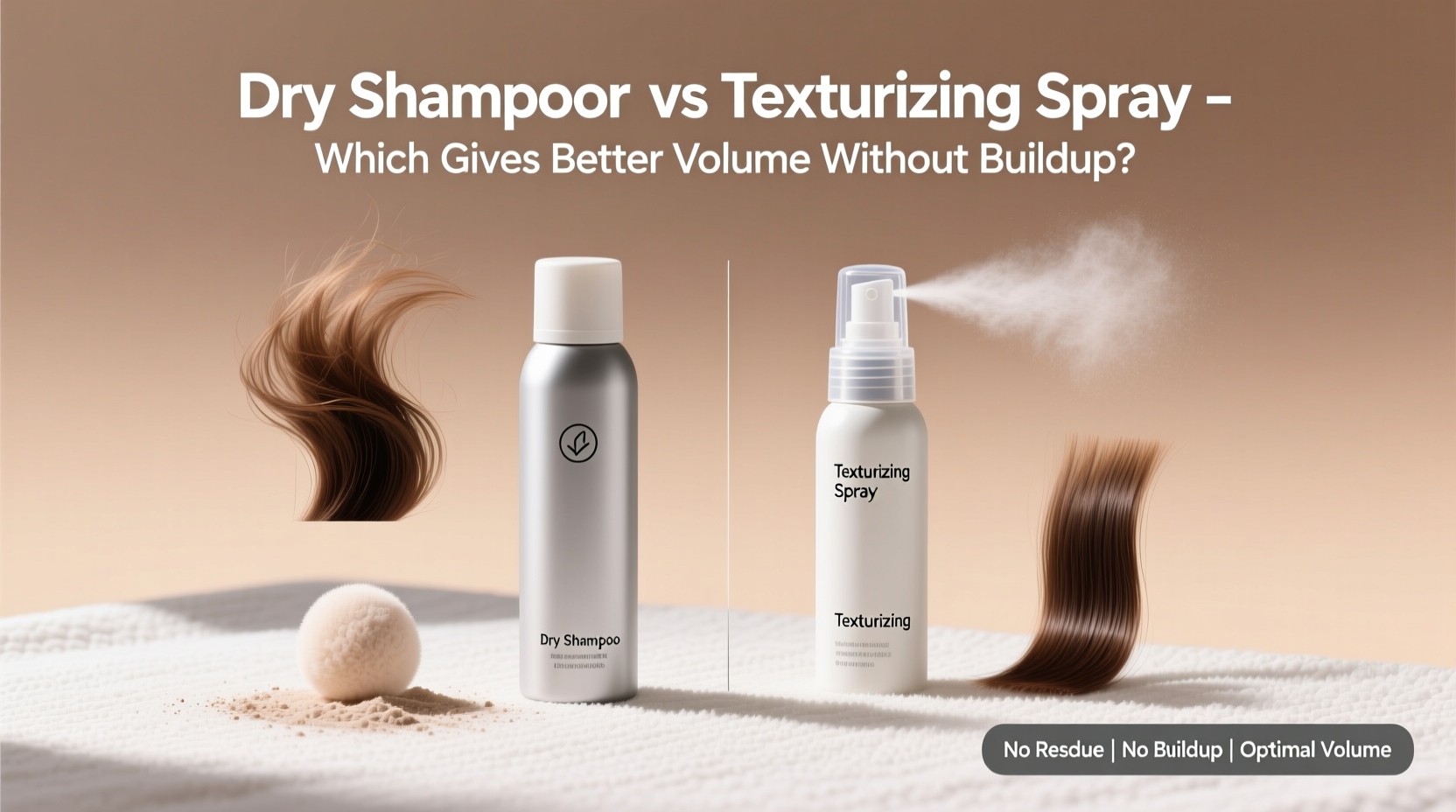
Dry shampoo was originally designed to extend time between washes by absorbing excess oil at the scalp. Most formulas contain starch-based powders (like rice, corn, or oat), alcohol, and sometimes fragrance. When sprayed at the roots and massaged in, these ingredients bind to sebum, giving hair a cleaner appearance and added grip.
The volume boost from dry shampoo is largely a side effect of this oil absorption. As grease is removed, hair stands up straighter and feels lighter. However, this benefit comes with trade-offs. Starch particles can accumulate on the scalp, especially if not fully brushed out or if used daily. Over time, this leads to product buildup that may dull hair, irritate the scalp, or even contribute to follicle congestion.
Aerosol versions often contain propellants and higher concentrations of alcohol, which can be drying. Non-aerosol sprays or powders may offer more control but require precise application to avoid clumping. While effective for oily scalps, dry shampoos aren't formulated to enhance texture along the shaft—they target the roots only.
Texturizing Spray: Volume Through Grip and Grain
Texturizing sprays take a different approach. Instead of absorbing oil, they deposit lightweight polymers, sea salt, or clay to create friction between strands. This \"grittiness\" allows hair to hold shape and appear fuller, especially in fine or slippery textures. Unlike dry shampoo, texturizing sprays are applied mid-length to ends, though some root-focused versions exist.
The volume here is structural—not just optical. By adding texture, these sprays help hair interlock, preventing flatness caused by smooth cuticles lying too close together. Because they don’t rely on oil-absorbing powders, they’re less likely to cause scalp buildup when used correctly. However, salt-based formulas can be dehydrating, particularly for curly or color-treated hair, and may leave a slight crunch if over-applied.
Modern texturizing sprays often include conditioning agents like panthenol or hydrolyzed proteins to offset dryness. These innovations make them suitable for daily use, provided you rinse thoroughly during shampooing to prevent polymer accumulation on the hair shaft.
“Texturizing sprays build dimension where dry shampoos only clean. For lasting volume without scalp stress, I recommend layering both—but always clarify weekly.” — Lena Torres, Celebrity Stylist & Trichology Consultant
Head-to-Head Comparison: Key Differences
| Feature | Dry Shampoo | Texturizing Spray |
|---|---|---|
| Primary Function | Oil absorption at scalp | Add texture and grip to hair |
| Main Ingredients | Starches, alcohol, propellants | Salt, clays, polymers, conditioning agents |
| Application Area | Roots only | Mid-lengths to ends (some root-safe) |
| Volume Mechanism | Reduces greasiness for lift | Creates friction for fullness |
| Buildup Risk | High (especially on scalp) | Low to moderate (on hair shaft) |
| Drying Effect | Yes, especially with alcohol | Yes, if salt-heavy; balanced in newer formulas |
| Best For | Oily scalps, extending wash days | Flat hair, beachy waves, fine textures |
Real-World Example: A Week of Styling Without Buildup
Consider Sarah, a 32-year-old office worker with fine, straight hair that flattens by noon. She previously relied solely on dry shampoo every other day, leading to flaky scalp patches and lackluster volume despite frequent use. After consulting a trichologist, she adjusted her routine:
- Day 1: Washed hair with a clarifying shampoo, then applied a light texturizing spray to damp hair before blow-drying for natural lift.
- Day 2: Used dry shampoo only at the crown after work, focusing on oily areas and brushing thoroughly.
- Day 3: Sprayed texturizing mist at mid-lengths to revive second-day waves, avoiding the scalp entirely.
- Day 4: Repeated dry shampoo sparingly, followed by a scalp massage with a boar bristle brush.
- Day 5: Clarified with a sulfate-free chelating shampoo to remove accumulated residue.
By rotating products and targeting application zones, Sarah maintained volume all week without irritation or heaviness. Her hair responded better to styling, and she reduced dry shampoo use by 60%—a move that significantly decreased residue buildup.
Smart Usage Strategies to Avoid Residue
The real issue isn’t choosing one product over the other—it’s how they’re used. Misapplication and overuse are the primary causes of buildup, not the products themselves. Here’s how to get volume without the downside:
- Limit frequency: Use dry shampoo no more than every other day. Daily use overwhelms the scalp’s natural balance.
- Target precisely: Spray dry shampoo only where oil appears—typically the crown and part line—not all over the head.
- Brush thoroughly: Always massage roots after application to distribute powder and prevent clumping.
- Layer wisely: Apply texturizing spray on second- or third-day hair to enhance existing volume, not as a replacement for cleansing.
- Clarify weekly: Use a clarifying shampoo once a week to dissolve mineral deposits, starches, and polymers.
- Choose clean formulas: Opt for alcohol-free dry shampoos with natural starches and texturizing sprays with water-soluble polymers.
Expert Insight: What Dermatologists Say About Scalp Health
Dr. Amara Lin, a board-certified dermatologist specializing in hair disorders, emphasizes that long-term scalp health depends on minimizing occlusive residue. “The scalp is skin,” she explains. “When you layer powders and silicones without proper removal, you risk disrupting the microbiome, clogging follicles, and triggering inflammation—conditions that can lead to thinning over time.”
She recommends dry shampoos only as a temporary solution and warns against relying on them beyond two consecutive days. “Texturizing sprays are generally safer for frequent use, especially if they’re free of heavy waxes. But even those need to be washed out regularly.”
“The best volume comes from healthy hair, not hidden buildup. If your hair feels stiff or looks dull, it’s time to reset with a deep cleanse.” — Dr. Amara Lin, MD, FAAD
Frequently Asked Questions
Can I use both dry shampoo and texturizing spray on the same day?
Yes, but apply them strategically. Use dry shampoo first at the roots to absorb oil, then texturizing spray from mid-lengths down to add body. Avoid overlapping applications to prevent ingredient clash and excess residue.
Which product is better for fine hair?
Both can work, but texturizing spray often provides more consistent volume without weighing hair down. Fine hair tends to get greasy faster, so dry shampoo helps with freshness—but overuse can make hair look dirty. A lightweight, aerosol-free dry shampoo paired with a sea-salt-free texturizer is ideal.
How do I know if I have product buildup?
Signs include dullness, difficulty styling, flaking, or a waxy feel even after washing. To test, run a white tissue over your scalp—if it picks up gray or white specks, you likely have dry shampoo residue. For hair shaft buildup, strands may feel stiff or fail to absorb moisture.
Action Plan: Your Weekly Routine for Buildup-Free Volume
To achieve maximum lift with minimal residue, follow this step-by-step guide:
- Day 1 – Cleanse & Prep: Wash hair with a clarifying or chelating shampoo. Apply a heat protectant and blow-dry with a round brush for base volume.
- Day 2 – Refresh Roots: Use dry shampoo only at the part and crown. Massage in with fingertips or a brush.
- Day 3 – Enhance Texture: Spritz a texturizing spray 6–8 inches from mid-lengths. Scrunch or tousle for movement.
- Day 4 – Combine Carefully: If needed, reapply dry shampoo sparingly. Follow with a light mist of texturizing spray for finish.
- Day 5 – Assess & Reset: Check for stiffness or flakiness. If buildup is suspected, wash with a sulfate-free clarifier.
- Weekly Maintenance: Once a week, use a scalp scrub or detox mask to exfoliate and unclog follicles.
- ☐ Use dry shampoo max 3x/week
- ☐ Brush thoroughly after each use
- ☐ Apply texturizing spray away from scalp
- ☐ Clarify hair weekly
- ☐ Rotate between aerosol and pump sprays
- ☐ Monitor scalp for irritation
Final Verdict: Which Gives Better Volume Without Buildup?
If the goal is pure volume without residue, **texturizing spray wins**—but with caveats. It doesn’t replace the oil-control function of dry shampoo, nor should it be used on visibly greasy hair. However, for creating lasting, touchable fullness without clogging the scalp, texturizing sprays are inherently less prone to buildup because they don’t rely on absorbent powders.
Dry shampoo excels at refreshing hair and lifting roots by removing oil, but its residue risk is high with frequent use. The key is moderation and proper removal. When used correctly—sparingly and followed by thorough brushing and weekly cleansing—it remains a valuable tool.
The smartest approach is integration: use dry shampoo to manage oil and extend wash days, then layer in texturizing spray to amplify volume and texture. This combination leverages the strengths of both while minimizing their weaknesses.




 浙公网安备
33010002000092号
浙公网安备
33010002000092号 浙B2-20120091-4
Comments
No comments yet. Why don't you start the discussion?