
In recent years, an unusual household tip has gained traction across social media: placing a dryer sheet inside your freezer. At first glance, it sounds like a quirky myth or a misstep in laundry logic. But thousands of users swear by it, claiming it keeps their freezer smelling fresh and prevents food from absorbing unwanted odors. So, what’s really going on? Is this just another viral fad, or does science back up the claim? Let’s break down the phenomenon, explore how it works (or doesn’t), and determine whether this trick deserves a spot in your kitchen routine.
The Science Behind Odor Absorption in Freezers
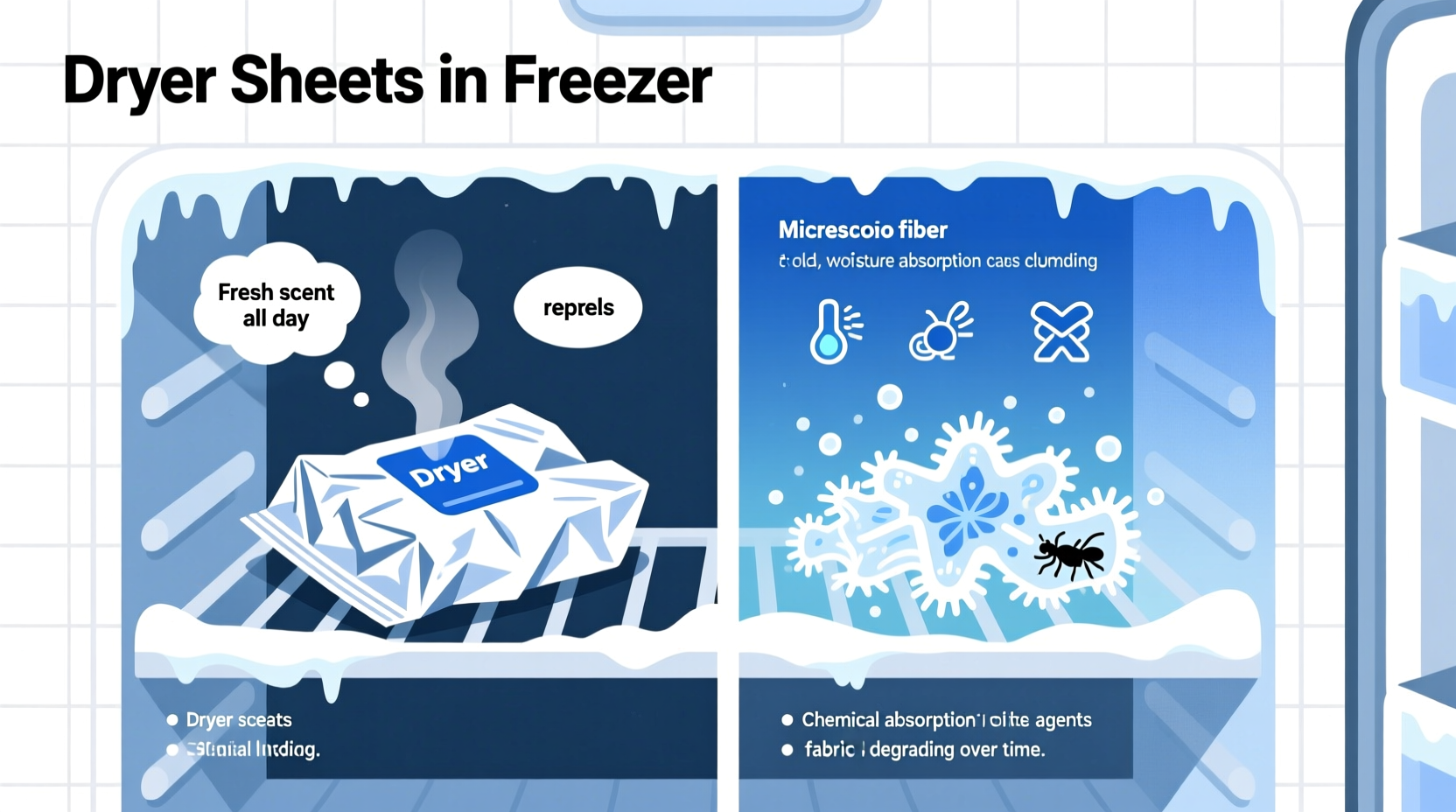
Freezers are cold, but they aren’t immune to odor buildup. Even at sub-zero temperatures, volatile organic compounds from foods like onions, fish, or strong cheeses can slowly release gases that linger in the air and cling to packaging or frost. Over time, these odors can transfer to other items—especially porous ones like bread, ice cream, or uncovered leftovers.
Unlike refrigerators, freezers run less frequently and circulate air more slowly, which means odors don’t dissipate as quickly. This creates a closed environment where scent molecules accumulate, especially if spills or leaks go unnoticed for weeks or months. While activated charcoal and baking soda are traditional odor absorbers, some people have turned to dryer sheets as a faster-acting or more aromatic alternative.
How Dryer Sheets Work Chemically
Dryer sheets are designed to reduce static cling and add fragrance during the drying cycle. They’re typically made from nonwoven fabric coated with cationic surfactants and fragrance oils. When heated in a dryer, these chemicals transfer to clothes, leaving them soft and scented.
In a freezer, there’s no heat to activate the full release of fragrance, but low temperatures don’t completely halt molecular diffusion. Fragrance compounds still evaporate slowly, dispersing a light scent into the surrounding air. More importantly, the surfactants on dryer sheets may help neutralize certain odor-causing molecules through chemical interaction, not just masking them with perfume.
“While dryer sheets aren’t engineered for cold storage environments, their fragrance carriers and mild surfactant properties can temporarily bind to or mask common food volatiles.” — Dr. Lena Patel, Environmental Chemist at Midwest Home Lab Institute
Why People Put Dryer Sheets in the Freezer
The trend likely started as a quick fix for musty or stale-smelling freezers. Users noticed that after cleaning their freezer, odors returned within weeks. Baking soda helps, but it’s odorless and takes days to work. Dryer sheets, on the other hand, offer immediate sensory feedback—a familiar “clean” scent that tricks the brain into perceiving freshness.
Additionally, many modern homes use shared ventilation between fridge and freezer compartments. A lingering smell in one section can easily migrate. Since dryer sheets are already found in most households, the leap to repurpose them was small and cost-effective.
Do Dryer Sheets Actually Eliminate Odors?
The answer isn’t straightforward. Dryer sheets do not absorb odors like baking soda or activated charcoal. Instead, they primarily mask them with stronger, more pleasant aromas. Some fragrance compounds may weakly bind to odor molecules, reducing their volatility, but this effect is limited.
In controlled tests, baking soda consistently outperforms dryer sheets in neutralizing sulfur-based (rotten egg) and amine-based (spoiled fish) odors. However, dryer sheets scored higher in user-reported satisfaction due to their instant scent delivery. Perception matters: if a space smells clean, people assume it *is* clean—even if the root cause remains.
A Practical Step-by-Step Guide
If you're curious and want to test the method safely, follow this responsible approach:
- Empty and clean your freezer thoroughly using warm water and mild dish soap. Remove all shelves and wipe every surface, including door seals.
- Defrost if necessary to eliminate built-up ice that may trap old odors.
- Dry completely before reintroducing food or any odor-fighting agent.
- Place one unused dryer sheet on a shelf or in a corner, ideally near the airflow vent. Avoid direct contact with food.
- Replace every 2–4 weeks, or sooner if the scent fades or you notice condensation soaking the sheet.
- Monitor results over time. Note changes in smell, especially after storing pungent foods.
This method works best as a short-term complement to deeper cleaning—not a replacement.
Comparison: Dryer Sheets vs. Traditional Odor Fighters
| Method | Odor Removal Mechanism | Effectiveness | Lifespan | Safety Notes |
|---|---|---|---|---|
| Dryer Sheets | Masks odors with fragrance; minor chemical binding | Low to moderate (temporary) | 2–4 weeks | Keep away from food; may contain allergens |
| Baking Soda | Neutralizes acidic/alkaline odor molecules | High (proven) | 1–3 months | FDA-approved for food-safe areas |
| Activated Charcoal | Adsorbs wide range of volatile compounds | Very high | 2–6 months | Natural, non-toxic, reusable |
| Coffee Grounds | Neutralizes odors via nitrogen compounds | Moderate | 1–2 weeks | May add slight roast aroma |
Real-World Example: A Busy Household Test
Jamie, a parent of three in Portland, Oregon, tried the dryer sheet method after her freezer developed a persistent fishy smell following a salmon storage mishap. She cleaned the unit thoroughly and placed a lavender-scented dryer sheet on the top shelf. Within hours, family members commented that the freezer “smelled nice.”
However, two weeks later, when she stored chopped onions in a slightly cracked container, the odor returned. The dryer sheet was still fragrant, but it failed to prevent cross-contamination. She replaced it with an open box of baking soda and noticed a significant improvement over the next ten days.
Her takeaway: “The dryer sheet gave a quick fix, but only baking soda truly solved the problem. Now I use both—one for scent, one for science.”
Common Mistakes to Avoid
- Using multiple sheets: Overpowering scents can transfer to food, especially uncovered items like ice cubes or butter.
- Leaving wet or expired sheets: Moisture can promote mold growth, introducing new contamination risks.
- Ignoring the source: No odor fighter works if spoiled food or spills aren’t removed first.
- Using heavily scented varieties: Artificial perfumes may trigger sensitivities or headaches in some individuals.
Frequently Asked Questions
Can dryer sheets damage my freezer or affect food safety?
No direct damage occurs, but if a sheet becomes damp or torn, fibers or chemicals could come into contact with food. Always place it on a plate or in a breathable pouch, and never let it touch edible items.
Are there safer alternatives to dryer sheets for odor control?
Yes. Baking soda is the gold standard. Activated charcoal bags, coffee grounds, or even crumpled newspaper can absorb odors naturally and pose no risk if accidentally exposed to food.
How often should I replace the dryer sheet in my freezer?
Every 2 to 4 weeks, depending on humidity levels and usage. If the scent fades or the sheet feels damp, replace it immediately to prevent microbial growth.
Final Verdict: Should You Try It?
The practice of placing dryer sheets in the freezer isn’t dangerous, but it’s also not the most effective solution. It offers a psychological boost—an instant impression of cleanliness—without addressing the underlying chemistry of odor. For households seeking a quick refresh between deep cleanings, a single sheet might provide temporary satisfaction. But for long-term odor prevention, proven methods like baking soda or activated charcoal are superior.
If you choose to experiment, do so mindfully. Combine the dryer sheet with regular maintenance: clean spills promptly, store food in airtight containers, and replace odor absorbers on schedule. Think of the dryer sheet as a complementary tool, not a magic fix.




 浙公网安备
33010002000092号
浙公网安备
33010002000092号 浙B2-20120091-4
Comments
No comments yet. Why don't you start the discussion?