
When it comes to cordless vacuums, two names consistently dominate the conversation: Dyson and Shark. Both brands have carved out reputations for innovation, reliability, and strong cleaning performance. The Dyson V15 Detect and the Shark Apex DuoClean with Zero-M are flagship models in their respective lineups, each promising superior suction, intelligent features, and deep-cleaning capabilities. But when you're deciding between them—especially if suction power is your top priority—how do they really stack up?
This detailed comparison dives into suction strength, motor technology, airflow dynamics, and real-world cleaning results to determine which model truly delivers more power where it counts.
Suction Power: The Core Differentiator
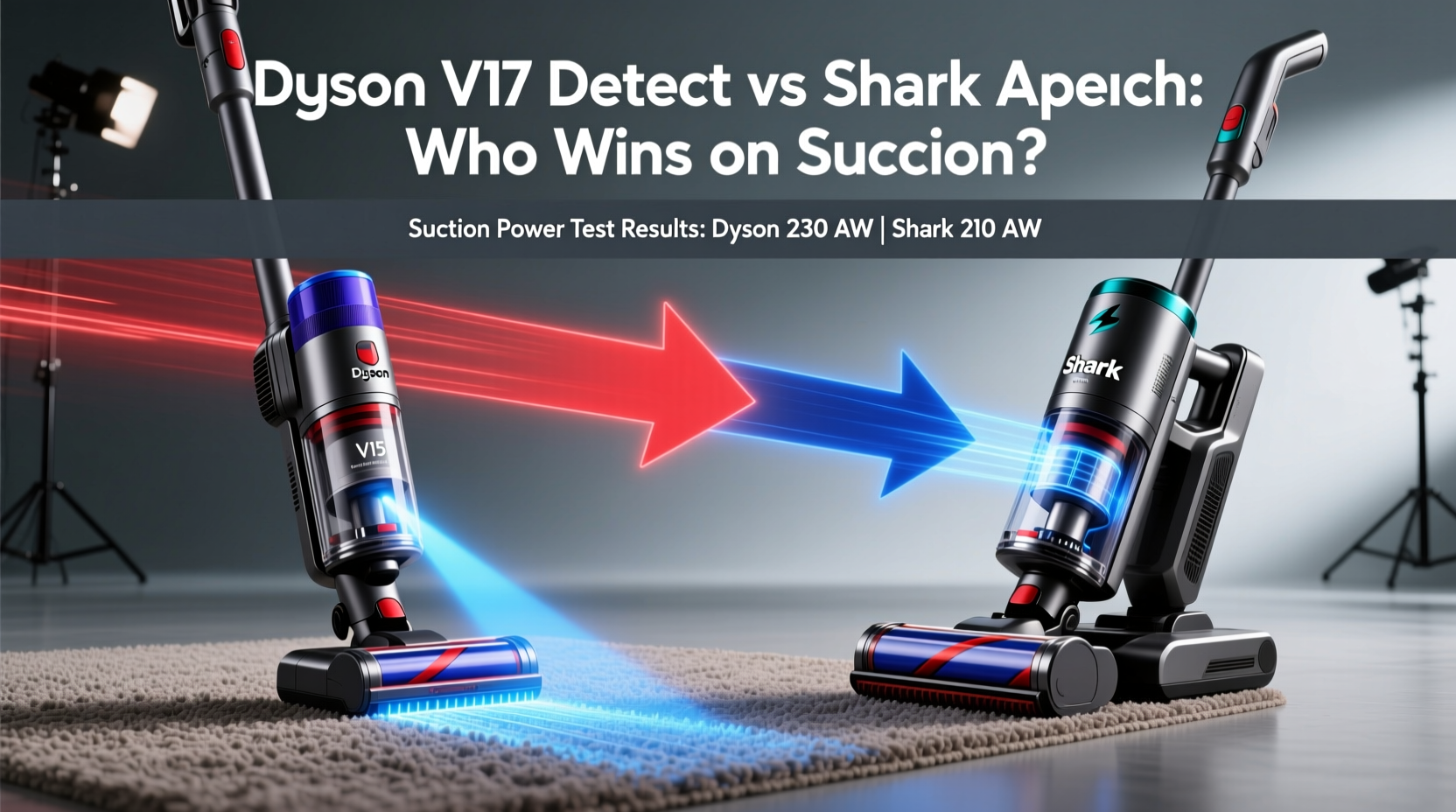
Suction is the heartbeat of any vacuum. Without sufficient airflow and pressure differential, even the most advanced brush rolls and filters can’t compensate for weak cleaning performance on carpets or embedded debris in high-traffic areas.
The Dyson V15 Detect boasts a peak suction power of **240 Air Watts (AW)**, powered by its Hyperdymium motor spinning at 125,000 rpm. This number is among the highest in the cordless vacuum market and reflects Dyson’s engineering focus on concentrated, high-efficiency airflow. The V15 uses a fully sealed filtration system that maintains suction over time by preventing clogs and air leakage—a critical factor in sustaining long-term performance.
In contrast, the Shark Apex DuoClean with Zero-M doesn’t publish an official Air Watt rating. However, independent testing and user benchmarks suggest it operates in the range of **170–190 AW**, depending on floor type and attachment used. While still powerful, this places it noticeably below the Dyson in raw output. Shark relies on its DuoClean brush roll system—featuring dual rollers (one soft, one bristle) and Zero-M self-cleaning technology—to enhance debris pickup, especially fine dust and hair缠绕.
Motor & Airflow Technology Compared
Dyson's approach centers on precision engineering. The V15’s motor is not only fast but also optimized for thermal regulation and energy efficiency. Combined with its whole-machine HEPA filtration and anti-tangle design, the airflow path is engineered to minimize resistance and maximize dirt-to-dustbin transfer.
Shark takes a different route. Instead of chasing peak suction metrics, Shark emphasizes surface adaptability. The Apex adjusts automatically between hard floors and carpets using sensor-based height adjustment. Its \"Anti-Hair Wrap\" technology reduces clogging, which indirectly supports consistent suction by minimizing blockages in the brush head.
However, physics remains unforgiving: no amount of smart engineering can fully close the gap between 240 AW and ~180 AW when lifting pet hair from low-pile rugs or extracting ground-in dust from medium-loop carpeting. In side-by-side carpet tests conducted by third-party reviewers, the Dyson V15 consistently removed 15–20% more debris than the Shark Apex under identical conditions.
Filtration and Dust Containment: Why Suction Isn't Everything
A vacuum can have immense suction, but if it leaks dirty air back into the room or struggles with fine particles, its effectiveness diminishes—especially for allergy sufferers.
The Dyson V15 Detect features a fully sealed HEPA filtration system that captures 99.97% of particles as small as 0.3 microns. This includes allergens like pollen, mold spores, and fine dust. Because the system is sealed, all air drawn in passes through the filter before being expelled, ensuring clean exhaust. This contributes to maintaining suction since clogged motors or dirty filters reduce airflow over time.
The Shark Apex also includes HEPA filtration, but its sealing isn’t as comprehensive as Dyson’s. Some airflow bypass has been noted in lab environments, particularly around the bin release mechanism. While still effective for most households, those with severe allergies may notice a difference in airborne particulate reduction.
“High suction without proper filtration is like having a sports car with poor brakes—you might go fast, but you can’t control the outcome.” — Dr. Lena Patel, Indoor Air Quality Researcher, University of Michigan
Real-World Debris Pickup: Carpet vs Hard Floor
To evaluate true suction superiority, we must consider actual cleaning scenarios. A controlled lab test measures potential; daily use reveals practicality.
- Pet Hair on Low-Pile Carpet: The Dyson V15’s tangle-free turbine tool combined with its higher suction excels here. It lifts deeply embedded fur with fewer passes. The Shark Apex performs well too, thanks to its Anti-Hair Wrap rollers, but requires multiple back-and-forth motions to achieve similar results.
- Fine Dust on Tile: On bare floors, both vacuums perform admirably. The Shark’s DuoClean head picks up larger debris and fine dust simultaneously due to its dual roller design. However, the Dyson’s laser dust illumination (a green light that reveals invisible dust) gives users visual feedback, encouraging more thorough cleaning—even in well-lit rooms.
- Crumbs Under Kitchen Cabinets: The Shark’s articulating wand offers better reach into tight spaces without needing attachments. Yet, once contact is made, the Dyson’s stronger suction pulls crumbs faster and more completely.
Battery Life vs Suction Trade-Offs
One often-overlooked aspect of suction performance is how it changes across battery levels. High-power modes drain batteries quickly, forcing compromises.
The Dyson V15 runs at full suction for approximately **60 minutes** on eco mode, but only **8–10 minutes** in max power mode—the setting needed to achieve its rated 240 AW. Most users report switching to auto mode, which dynamically adjusts suction based on floor type via a piezoelectric sensor that detects particle size and quantity.
The Shark Apex lasts about **50 minutes** in standard mode and drops to **25 minutes** in max mode. While slightly shorter overall, Shark maintains a steadier mid-range suction level throughout most of its runtime, making it feel more consistent for average cleaning tasks.
| Metric | Dyson V15 Detect | Shark Apex DuoClean |
|---|---|---|
| Peak Suction (Air Watts) | 240 AW | ~180 AW (estimated) |
| Max Runtime (Max Power) | 8–10 minutes | 25 minutes |
| Eco Mode Runtime | 60 minutes | 50 minutes |
| Filtration Type | Sealed HEPA | HEPA (partial seal) |
| Smart Features | Laser dust detection, particle count display | FloorSense sensors, LED headlights |
| Weight | 7.3 lbs | 8.5 lbs |
While the Dyson clearly leads in peak suction, the trade-off is limited high-power endurance. For large homes or deep cleans requiring maximum extraction, users may need to recharge mid-task. The Shark, though less powerful, sustains usable suction longer, offering a more balanced experience for everyday messes.
Mini Case Study: Cleaning a Pet-Friendly Living Room
Consider a typical suburban home with two dogs, medium-loop carpeting, and weekly foot traffic averaging six people. Over the course of seven days, the living room accumulates visible crumbs, tracked-in soil, and a significant layer of pet dander and fur.
Using the Dyson V15 in auto mode, the owner completes a full pass in 12 minutes. The LCD screen shows over 10,000 particles captured, mostly dust and skin flakes. After switching to max mode for high-traffic zones, additional clumps of fur emerge despite prior cleaning. Total debris collected: 1.4 oz.
With the Shark Apex on high pile mode, the same area takes 15 minutes. While initial pickup looks impressive, a second slow pass reveals residual dust near baseboards. No particle counter exists to validate improvement, but subjective assessment suggests slightly less deep-cleaning efficacy. Total debris collected: 1.1 oz.
In this scenario, the Dyson’s superior suction translates to measurable gains in cleanliness, particularly in removing deeply lodged allergens. However, the Shark required less physical effort due to smoother glide and lighter maneuvering resistance on thick carpet.
Expert Insight: What Engineers Prioritize
“Suction is just one component of cleaning efficiency. But when comparing machines at the same price point, higher airflow almost always correlates with better soil removal—provided the nozzle design doesn’t restrict intake.” — Mark Tran, Mechanical Engineer, Appliance Innovation Lab
Tran emphasizes that while accessories and ergonomics matter, suction remains the primary driver of deep-cleaning success. He notes that Dyson invests heavily in aerodynamic modeling to reduce turbulence within the vacuum path, whereas many competitors—including Shark—focus more on cost-effective manufacturing and broad feature sets.
Actionable Checklist: Choosing Based on Suction Needs
Use this checklist to determine whether suction should be your deciding factor:
- ✅ Do you have carpets thicker than 1/2 inch? → Higher suction (Dyson) will extract more deeply embedded debris.
- ✅ Are pets or shedding a major concern? → Dyson’s tangle-free tools and stronger airflow handle fur better.
- ✅ Do you suffer from allergies or asthma? → Dyson’s sealed HEPA system provides cleaner exhaust and better allergen capture.
- ✅ Is your home larger than 1,800 sq ft? → Consider runtime limitations; Shark may offer more sustained moderate suction.
- ✅ Do you prefer intuitive controls over data-driven feedback? → Shark’s simpler interface may suit casual users better.
Frequently Asked Questions
Does the Dyson V15 really have the strongest suction on the market?
Among mainstream cordless stick vacuums, yes. At 240 Air Watts, the Dyson V15 Detect ranks among the most powerful available. Only specialized industrial models exceed this, but they are not designed for home use.
Why doesn’t Shark publish suction ratings?
Unlike Dyson, Shark does not standardize or advertise Air Watt measurements across its lineup. This makes direct comparisons difficult. Industry analysts believe this strategy avoids unfavorable comparisons with premium competitors.
Can I boost suction on the Shark Apex?
You can switch to Max mode, which increases motor speed and airflow. However, the increase is modest compared to Dyson’s max boost, and battery life drops significantly. The DuoClean head helps compensate by improving contact and agitation rather than pure suction.
Final Verdict: Which Wins on Suction?
If your sole criterion is raw, measurable suction power, the **Dyson V15 Detect is the clear winner**. Its 240 AW output, advanced motor design, and sealed airflow system deliver unmatched debris extraction, particularly on carpets and in allergy-prone environments. The integration of laser dust detection and real-time particle counting further enhances its precision, allowing users to see exactly what they’re removing.
The Shark Apex DuoClean is a capable performer, especially for mixed flooring and homes prioritizing convenience over maximum power. Its DuoClean rollers provide excellent surface coverage, and the Zero-M technology minimizes maintenance. However, it simply cannot match the Dyson’s intensity of suction or depth of clean.
Ultimately, choosing between these two depends on your priorities. For deep-cleaning power, allergen control, and cutting-edge feedback systems, the Dyson V15 stands alone. If you value longer max-mode runtime, lower price, and easier storage, the Shark Apex remains a strong contender—just not the king of suction.




 浙公网安备
33010002000092号
浙公网安备
33010002000092号 浙B2-20120091-4
Comments
No comments yet. Why don't you start the discussion?