
Pairing a sweater with a suit is no longer reserved for casual Fridays or off-duty moments. Today, it’s a hallmark of modern menswear—sophisticated, layered, and effortlessly stylish. But when it comes to choosing between a turtleneck and a crewneck beneath a tailored jacket, the decision isn’t just about comfort or temperature. It’s about silhouette, formality, personal style, and context. The right choice can elevate your outfit; the wrong one can undermine an otherwise sharp ensemble.
This guide breaks down the nuances between turtlenecks and crewnecks when worn under suits, offering actionable insights on fabric, fit, color coordination, and situational appropriateness. Whether you're dressing for a boardroom meeting, a winter wedding, or a creative industry event, understanding these distinctions ensures your layered look remains polished and intentional.
The Turtleneck Advantage: Elegance and Structure
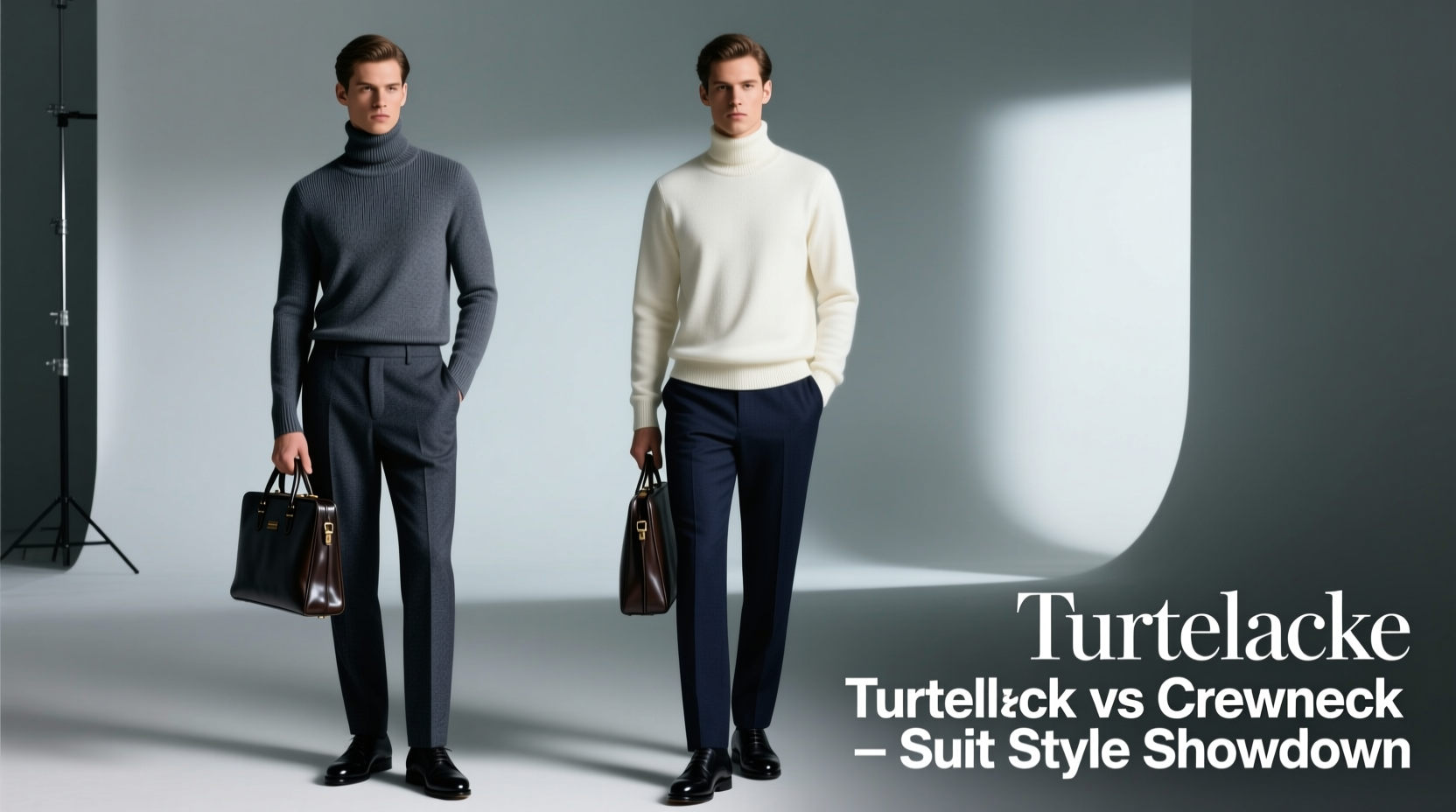
The turtleneck has long been associated with intellectualism, minimalism, and high fashion. Think Steve Jobs, James Bond in cold climates, or architects at a gallery opening. Its defining feature—the high, close-fitting collar—creates a clean neckline that eliminates the need for a tie while maintaining a formal appearance.
When paired with a suit, a well-fitted turtleneck offers several advantages:
- Seamless transition from neck to jacket: The tall ribbed collar fills the space between jawline and lapel, creating a continuous vertical line that elongates the torso.
- No visible shirt collar: Unlike a dress shirt, which requires precise collar alignment with the suit, a turtleneck sits invisibly beneath the jacket, reducing visual clutter.
- Modern sophistication: Especially in black, charcoal, or deep navy, a fine-gauge merino turtleneck under a slim-fit suit reads as contemporary and confident.
When to Choose a Turtleneck
The turtleneck excels in settings where understated elegance matters more than traditional formality. It works best:
- In cooler months when layering is practical.
- With single-breasted, notch or peak-lapel suits in wool or flannel.
- For evening events, creative workplaces, or fashion-forward environments.
- When wearing a topcoat or overcoat—turtlenecks integrate seamlessly without collar competition.
“The turtleneck under a suit is the ultimate expression of quiet luxury. It says you understand proportion, texture, and restraint.” — Marcus Reed, Menswear Stylist & Creative Director
Crewneck Appeal: Casual Versatility and Comfort
The crewneck sweater, with its round, modest neckline, is inherently more relaxed. It originated as sportswear and evolved into a staple of smart-casual wardrobes. While less structured than a turtleneck, it offers greater versatility across contexts.
Worn under a suit, a crewneck introduces a subtle break from tradition. It signals approachability and ease while still maintaining a degree of polish—provided the fit and fabric are carefully selected.
Key benefits include:
- Comfort and breathability: Lower necklines allow for easier movement and reduce heat buildup.
- Layering flexibility: You can wear a dress shirt underneath if needed, though this risks bulkiness.
- Casual integration: Ideal for hybrid work environments or weekend meetings where full formality isn't expected.
When to Choose a Crewneck
A crewneck shines in transitional weather and informal business settings. Consider it when:
- You're in a tech startup, design studio, or creative agency.
- The suit is unstructured or made from cotton, linen, or tropical wool.
- You want a softer, more accessible aesthetic—think investor pitch with a human touch.
- You’re pairing with sneakers or loafers instead of oxfords.
Comparative Breakdown: Turtleneck vs Crewneck
| Feature | Turtleneck | Crewneck |
|---|---|---|
| Formality Level | High (near formal) | Medium (smart-casual) |
| Neckline Visibility | Fully covered by collar | Visible above jacket |
| Best Suit Types | Slim-fit, wool, peak lapel | Unstructured, cotton, notch lapel |
| Seasonal Suitability | Fall, Winter | Spring, Fall |
| Fit Sensitivity | Very sensitive—must be snug but not tight | Moderate—slightly looser acceptable |
| Style Vibe | Minimalist, modern, authoritative | Approachable, relaxed, youthful |
| Shoe Pairings | Oxfords, Chelsea boots | Loafers, chukkas, clean sneakers |
Step-by-Step Guide: How to Wear Either Sweater Under a Suit
Getting the combination right involves more than just throwing on a knit and a blazer. Follow this sequence for a seamless result:
- Start with the right suit fit: Ensure your jacket has enough room in the shoulders and chest to accommodate a layer without pulling or gapping at the buttons.
- Select a slim-knit sweater: Choose fine-gauge wool, cashmere, or a wool-silk blend. Avoid thick cable knits—they add unnecessary volume.
- Try the turtleneck test: If wearing a turtleneck, fasten the top button of your jacket. The collar should sit neatly beneath the lapel without pushing up or wrinkling.
- Check sleeve length: Your sweater sleeves should extend just past the wrist bone but remain fully visible under the suit jacket’s sleeve. This prevents unsightly gaps when arms are raised.
- Coordinate colors thoughtfully: Stick to tonal combinations—navy suit with gray turtleneck, charcoal with black, beige with cream. Contrast only works with deliberate intention (e.g., burgundy crewneck under gray).
- Finish with appropriate footwear: Match the formality level of your sweater-suit combo with shoes that complement rather than clash.
Real-World Example: Two Professionals, Two Choices
Consider two colleagues attending the same client dinner—one opts for a turtleneck, the other for a crewneck.
Case Study: Daniel, Financial Advisor
Daniel wears a midnight-blue wool suit with a black merino turtleneck and black oxfords. His look is sleek, commanding, and seasonally appropriate. Clients perceive him as detail-oriented and serious—perfect for discussing long-term investments. The absence of a tie doesn’t read as casual; instead, it feels like a deliberate nod to modern tailoring.
Case Study: Maya, UX Designer
Maya chooses a light-gray cotton-blend suit with a heather-gray crewneck and white leather sneakers. She’s presenting a new app interface. Her outfit balances professionalism with creativity. The visible crewneck edge adds softness, making her appear collaborative and open—a strategic advantage in team-based industries.
Both are correct for their roles. Neither looks sloppy. The difference lies in intent and environment.
Expert Checklist: Sweater-and-Suit Success
Before leaving the house, run through this checklist:
- ✅ Sweater is wrinkle-free and properly fitted (no pulling or excess fabric)
- ✅ Neckline does not peek awkwardly above jacket collar (especially critical for crewnecks)
- ✅ Fabric weight complements the suit (lighter knits for summer, heavier for winter)
- ✅ Colors harmonize—avoid clashing hues or overly busy patterns
- ✅ Jacket buttons comfortably without strain
- ✅ Overall silhouette is streamlined, not bulky
- ✅ Shoes and accessories match the tone set by the sweater choice
Frequently Asked Questions
Can I wear a crewneck with a tie?
Technically yes, but it’s rarely advisable. Layering a tie over a crewneck creates excessive bulk and disrupts proportion. If you need a tie, wear a dress shirt. The crewneck is meant to replace—not accompany—the shirt in most cases.
Is a black turtleneck under a suit cliché?
It can be, especially if styled without attention to fit or fabric. However, when executed well—using a fine-knit, perfectly tailored turtleneck under a well-cut suit—it remains a timeless look. Avoid the “tech CEO stereotype” by varying textures (e.g., brushed cashmere instead of shiny acrylic) and pairing with non-black suits like charcoal or navy.
What about V-necks?
V-neck sweaters can work under suits, but they introduce complexity. They expose more of the shirt (or skin), which may require a collared layer underneath. In conservative settings, this can appear incomplete. For most, sticking to turtlenecks or crewnecks offers cleaner results.
Final Thoughts: It’s About Context, Not Rules
There is no universal answer to whether a turtleneck or crewneck “looks better” with a suit. The superior choice depends entirely on who you are, where you’re going, and what message you want to convey. The turtleneck commands authority and refinement; the crewneck invites connection and ease.
Ultimately, both options reflect a growing shift in menswear: away from rigid dress codes and toward intelligent layering. Mastery lies not in following trends, but in understanding how each piece contributes to the whole.




 浙公网安备
33010002000092号
浙公网安备
33010002000092号 浙B2-20120091-4
Comments
No comments yet. Why don't you start the discussion?