
Royal icing is the gold standard for decorating sugar cookies. It dries to a hard, glossy finish, holds intricate details beautifully, and can be easily colored and piped into stunning designs. While many recipes exist, few deliver consistent results across different climates and skill levels. This guide provides a time-tested, foolproof method that ensures your icing sets properly, flows just right, and tastes as good as it looks.
The key to great royal icing lies in balance: the right ratio of ingredients, proper mixing technique, and careful handling after application. Whether you're preparing for holidays, weddings, or weekend baking with kids, this recipe delivers professional-quality results without requiring specialty equipment.
The Perfect Royal Icing Formula
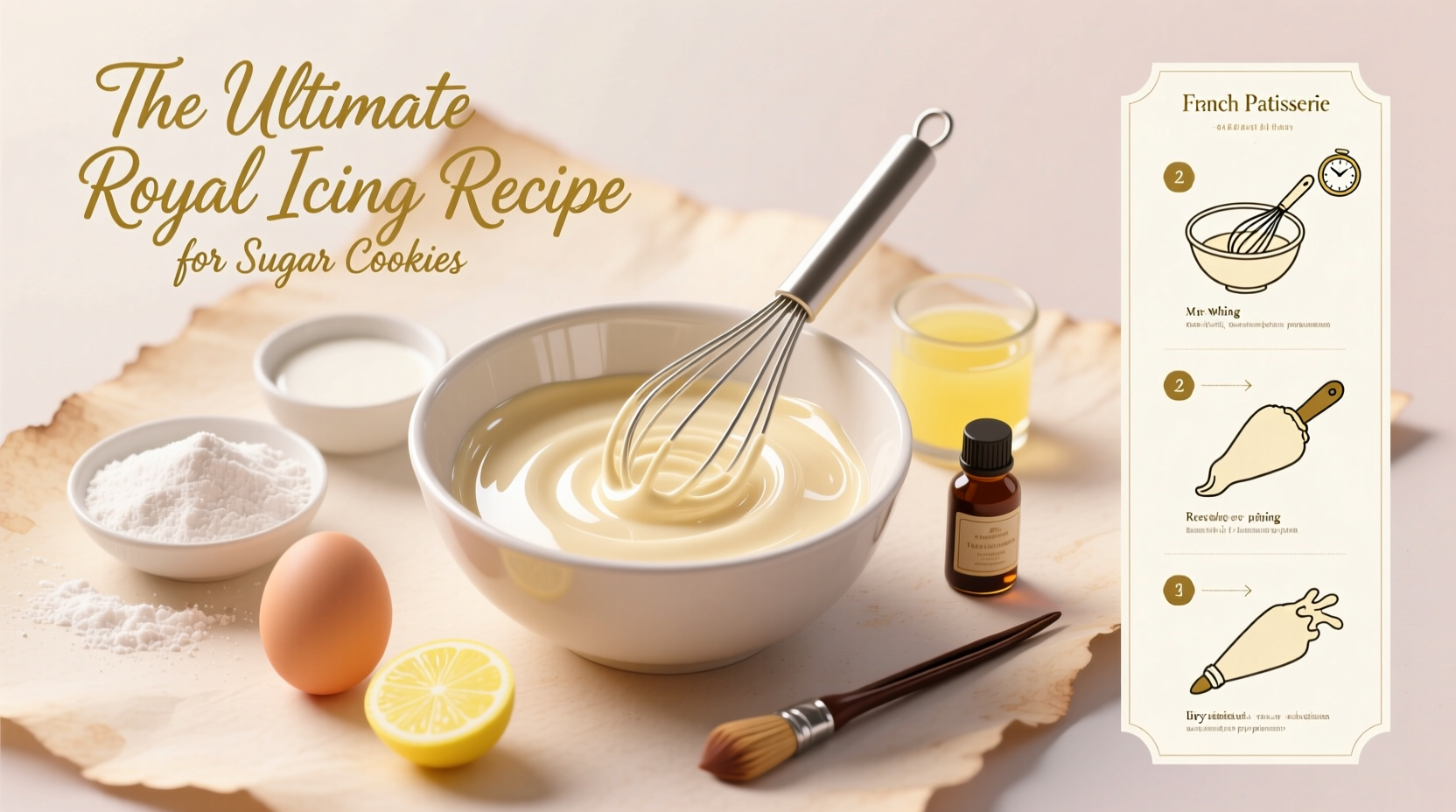
This version uses meringue powder instead of raw egg whites, making it safe, shelf-stable, and easy to work with. The result is a clean-tasting, smooth icing that pipes beautifully and dries within 4–6 hours under normal conditions.
Basic Royal Icing Recipe (Yields ~2 cups):
- 3 tablespoons meringue powder
- 4 cups (about 480g) powdered sugar, sifted
- 6–7 tablespoons warm water, divided
- 1/4 teaspoon cream of tartar (optional, stabilizes icing)
- Food coloring (gel preferred)
- In a large bowl, combine meringue powder and sifted powdered sugar.
- Add 5 tablespoons of warm water and mix on low speed using a stand mixer or hand mixer.
- Increase speed to medium-high and beat for 5–7 minutes until stiff peaks form and the mixture is glossy.
- If desired, add cream of tartar for extra stability, especially in humid environments.
- Check consistency: lift the beater — the peak should stand straight up without drooping.
- To thin for flooding, add water 1/4 teaspoon at a time until desired flow is achieved.
- Add gel food coloring gradually and mix thoroughly before adjusting further.
Understanding Consistency: The Key to Success
Royal icing isn't one-size-fits-all. Different techniques require different thicknesses. Mastering these variations gives you full control over your decorating.
| Consistency | Use Case | Test Method | Water Adjustment |
|---|---|---|---|
| Stiff | Piping outlines, 3D details, flowers | Peaks hold shape firmly when lifted | Minimal added water (5 tbsp) |
| Medium | Writing, fine lines, borders | Peak curls slightly at tip | Add 1/4 tsp water per cup |
| Flood | Filling cookie interiors smoothly | 10-second rule: trace a \"8\", disappears in 10 sec | Up to 1–2 additional tbsp total |
Adjusting consistency post-mixing is common. If too runny, blend in more sifted powdered sugar. If too thick, add water drop by drop. Never rush this step — precision here prevents smudging and uneven drying later.
Step-by-Step Decorating Process
Follow this sequence for clean, polished cookies every time:
- Outline: Use stiff or medium icing in a piping bag fitted with a #2 or #3 round tip. Trace the cookie’s edge to create a dam.
- Wait 1–2 minutes: Let the outline set slightly to contain the flood layer.
- Flood interior: Thin icing to flood consistency. Use a squeeze bottle or smaller piping tip to fill the center.
- Spread gently: Use a scribe tool or toothpick to guide icing into corners and pop air bubbles.
- Dry undisturbed: Place cookies on a flat surface away from humidity, heat, or airflow. Allow 4–6 hours minimum.
“Royal icing is like paint — preparation determines perfection. Sift your sugar, measure water precisely, and work efficiently.” — Claire Peterson, Professional Cake & Cookie Decorator
Common Challenges and How to Solve Them
Even experienced bakers face issues. Here’s how to troubleshoot the most frequent problems:
- Icing is too runny: Likely caused by excess water. Mix in small amounts of sifted powdered sugar until thickened. Prevent by measuring water carefully.
- Icing dries too fast: Common in dry or windy rooms. Work in batches, keep bowls covered, and avoid placing near fans or vents.
- Crust forms during use: Air exposure creates a skin. Always store with a damp paper towel pressed against the surface and sealed with plastic wrap.
- Bubbling or pitting: Stir, don’t whip, after thinning. Overmixing incorporates air. Tap the bowl gently after flooding to release trapped bubbles.
- Colors bleed: Applying new icing over incompletely dried layers causes this. Wait at least 4 hours between layers in humid climates.
Mini Case Study: Holiday Cookie Disaster Turned Success
Jamie from Portland attempted her first batch of Christmas sugar cookies last year. She used a raw egg white recipe she found online, skipped sifting the sugar, and left the icing uncovered while prepping colors. By the time she started piping, the icing had formed a crust. Her outlines were lumpy, and the flood icing wouldn’t spread evenly.
This year, Jamie switched to this meringue powder recipe. She sifted everything, worked in small portions, and kept each bowl tightly covered. She also used the 10-second test to verify flood consistency. The result? Crisp stars, smooth holly leaves, and a proud display at her family gathering. The only leftover cookies were the ones she hid for herself.
Storage and Shelf Life Tips
Proper storage preserves royal icing for future use:
- Store undivided base icing in an airtight container at room temperature for up to 5 days.
- Colored portions can be refrigerated for up to 2 weeks — bring to room temperature and re-whip before use.
- Freezing is not recommended due to texture changes upon thawing.
- Dried icing decorations (like lace or transfers) can be stored in a single layer with parchment between pieces for months.
FAQ
Can I make royal icing without meringue powder?
Yes, but it requires pasteurized egg whites for safety. Combine 2 large egg whites with 4 cups sifted powdered sugar and 1/2 teaspoon lemon juice or cream of tartar. Beat until stiff peaks form. This version carries higher risk if eggs aren’t handled safely and doesn’t keep as long.
Why does my royal icing crack when it dries?
Cracking usually happens when the outer layer dries too quickly while the underside remains wet — often due to excessive heat or airflow. Dry cookies in a cool, still area. Also, ensure consistent thickness; very thick applications are prone to cracking.
How do I fix icing that won’t dry?
High humidity is the usual culprit. Run a dehumidifier or place cookies near a fan (not blowing directly on them) to improve airflow. Adding a pinch more meringue powder next time increases drying power.
Final Checklist Before You Begin
- ✅ Sift all powdered sugar before measuring
- ✅ Use warm, not cold, water for better dissolution
- ✅ Have gel food coloring ready (liquid alters consistency)
- ✅ Prepare piping bags or bottles in advance
- ✅ Cover every bowl immediately after use
- ✅ Test consistency with the 10-second rule before flooding
- ✅ Choose a dry day for best drying results
Conclusion
Creating perfect royal icing doesn’t require secret ingredients or years of experience. With this reliable recipe and practical techniques, anyone can achieve crisp, beautiful results on sugar cookies. The combination of meringue powder, precise water ratios, and consistent handling removes guesswork and delivers dependable outcomes batch after batch.




 浙公网安备
33010002000092号
浙公网安备
33010002000092号 浙B2-20120091-4
Comments
No comments yet. Why don't you start the discussion?