
When it comes to personal accessories, even the smallest items can carry emotional value. The Eeyore plush keychain—soft, cuddly, and nostalgic—is a favorite among fans of the gloomy donkey from Winnie the Pooh. But how does it stack up against its sturdier counterpart: the metal Eeyore keychain? For those who want both charm and longevity, the choice isn’t just about aesthetics—it’s about endurance. This article compares the long-term durability of plush versus metal Eeyore keychains, examining material science, environmental resistance, wear patterns, and user habits to determine which option truly stands the test of time.
Material Composition and Structural Integrity
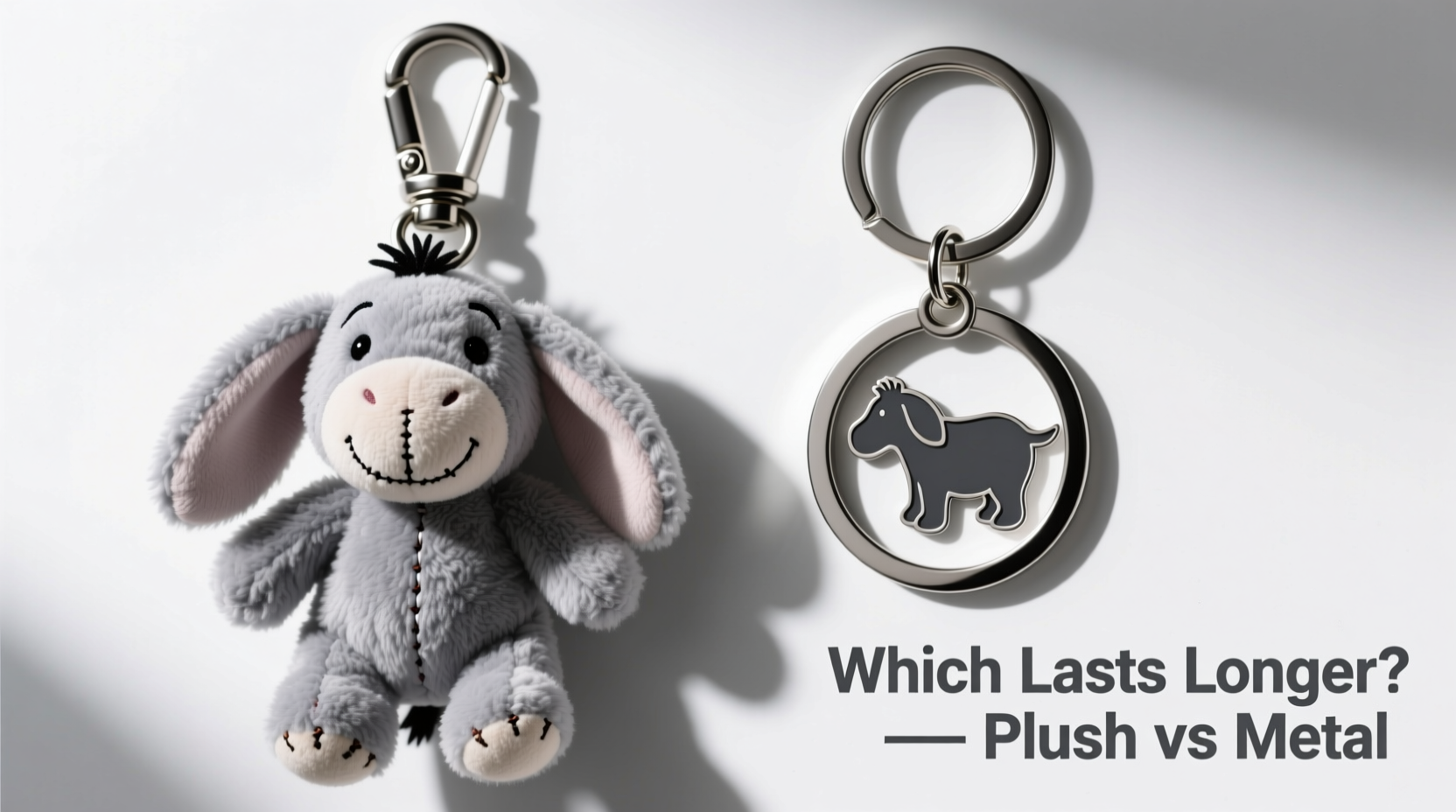
The core difference between plush and metal keychains lies in their construction. Plush versions are typically made from polyester fabric filled with soft polyfill, embroidered facial details, and a plastic or metal ring attachment. These materials prioritize comfort and visual appeal but are inherently vulnerable to physical degradation. Over time, seams may unravel, fabric fades under UV exposure, and stuffing compacts or clumps, especially when exposed to moisture.
In contrast, metal Eeyore keychains are usually crafted from zinc alloy, stainless steel, or aluminum. These metals offer high tensile strength and resistance to deformation. Even when dropped or jostled in a pocket or bag, metal retains its shape far better than fabric-based counterparts. While some metal versions feature enamel coloring or painted details that can chip, the underlying structure remains intact for years under normal use.
Durability Under Daily Wear and Tear
Real-world usage plays a decisive role in longevity. A plush keychain might survive months or even a year with gentle handling, but regular friction against zippers, door handles, or rough surfaces accelerates wear. The stitching on ears or limbs often gives way first, leading to torn fabric and lost stuffing. Exposure to rain or humidity introduces mold risk, while frequent hand contact transfers oils that degrade fabric dyes.
Metal keychains, by comparison, thrive in high-friction environments. They resist abrasion, are unaffected by sweat or light moisture, and do not compress or deform from pressure. Even if scratched, the functional integrity remains unimpaired. Anodized or powder-coated finishes further enhance scratch resistance, preserving appearance over time.
“Materials like zinc alloy used in collectible keychains are engineered for daily use. With minimal care, they can last decades.” — Dr. Lena Torres, Materials Engineer at Urban Accessory Labs
Environmental Resistance Comparison
Environmental factors such as sunlight, moisture, temperature, and chemicals significantly impact lifespan. Plush materials are particularly sensitive:
- Sunlight: UV rays break down synthetic fibers and fade colors within weeks of direct exposure.
- Moisture: Wet conditions lead to mildew, odor retention, and fabric weakening.
- Cold/Heat: Extreme temperatures cause polyfill to expand or contract, distorting shape.
Metal fares far better across all categories. Stainless steel resists rust; aluminum won’t corrode under typical urban conditions. Enamel paint may dull over years, but the base form persists. Only prolonged exposure to saltwater or acidic environments poses a serious threat—and even then, failure takes years, not months.
| Factor | Plush Keychain | Metal Keychain |
|---|---|---|
| Scratch Resistance | Poor (fabric tears easily) | High (especially anodized metals) |
| UV Light Exposure | Fades quickly; fiber degradation | Minimal effect; color may fade slowly |
| Water/Moisture | High risk of mold and warping | Resistant (unless low-grade metal) |
| Temperature Fluctuations | Affects stuffing and fabric | Negligible impact |
| Lifespan (Average Use) | 6–18 months | 5+ years |
Real-World Example: Two Years of Daily Use
Consider Sarah, a college student who attached a plush Eeyore keychain to her backpack during freshman year. By mid-sophomore year, the left ear had detached, the tail was missing stuffing, and the once-gray fur had yellowed from sun exposure. Despite being “cute,” she replaced it after 18 months due to disintegration.
In contrast, her roommate Mark chose a stainless steel Eeyore pendant. After two years of being clipped to jeans, tossed into gym bags, and occasionally dropped on pavement, the keychain showed only minor surface scratches. No structural damage occurred, and the silhouette remained sharp. It’s still in use today—three years later—with no signs of imminent failure.
This scenario reflects a broader trend: sentimental value often drives plush purchases, but functionality favors metal in active lifestyles.
Maintenance Requirements and Longevity Tips
Proper care can extend the life of either type—but the effort required differs drastically.
Plush keychains demand near-constant attention:
- Spot clean gently with damp cloth (never machine wash)
- Avoid direct sunlight and humid areas
- Store in a breathable pouch when not in use
- Inspect monthly for loose threads or stains
Metal versions require almost no upkeep:
- Wipe with dry cloth if dusty
- Rinse briefly if exposed to salt or grime
- Dry immediately after water contact
- Occasionally polish to restore shine (optional)
Checklist: How to Maximize Keychain Lifespan
- Choose metal for high-use scenarios (keys, bags, outdoor gear)
- Limit plush exposure to pockets or purses—not exterior clips
- Remove keychains before swimming, showering, or exercising
- Inspect attachments monthly for cracks or looseness
- Rotate multiple keychains to reduce strain on any single one
- Store plush versions in a sealed container with silica gel packs
- Apply clear nail polish to enamel edges on metal to prevent chipping
FAQ: Common Questions About Eeyore Keychain Durability
Can I wash a plush Eeyore keychain?
No, washing machines agitate the fabric too harshly, causing seams to burst and stuffing to clump. Instead, spot-clean with a microfiber cloth and mild soap. Let air dry completely away from heat sources.
Do metal keychains tarnish over time?
Lower-cost alloys may develop surface oxidation, especially in humid climates. Stainless steel and anodized aluminum resist tarnishing best. Applying a thin layer of carnauba wax annually can protect finish and luster.
Is there a hybrid option that offers both softness and durability?
Some brands offer rubberized silicone Eeyore keychains—flexible, waterproof, and more durable than plush while retaining a soft touch. These last longer than fabric but not as long as solid metal. Ideal for moderate use with aesthetic preference.
Final Verdict: Which Lasts Longer?
The answer is unequivocal: **metal Eeyore keychains last significantly longer** than plush versions. Under average conditions, a well-made metal keychain will outlive its plush counterpart by a factor of five or more. While plush models offer tactile warmth and nostalgic charm, they are fundamentally designed for short-to-medium term enjoyment rather than enduring utility.
If your priority is emotional connection and occasional display, a plush version makes a delightful keepsake. But for anyone seeking a reliable, long-lasting accessory that withstands daily chaos—from jammed pockets to rainy commutes—metal is the superior investment.




 浙公网安备
33010002000092号
浙公网安备
33010002000092号 浙B2-20120091-4
Comments
No comments yet. Why don't you start the discussion?