
Ear pressure is a common discomfort that affects millions of people every year. Whether you're descending in an airplane, diving underwater, or recovering from a cold, the sensation of fullness or blockage in your ears can be more than just annoying—it can impair hearing, cause dizziness, or lead to pain if left unaddressed. The good news: most cases are temporary and can be resolved with simple, non-invasive techniques. The key is using safe, gentle methods that restore balance to the middle ear without risking damage.
This guide explores scientifically supported and widely recommended strategies to relieve ear pressure effectively. From natural maneuvers to environmental adjustments, these approaches prioritize safety and speed while minimizing strain on delicate ear structures.
Understanding Ear Pressure and the Eustachian Tube
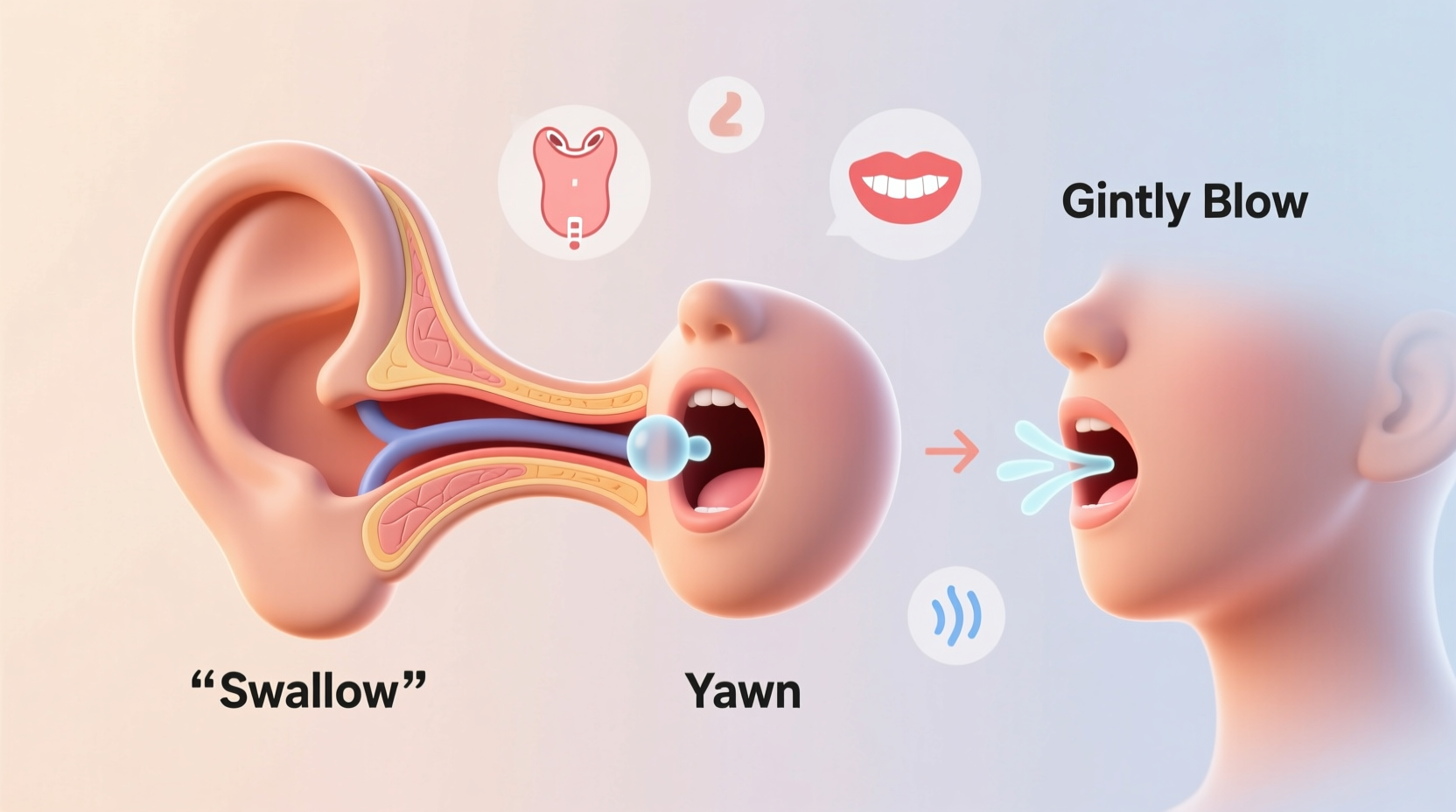
The root cause of ear \"popping\" lies in the Eustachian tube—a narrow passage connecting the middle ear to the back of the throat. Its primary role is to equalize air pressure on both sides of the eardrum. When this tube becomes blocked or fails to open properly due to altitude changes, congestion, or inflammation, pressure builds up, creating that familiar muffled feeling.
Sudden changes in altitude—like during takeoff and landing in flights, driving through mountainous regions, or scuba diving—are frequent triggers. Illnesses such as colds, allergies, or sinus infections can also swell the tissues around the Eustachian tube, making it harder for air to pass through.
“Proper Eustachian tube function is essential for hearing clarity and comfort. Gentle, consistent techniques often succeed where forceful actions fail—and may even cause harm.” — Dr. Lena Patel, Otolaryngologist
Safe and Effective Techniques to Pop Your Ears
Most people instinctively swallow, yawn, or chew gum when their ears feel blocked. These actions work because they engage muscles connected to the Eustachian tube, helping it open briefly to release pressure. But when basic methods don’t work, more targeted techniques can help.
1. The Valsalva Maneuver (Gentle Version)
A modified version of the Valsalva maneuver is one of the most reliable ways to equalize ear pressure. Unlike the traditional method, which involves forceful blowing, the gentle approach reduces the risk of over-pressurizing the middle ear.
- Sit upright and take a slow, deep breath.
- Close your mouth and pinch your nostrils shut with your fingers.
- Gently blow air through your nose as if trying to exhale—but keep your nose sealed.
- Continue for 2–3 seconds, stopping immediately if you feel any pain.
- Repeat up to three times with 15-second breaks between attempts.
2. Toynbee Maneuver
This technique combines swallowing with nasal occlusion and is especially useful during descent in airplanes.
- Pinch your nostrils closed.
- Sip a small amount of water or simply simulate swallowing.
- The combination helps open the Eustachian tubes while controlling airflow.
3. Jaw Movement and Yawning
Moving the jaw side-to-side or opening the mouth wide in a deliberate yawn activates muscles linked to the Eustachian tube. This method requires no special tools or effort and can be done discreetly.
Chewing gum or sucking on hard candy during altitude changes encourages repeated swallowing, which continuously stimulates pressure equalization.
When to Use External Aids
If natural methods aren’t sufficient, certain devices and aids can assist in gently opening the Eustachian tubes. These are particularly helpful for frequent flyers, divers, or individuals prone to recurrent ear blockages.
Otovent Balloon Device
The Otovent is a drug-free device designed specifically for Eustachian tube dysfunction. It works by creating controlled resistance during nasal blowing, promoting safe pressure equalization.
- Attach the balloon to one nostril.
- Seal the other nostril with your finger.
- Breathe out gently through the open nostril until the balloon inflates.
- Repeat 3–4 times per session, up to twice daily if needed.
Clinical studies show that regular use of Otovent improves symptoms in over 70% of users within a week.
Filtered Earplugs (e.g., EarPlanes)
These specialized earplugs are designed to slow down pressure changes reaching the eardrum, giving the Eustachian tube more time to adjust naturally during flights.
| Method | Best For | Speed of Relief | Safety Level |
|---|---|---|---|
| Swallowing / Chewing Gum | Mild blockage, flight descent | Fast (seconds to minutes) | Very High |
| Gentle Valsalva | Moderate pressure, diving | Immediate | High (if done gently) |
| Otovent Device | Chronic dysfunction, children | Within minutes (with repetition) | Very High |
| Decongestants (oral/spray) | Congestion-related blockage | 15–30 minutes | Moderate (short-term only) |
| Warm Compress | Muscle tension, mild swelling | Gradual (10–20 min) | Very High |
Do’s and Don’ts of Ear Pressure Relief
Even well-intentioned efforts can backfire if done incorrectly. Follow this checklist to stay safe while seeking relief.
✅ Do’s
- Stay awake during airplane descent to actively swallow.
- Use saline nasal spray before flying if congested.
- Try chewing or yawning at the first sign of pressure.
- Stay hydrated—dry mucous membranes resist drainage.
- Use filtered earplugs for long flights.
❌ Don’ts
- Blow your nose forcefully—this can push fluid into the Eustachian tube.
- Insert cotton swabs or objects into the ear canal.
- Attempt aggressive Valsalva if you have an ear infection.
- Ignore persistent pain or hearing loss lasting more than 48 hours.
- Use decongestant sprays for more than 3 consecutive days.
Real-Life Example: Managing Ear Pressure During Travel
Sarah, a marketing consultant based in Denver, frequently flies to sea-level cities for client meetings. She began experiencing painful ear pressure during descent, sometimes lasting hours after landing. Over-the-counter decongestants helped but caused jitteriness.
After consulting an ENT specialist, she adopted a new routine: starting 24 hours before her flight, she used a saline nasal rinse twice daily, stayed hydrated, and chewed gum during takeoff and landing. She also tried the gentle Valsalva maneuver when needed. Within two trips, her symptoms decreased significantly. Now, she uses filtered earplugs and carries an Otovent device for longer flights—reporting nearly complete relief without medication.
Her experience highlights how combining preventive care with timely interventions can make a meaningful difference.
FAQ: Common Questions About Popping Ears
Why do my ears pop when I swallow?
Swallowing activates the muscles attached to the Eustachian tube, causing it to open briefly. This allows air to flow in or out of the middle ear, equalizing pressure and often producing a popping sound or sensation.
Can popping your ears too much cause damage?
Yes. Repeated or forceful attempts—especially blowing hard through the nose—can over-pressurize the middle ear, potentially leading to dizziness, pain, or even eardrum injury. Always use gentle methods and stop if discomfort occurs.
How long should ear pressure last before seeing a doctor?
If fullness, pain, or muffled hearing persists beyond 48 hours despite trying safe techniques, consult a healthcare provider. Persistent blockage could indicate fluid buildup, infection, or Eustachian tube dysfunction requiring medical evaluation.
Conclusion: Act Early, Stay Gentle, and Stay Informed
Relieving ear pressure doesn’t require drastic measures. Most cases respond well to simple, everyday actions like swallowing, yawning, or gentle pressure maneuvers. The real key lies in acting early—before pressure builds to uncomfortable levels—and avoiding aggressive tactics that could do more harm than good.
For those who travel often, dive, or struggle with seasonal allergies, building a personalized prevention plan makes a significant difference. Whether it’s packing gum for your next flight, using saline spray before ascent, or investing in an Otovent device, small steps lead to lasting comfort.




 浙公网安备
33010002000092号
浙公网安备
33010002000092号 浙B2-20120091-4
Comments
No comments yet. Why don't you start the discussion?