
Walking your dog should be a peaceful, enjoyable experience—not a constant battle of resistance and strain. Yet, many pet owners struggle with dogs that pull relentlessly on the leash, making every outing stressful and exhausting. While training plays a major role in behavior correction, the way you attach and manage the leash can significantly influence your control and your dog’s responsiveness. Understanding effective leash tying techniques is not just about knots—it’s about positioning, equipment compatibility, and communication.
This guide breaks down practical, vetted methods to secure your dog’s leash in ways that discourage pulling, improve handling, and support consistent training. Whether you're dealing with an energetic puppy or a strong-willed adult dog, these techniques offer tangible solutions grounded in animal behavior science and real-world application.
Why Leash Attachment Matters More Than You Think
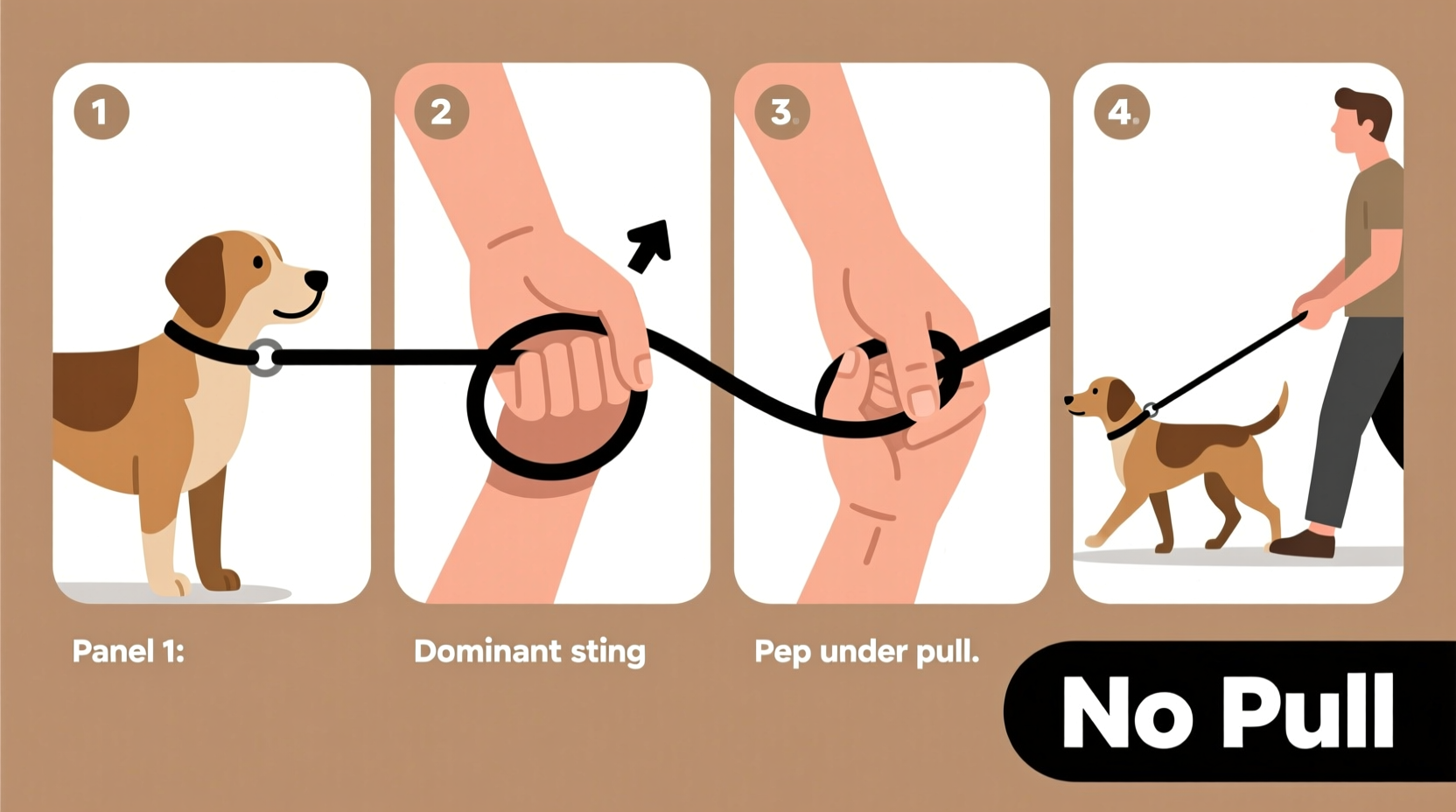
The point where the leash connects to your dog’s harness or collar directly affects balance, posture, and response to tension. A poorly positioned attachment can encourage pulling by giving leverage, while a well-placed one promotes self-correction and cooperation.
Dogs naturally resist pressure. When a leash pulls from the front of the body—such as across the chest—they instinctively stop moving forward to avoid discomfort. Conversely, when attached at the back, especially on traditional harnesses, dogs gain mechanical advantage, turning pulling into a rewarding motion. This explains why some dogs practically sprint when clipped behind but slow down when using a front-clip harness.
“Where you attach the leash changes everything—from biomechanics to psychology. Front attachments interrupt pulling before it starts.” — Dr. Karen Overall, Veterinary Behaviorist
Step-by-Step: Choosing and Tying the Right Leash Setup
Effective leash management begins with selecting the right gear and securing it properly. Follow this sequence to ensure optimal function and safety.
- Choose the correct harness type: Opt for a front-clip harness if pulling is a consistent issue. These redirect your dog’s momentum toward you when they surge ahead.
- Select a sturdy, appropriately sized leash: A 4–6 foot nylon or biothane leash offers better control than retractable lines, which encourage erratic movement.
- Attach the leash to the front ring: On front-clip harnesses, locate the metal ring positioned between the dog’s shoulders. Clip the leash here securely.
- Double-check security: Ensure the harness fits snugly (two fingers under straps) and the leash snaps shut with an audible click.
- Test tension response: Gently apply forward pressure to simulate pulling. Your dog should pivot toward you, not lunge ahead.
Advanced Techniques: Reinforcement Loops and Backup Knots
In high-distraction environments or with powerful breeds, additional security measures may be necessary. One such method involves creating a reinforcement loop using dual attachment points—a technique used by professional handlers.
Some harnesses feature both front and rear rings. By using a secondary tether or carabiner, you can create a dynamic system that shifts control based on behavior:
- Use the front clip for everyday walking and training.
- Add a backup line to the rear ring only when needed—for example, during recall drills or off-leash transitions.
- Never use both clips simultaneously during regular walks unless trained to do so, as this can restrict shoulder movement.
If you must tie a knot—such as when modifying a leash or attaching a secondary line—use a **bowline knot**. It’s strong, won’t slip under load, and remains easy to untie after pressure.
Bowline Knot Instructions:
- Form a small loop near the end of the rope (the “rabbit hole”).
- Pass the free end up through the loop (the “rabbit comes out of the hole”).
- Wrap it around the standing part and back down through the loop (the “rabbit dives back in”).
- Pull tight—the knot should hold firm without slipping.
Do’s and Don’ts of Leash Attachment
| Do’s | Don’ts |
|---|---|
| Use a front-clip harness for dogs that pull | Clip to loose or dangling rings that twist |
| Inspect leash hardware weekly for wear | Use damaged leashes with frayed stitching |
| Position leash hand close to your body for better control | Let the leash dangle loosely—this delays correction timing |
| Practice short-directional cues (“left,” “here”) with consistent pressure-release | Rip or yank the leash abruptly—this increases fear-based resistance |
| Rotate leash types based on activity (e.g., traffic vs. park) | Use retractable leashes in crowded or unsafe areas |
Real Example: Transforming Max, the Overexcited Labrador
Max, a two-year-old yellow Lab, would lunge at every squirrel, jogger, and passing dog. His owner, Sarah, had tried choke collars and verbal commands, but nothing stopped the relentless pulling. After consulting a certified trainer, she switched to a front-clip harness and began using a 5-foot biothane leash clipped precisely to the chest ring.
The change was immediate. When Max surged forward, the leash redirected him slightly inward, breaking his forward momentum. Combined with treats for walking beside her, he learned within three weeks to stay within a half-step of Sarah’s left side. The key wasn’t just the equipment—it was how it was tied and used consistently.
“I didn’t realize the clip position made such a difference,” Sarah said. “Now our walks are calm, and Max actually checks in with me instead of dragging me along.”
Essential Checklist for Pull-Free Walks
- ✅ Harness fits correctly—no slipping or pinching
- ✅ Leash is attached to the front ring (for anti-pull effect)
- ✅ Snap lock is engaged with a clear click
- ✅ No fraying, weak stitching, or rusted hardware
- ✅ Treats or rewards ready for positive reinforcement
- ✅ Walking posture: elbow bent at 90°, leash hand near hip
Frequently Asked Questions
Can I use a regular back-clip harness to stop pulling?
Back-clip harnesses often worsen pulling because they give dogs leverage. They’re suitable for well-trained dogs or those with respiratory issues (like brachycephalic breeds), but for pullers, a front-clip design is far more effective.
Is it safe to tie knots in my dog’s leash?
Avoid knots in standard flat leashes as they can weaken fibers or snag. If customization is needed, use a separate paracord section or swivel clasp. The bowline knot is acceptable only on rope-style leashes designed for knotting.
How tight should the leash be during a walk?
Maintain a loose but responsive line—slack no longer than the length of your forearm. The leash should allow quick correction but not drag on the ground. Think “ready, not rigid.”
Conclusion: Turn Tension Into Trust
Preventing your dog from pulling isn’t about dominance or strength—it’s about smart mechanics and consistent communication. The right leash tying technique transforms a chaotic walk into a cooperative experience. From choosing front-clip harnesses to mastering secure attachments and reinforcing good habits, every detail contributes to a calmer, safer journey together.
Start today: inspect your current setup, reposition the leash if needed, and practice short, focused walks with immediate rewards. Small adjustments yield lasting results. Your dog isn’t misbehaving—they’re responding to the tools you’ve given them. Give them the right ones, and watch the change unfold.




 浙公网安备
33010002000092号
浙公网安备
33010002000092号 浙B2-20120091-4
Comments
No comments yet. Why don't you start the discussion?