
Velvet has long occupied a unique space in fashion and interior design—simultaneously revered for its opulence and dismissed for its divisive texture. While one person might drape their living room in emerald crushed velvet, another cringes at the mere thought of touching it. This polarizing fabric continues to spark debate, not just for how it feels, but also for what it represents across generations and aesthetics. As we move through 2024, the question remains: why do so many people dislike velvet, and more importantly, is it still in style?
The answer lies in a blend of sensory psychology, historical context, and evolving design trends. Velvet’s reputation swings between vintage charm and outdated kitsch, depending on who you ask. To understand its current standing, it's essential to unpack both the emotional reactions it provokes and the ways modern designers are reinterpreting it.
The Sensory Backlash: Why Texture Triggers Discomfort
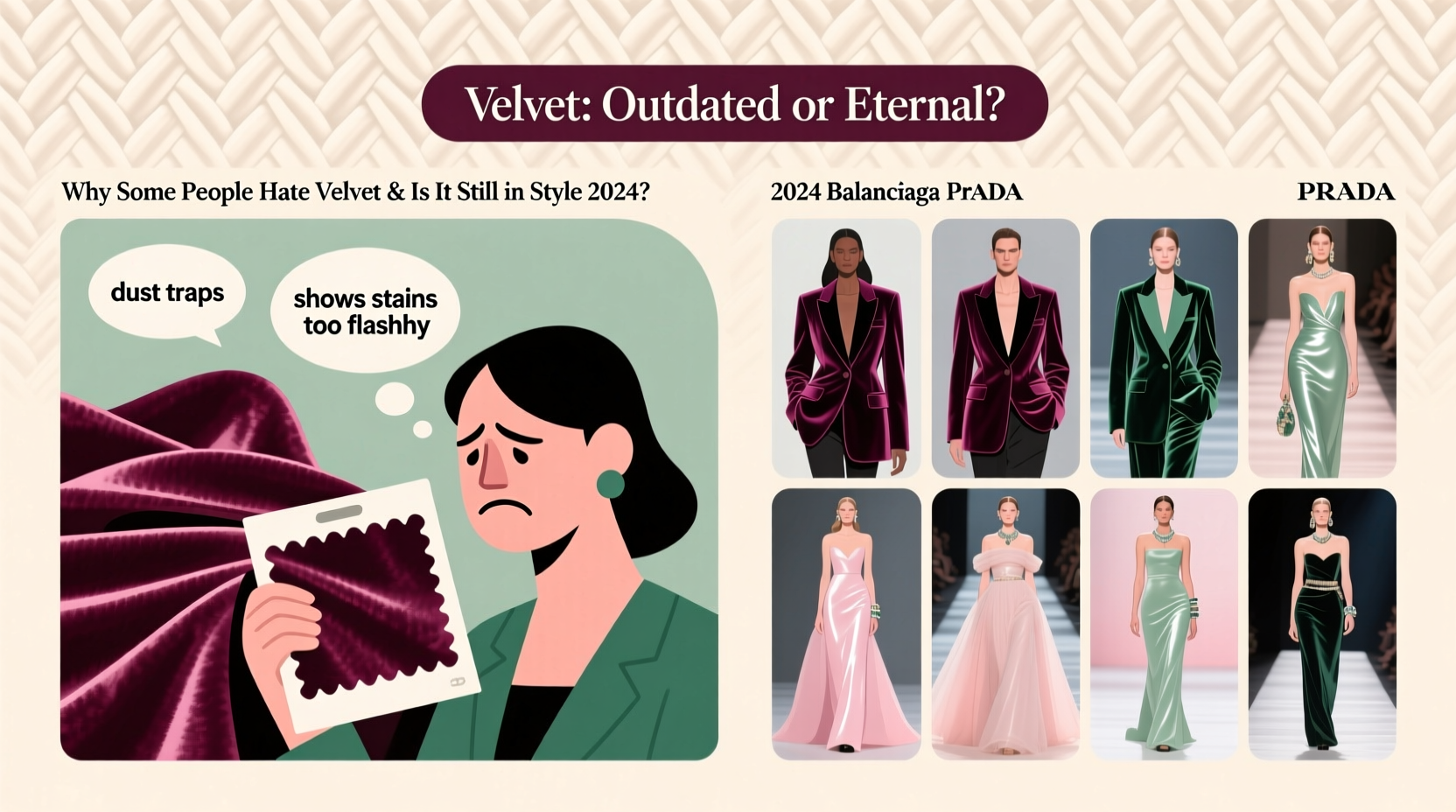
For many, the aversion to velvet isn’t about appearance—it’s about touch. The fabric’s dense, plush pile creates a tactile experience that can feel unsettling or even repulsive to certain individuals. This reaction may stem from a condition known as misophonia or, more broadly, textural sensitivity, where specific textures trigger strong negative emotions.
Some describe velvet as “wet” or “sticky” to the touch, despite being dry. This illusion occurs because the fabric resists gliding smoothly under the fingers—the fibers compress and rebound unevenly, creating an unpredictable sensation. In contrast, satin or cotton offers consistent friction, which the brain finds more predictable and therefore less jarring.
“Texture plays a powerful role in material preference. Velvet’s irregular surface activates different neural pathways than smooth fabrics, which can lead to subconscious discomfort.” — Dr. Lena Torres, Cognitive Psychologist specializing in sensory perception
This sensory dissonance explains why some people avoid velvet clothing, upholstery, or accessories altogether. It’s not merely a matter of taste; it’s a neurological response rooted in how the brain interprets physical stimuli.
Cultural and Generational Baggage
Beyond touch, velvet carries heavy cultural associations that influence how people perceive it. For older generations, it evokes memories of 1970s interiors: dark-paneled walls, shag carpeting, and gold-trimmed sofas. These retro connotations can make velvet seem dated or overly theatrical, especially when associated with poorly lit basements or grandmother’s formal parlor.
Younger consumers, particularly Millennials and Gen Z, often reject anything perceived as “old-fashioned” unless it’s been recontextualized with irony or minimalist styling. Velvet, in its traditional form, rarely fits that mold without intentional curation.
Yet, paradoxically, these same demographics embrace velvet when it appears in streetwear collaborations or limited-edition sneakers. The key difference? Context and execution. A matte-black velvet sneaker from a high-end designer reads as edgy and exclusive; a burgundy velvet armchair from a discount furniture store reads as last-century decor.
The Stigma of \"Too Much\" Luxury
Venetian brocades, royal robes, and theater curtains—all historically linked to power and ceremony—were often made from velvet. While this heritage adds prestige, it also contributes to the idea that velvet is “too rich,” “too dramatic,” or “trying too hard.” In an era that values understated minimalism—think Scandinavian interiors or normcore fashion—velvet can feel excessive.
This tension between luxury and restraint shapes much of the disdain. People don’t necessarily hate the fabric itself; they resist what it symbolizes: indulgence, ornamentation, and emotional expressiveness in spaces meant to be calm and functional.
Is Velvet Still in Style in 2024?
Despite its detractors, velvet is experiencing a measured resurgence—not as a dominant trend, but as a strategic accent. Designers and stylists are using it with precision, avoiding the all-over applications that once made it overwhelming.
In fashion, velvet appears in tailored blazers, evening gowns, and footwear, often in deep jewel tones like sapphire, amethyst, or forest green. These pieces are styled with sleek silhouettes and neutral bases to balance the richness of the fabric. The result is modern elegance rather than retro overload.
Interior design follows a similar pattern. Rather than upholstering entire living rooms in velvet, decorators now use it selectively—a single chair, throw pillows, or drapery lining. Matte-finish velvets, especially in muted earth tones, have gained favor over shiny varieties, aligning better with contemporary tastes for organic textures and quiet luxury.
Key Trends Driving Velvet’s Comeback
- Quiet Luxury: Velvet’s subtle sheen and depth fit seamlessly into the “stealth wealth” aesthetic popularized in 2023–2024.
- Sustainable Textiles: High-quality velvet made from recycled fibers or organic cotton is gaining traction among eco-conscious brands.
- Tactile Layering: Designers combine velvet with wool, linen, and leather to create sensory contrast without visual clutter.
- Gender-Fluid Fashion: Velvet’s inherent drama appeals to non-binary and expressive styles, making it a favorite on runways from London to Seoul.
| Vintage Velvet (Pre-2020) | Modern Velvet (2024) |
|---|---|
| High-gloss finish | Matte or low-luster finish |
| Used in large furniture pieces | Accent pieces only (pillows, benches, jackets) |
| Warm tones (burgundy, gold, olive) | Cool and neutral tones (slate blue, charcoal, taupe) |
| Associated with formal, traditional spaces | Integrated into minimalist, contemporary settings |
| Rarely mixed with other textures | Layered with wool, shearling, and metal accents |
How to Wear and Use Velvet Without Looking Dated
If you love velvet but want to avoid the pitfalls of poor styling, follow these principles to keep it fresh and relevant.
- Start small. Choose a velvet accessory—a clutch, tie, or cushion—before committing to larger items.
- Prioritize matte finishes. Avoid shiny velvets unless used intentionally for a glam look.
- Pair with clean lines. Balance velvet’s softness with structured garments or furniture.
- Mix textures deliberately. Combine velvet with denim, wool, or polished wood to prevent a monotonous feel.
- Stick to modern colors. Muted tones integrate better into current palettes than classic reds or purples.
Real Example: From Kitsch to Cool
Consider the case of Maya Chen, a 32-year-old interior designer in Portland. She inherited a set of 1970s velvet dining chairs from her aunt—bright mustard yellow with carved wooden legs. Initially, she planned to donate them. Instead, she reupholstered them in a charcoal-gray, matte velvet and paired them with a sleek white oak table and concrete floor lamps.
The transformation turned heads. What was once seen as garish became a statement of curated nostalgia. Maya didn’t change the shape of the chairs; she updated the fabric and context. Her project went viral on design forums, proving that velvet isn’t the problem—execution is.
Expert Insight: Reclaiming Velvet’s Potential
Fashion historian and textile curator Amara Singh emphasizes that velvet’s reputation is cyclical, not fixed.
“Every decade, velvet gets reinvented. In the '90s, it was grunge flannel meets prom dresses. In the 2010s, it was millennial pink couches. Now, it’s about restraint and intentionality. The fabric hasn’t changed—our relationship to luxury has.” — Amara Singh, Curator at the Museum of Contemporary Craft
Singh notes that sustainable practices are also reshaping velvet’s image. Brands like Stella McCartney and Matter Prints now offer velvet alternatives made from plant-based cellulose or recycled PET, reducing environmental impact while maintaining softness and drape.
FAQ
Can velvet be worn year-round?
Yes, but with adjustments. Lightweight cotton velvet works well in spring and fall, while heavier silk or synthetic blends are better suited for winter. Avoid thick velvet in humid climates, as it can trap heat and moisture.
Is velvet hard to maintain?
It depends on the type. Silk velvet requires professional cleaning, while polyester or cotton blends can often be spot-cleaned. Always check care labels. Regular brushing with a soft clothes brush helps maintain the nap and prevent matting.
Does velvet work in small spaces?
Yes, if used sparingly. A single velvet pillow or a small ottoman can add depth and warmth without overwhelming a compact room. Opt for darker shades to create a cozy atmosphere, or lighter tones to add soft contrast.
Checklist: Using Velvet the Right Way in 2024
- ✅ Choose matte or crushed velvet over shiny versions
- ✅ Limit velvet to one or two focal points per room or outfit
- ✅ Pair with minimalist elements to avoid visual clutter
- ✅ Select eco-friendly or blended fabrics for durability and breathability
- ✅ Test the texture in person before committing to large purchases
- ✅ Use steam (not water) to remove wrinkles gently
- ✅ Rotate velvet cushions regularly to prevent uneven wear
Conclusion: Embracing Velvet on Its Own Terms
Velvet will never be universally loved. Its texture challenges sensory comfort, its history carries baggage, and its richness demands careful handling. But these very qualities also make it compelling. In a world of flat, digital surfaces and mass-produced minimalism, velvet offers depth, tactility, and soul.
So yes, velvet is still in style—but not in the way it once was. It’s no longer about covering every surface in lush fabric. It’s about choosing one perfect piece that catches the light just right, that invites touch without demanding attention. Whether in a tailored jacket, a midnight-blue sofa, or a pair of boots with a whisper-soft finish, velvet endures not because it pleases everyone, but because it means something to those who appreciate it.




 浙公网安备
33010002000092号
浙公网安备
33010002000092号 浙B2-20120091-4
Comments
No comments yet. Why don't you start the discussion?