
Locating a phone number can be necessary for personal safety, reconnecting with contacts, or verifying unknown callers. However, it's essential to approach this task with respect for privacy and within legal boundaries. Unauthorized tracking violates laws in many countries, including the U.S. Electronic Communications Privacy Act and the EU’s GDPR. This guide outlines practical, ethical, and lawful ways to determine the general location of a phone number without overstepping legal limits.
Understanding What \"Location\" Means for Phone Numbers
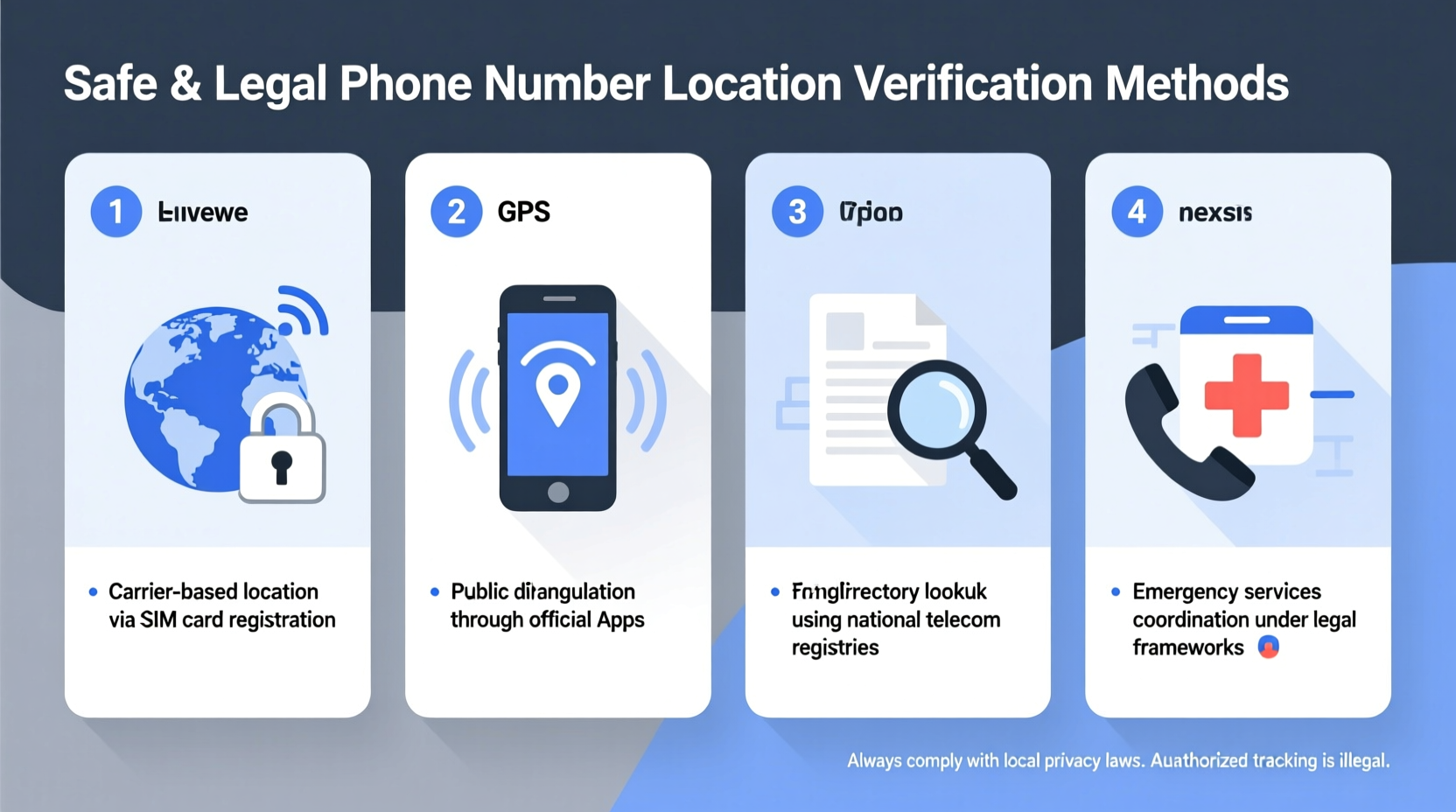
The term “location” in relation to a phone number typically refers to its registered area code, carrier region, or approximate geographic origin—not real-time GPS tracking. Real-time tracking requires user consent and access to device-level data, which is not accessible through public tools. Instead, what most people seek is:
- The city or state associated with the number’s area code
- Whether the number is mobile, landline, or VoIP (Voice over IP)
- Carrier information (e.g., Verizon, T-Mobile)
- Potential red flags like spoofed or scam numbers
This level of detail helps identify suspicious calls or verify the legitimacy of a contact without infringing on personal rights.
Legal Methods to Determine Phone Number Location
Several reliable and compliant methods exist to gather non-sensitive location data from a phone number. These are widely used by individuals, customer support teams, and security professionals.
1. Use Reputable Reverse Phone Lookup Services
Reverse lookup services query public databases to return available information about a number. While free versions offer limited insights, paid platforms provide more detailed reports including location history, carrier type, and spam risk scores.
Top providers include:
| Service | Key Features | Cost Model |
|---|---|---|
| Truecaller | Spam detection, global database, caller ID | Freemium |
| Whitepages | U.S.-focused, reverse address search | Paid report per search |
| Spy Dialer | Voice message playback, no live connection | Free with ads |
| BeenVerified | Criminal records, social profiles, background checks | Subscription-based |
“Reverse lookups are valuable for identifying nuisance calls, but they should never replace formal investigations.” — David Lin, Cybersecurity Analyst at SecureComms Inc.
2. Analyze Area Code and Prefix Databases
NANPA (North American Numbering Plan Administrator) maintains official records of area codes and their assigned regions. Publicly accessible tools like AreaCode.org or NationalNANP.com allow you to input a number and retrieve the originating location.
For example:
- (212) – New York City, NY
- (310) – Los Angeles, CA
- (512) – Austin, TX
While useful, these only show initial registration zones, not current physical locations.
3. Leverage Carrier-Based Tools (With Consent)
If you're trying to locate a family member or friend’s device and have their permission, carrier-provided services like Apple’s “Find My” or Google’s “Find My Device” can help. These require prior setup and explicit authorization.
Carriers such as AT&T and Verizon also offer family locator plans that let parents monitor children’s devices. Participation must be opt-in and transparent.
Step-by-Step Guide: How to Check a Number’s Location Legally
Follow this structured process to ensure compliance and accuracy:
- Collect the full number – Include country code if international (e.g., +1 for U.S.).
- Use a free reverse lookup tool – Try Truecaller or Whitepages Basic Search.
- Evaluate the result – Look for consistency in location, carrier, and usage type.
- Check spam and fraud indicators – Does the number appear in scam registries?
- Upgrade to a premium service if needed – For deeper insight, use BeenVerified or Intelius.
- Document findings – Keep notes for personal reference or reporting purposes.
This method avoids speculation and grounds your inquiry in verifiable data.
Mini Case Study: Identifying a Suspicious Caller
Jessica began receiving late-night calls from a (956) number claiming to be her bank. The caller asked for her account details. Skeptical, she ran the number through Truecaller, which flagged it as a known scam associated with Brownsville, Texas—a region commonly used for robocall operations.
She then cross-referenced it on the FTC’s Do Not Call Registry and reported the number. Her bank confirmed they never make unsolicited requests. By using legal tools responsibly, Jessica protected herself without violating anyone’s rights.
What You Should Never Do
Some online forums promote hacking apps, IMSI catchers, or fake geolocation software. These are not only ineffective for average users but often illegal. Avoid:
- Downloading “phone tracker” apps promising real-time GPS without consent
- Using phishing techniques to install monitoring software
- Purchasing data from black-market sources
- Impersonating law enforcement to obtain records
Engaging in these activities can lead to criminal charges, fines, or civil lawsuits—even with good intentions.
Checklist: Safe & Legal Phone Location Verification
- ✅ Confirm the purpose of your search is legitimate (safety, verification, reconnection)
- ✅ Use only publicly available or subscription-based legal tools
- ✅ Respect privacy—do not share or misuse discovered information
- ✅ Verify results across multiple trusted sources
- ✅ Report fraudulent numbers to authorities like the FCC or FTC
Frequently Asked Questions
Can I find someone’s exact location from their phone number?
No. Exact real-time location requires access to GPS data, which is protected by encryption and privacy laws. Only law enforcement with a warrant—and device owners with enabled sharing—can access this information.
Are free phone location trackers reliable?
Most free tools provide basic data like area code and carrier. They may lack up-to-date records or miss VoIP numbers. For higher accuracy, consider paid services with verified databases.
Is it legal to look up a phone number’s location?
Yes, as long as you use public or licensed databases and do not attempt to track, harass, or impersonate. The key is intent and method—information gathering for personal awareness is permitted; stalking or surveillance is not.
Conclusion: Stay Informed, Stay Ethical
Knowing how to check a phone number’s location safely and legally empowers you to protect yourself and loved ones from scams and misinformation. The right tools provide clarity without crossing ethical lines. Always prioritize transparency, legality, and respect for digital boundaries.
Technology should enhance safety, not compromise privacy. By following these guidelines, you contribute to a more responsible digital environment.




 浙公网安备
33010002000092号
浙公网安备
33010002000092号 浙B2-20120091-4
Comments
No comments yet. Why don't you start the discussion?