
Water resistance is a critical feature for many watch owners, especially those who swim, dive, or lead active lifestyles. However, not all watches labeled \"water resistant\" are built to withstand prolonged exposure to water. Over time, seals degrade, crowns loosen, and gaskets wear out—compromising protection. While professional pressure testing is the gold standard, it’s not always accessible. Fortunately, there are reliable, low-risk methods you can use at home to assess your watch’s ability to resist water penetration—without damaging it.
Understanding Water Resistance Ratings
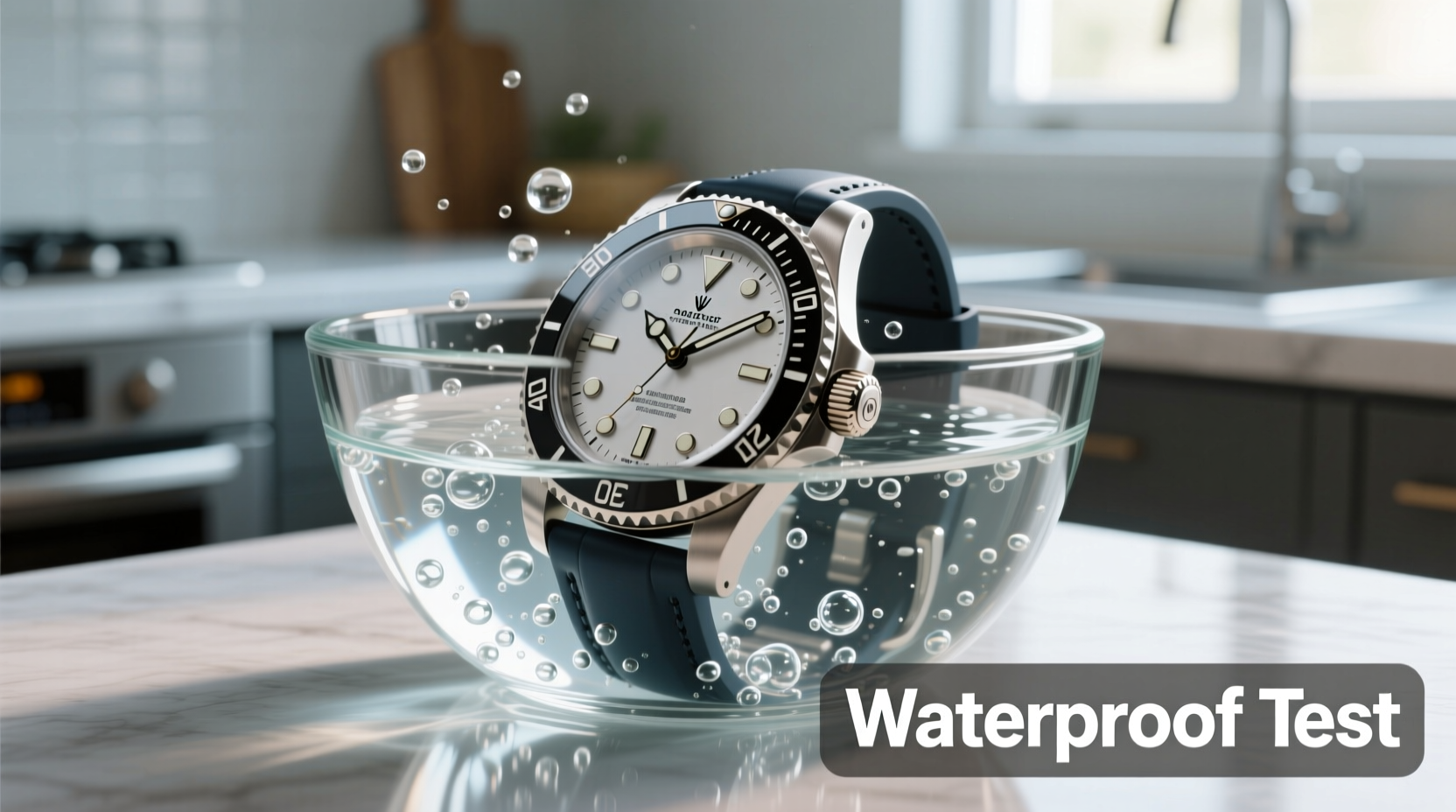
Before conducting any test, it’s essential to understand what water resistance ratings actually mean. These are standardized under ISO 22810 (for regular watches) and ISO 6425 (for dive watches). Common ratings include:
- 30 meters (3 ATM): Resists splashes or brief immersion. Not suitable for swimming.
- 50 meters (5 ATM): Suitable for shallow swimming in calm water.
- 100 meters (10 ATM): Safe for snorkeling and recreational diving.
- 200+ meters (20 ATM): Designed for scuba diving and deep-water activities.
It’s crucial to note that these ratings do not indicate the maximum depth you should submerge the watch. Instead, they reflect laboratory conditions involving static pressure, temperature changes, and mechanical stress. Real-world factors like water temperature, movement, and sudden impacts significantly affect performance.
“Water resistance is not permanent. Seals deteriorate over time, even if the watch isn’t used in water.” — Richard Truong, Master Watchmaker & Horology Instructor
Safe Home Testing Methods
Professional testing requires specialized equipment that applies controlled pressure and detects micro-leaks. At home, you can't replicate this precision, but you can perform observational checks that reveal early signs of failure. Below are four practical, non-destructive techniques.
1. Condensation Check (The Steam Test)
This method detects compromised seals by exposing the watch to humidity. Here’s how to perform it:
- Boil water in a kettle or pot.
- Hold the watch face-up about 6–8 inches above the steam for 30–45 seconds.
- Immediately place the watch in a cool, dry area (preferably refrigerated for 5 minutes).
- Inspect the crystal for fogging or internal condensation.
If moisture appears inside the watch, the seals have likely failed. This doesn’t necessarily mean the watch is leaking under water, but it indicates vulnerability.
2. Cold Water Submersion Test
A more direct approach involves brief submersion in cold tap water. Warm water expands metal and rubber, potentially masking leaks. Cold water minimizes this effect, offering a more accurate simulation.
- Fill a bowl with cold tap water (no ice).
- Submerge the watch for 10–15 minutes, ensuring it remains upright.
- Remove and dry thoroughly with a soft cloth.
- Wait 24 hours and inspect for internal fogging or water droplets.
This test simulates short-term exposure and helps identify immediate failures. It should only be attempted on watches rated for at least 50 meters.
3. Pressure Bottle Method (DIY Vacuum Simulation)
While true vacuum testing requires professional gear, a modified version using a hand pump and sealed container can simulate slight negative pressure—a useful indicator of seal integrity.
You’ll need:
- Airtight food storage container with rubber gasket
- Bicycle hand pump or vacuum sealer adapter
- Tube to connect pump to container lid
- Place the watch inside the container (do not submerge in water).
- Seal the container and slowly remove air using the pump.
- Maintain reduced pressure for 5 minutes.
- Release pressure and inspect the watch for fogging.
If moisture forms inside after depressurization, outside humid air entered through a breach during the vacuum phase—indicating poor sealing.
4. Tape and Dip Observation (Short-Term Immersion)
For watches rated 100 meters or higher, a cautious dip test can provide confidence. This method uses visual inspection rather than prolonged exposure.
- Cover the watch back with transparent tape (to catch bubbles).
- Submerge the watch in a clear glass of water for no more than 2 minutes.
- Watch closely for any air bubbles emerging from the case, crown, or crystal.
- Remove, dry, and monitor for 48 hours for internal moisture.
Bubbles indicate escaping air—which means water could enter under greater pressure. This test should never be used on vintage or untested watches.
What Not to Do: Common Mistakes
Many well-intentioned attempts to test water resistance end up damaging watches. The following practices should be strictly avoided:
| Do’s | Don’ts |
|---|---|
| Test only watches with known water resistance ratings | Never test vintage or non-water-resistant watches |
| Use cold or room-temperature water | Avoid hot water, which can warp gaskets |
| Dry thoroughly after any test | Don’t leave watches wet or in humid environments |
| Check manufacturer guidelines first | Never force open the case back or adjust settings underwater |
Real-World Example: A Diver’s Experience
Mark R., an amateur diver from San Diego, relied on his 200-meter-rated dive watch for weekly ocean excursions. After noticing slight fogging post-dive, he performed the steam test at home. Condensation appeared within minutes. He took the watch to a local jeweler, where pressure testing confirmed a failing crystal gasket. Thanks to the early detection, he avoided corrosion of the movement and saved hundreds in repair costs. “I thought my watch was bulletproof,” Mark said. “But five years of saltwater exposure took its toll. That simple steam check probably saved my watch.”
Recommended Maintenance Checklist
To ensure long-term water resistance, follow this annual checklist:
- ✅ Inspect crown and pushers for looseness or wobbling
- ✅ Clean case and gaskets with a soft cloth and mild soapy water
- ✅ Perform the condensation check every 6 months
- ✅ Avoid exposing the watch to chlorinated pools, saltwater, or perfumes regularly
- ✅ Schedule professional pressure testing every 1–2 years
- ✅ Replace gaskets during battery changes or after major impacts
Frequently Asked Questions
Can I swim with a 50-meter water-resistant watch?
Yes, but only in calm conditions and for short durations. Avoid diving, jumping into water, or vigorous swimming. Showering or hot tub use is not recommended, as heat and soap degrade seals faster.
Why does my watch fog up even when I haven’t been in water?
Temperature shifts cause air inside the watch to contract, drawing in humid air through weakened seals. If fogging occurs frequently, it’s a sign of compromised water resistance and should be inspected professionally.
Is water resistance permanent?
No. Gaskets degrade over time due to UV exposure, chemicals, and normal wear. Most manufacturers recommend resealing and pressure testing every 1–2 years to maintain reliability.
Final Thoughts and Action Steps
Testing your watch’s waterproof capability at home isn’t about pushing limits—it’s about catching problems early. The methods outlined here are designed to be safe, informative, and practical for everyday users. No DIY test replaces professional evaluation, but they serve as valuable early-warning systems.
Start by understanding your watch’s rating, then apply one or more of these tests annually. Combine them with routine care and professional servicing to maximize longevity and reliability. Water damage is often silent until it’s too late—don’t wait for fogged crystals or a stopped movement to act.




 浙公网安备
33010002000092号
浙公网安备
33010002000092号 浙B2-20120091-4
Comments
No comments yet. Why don't you start the discussion?