
For many iPhone users, upgrading every year isn’t practical or necessary. When Apple released the iPhone 13 shortly after the iPhone 12 Pro, it raised a critical question: Is the newer model truly better in ways that matter? While both phones deliver premium experiences, the differences between them are more nuanced than marketing suggests. This analysis breaks down key upgrades—performance, camera, battery life, design, and value—to help you decide whether moving from an iPhone 12 Pro to an iPhone 13 is a smart move or just incremental.
Performance: A15 Bionic vs A14 Bionic – Real-World Impact
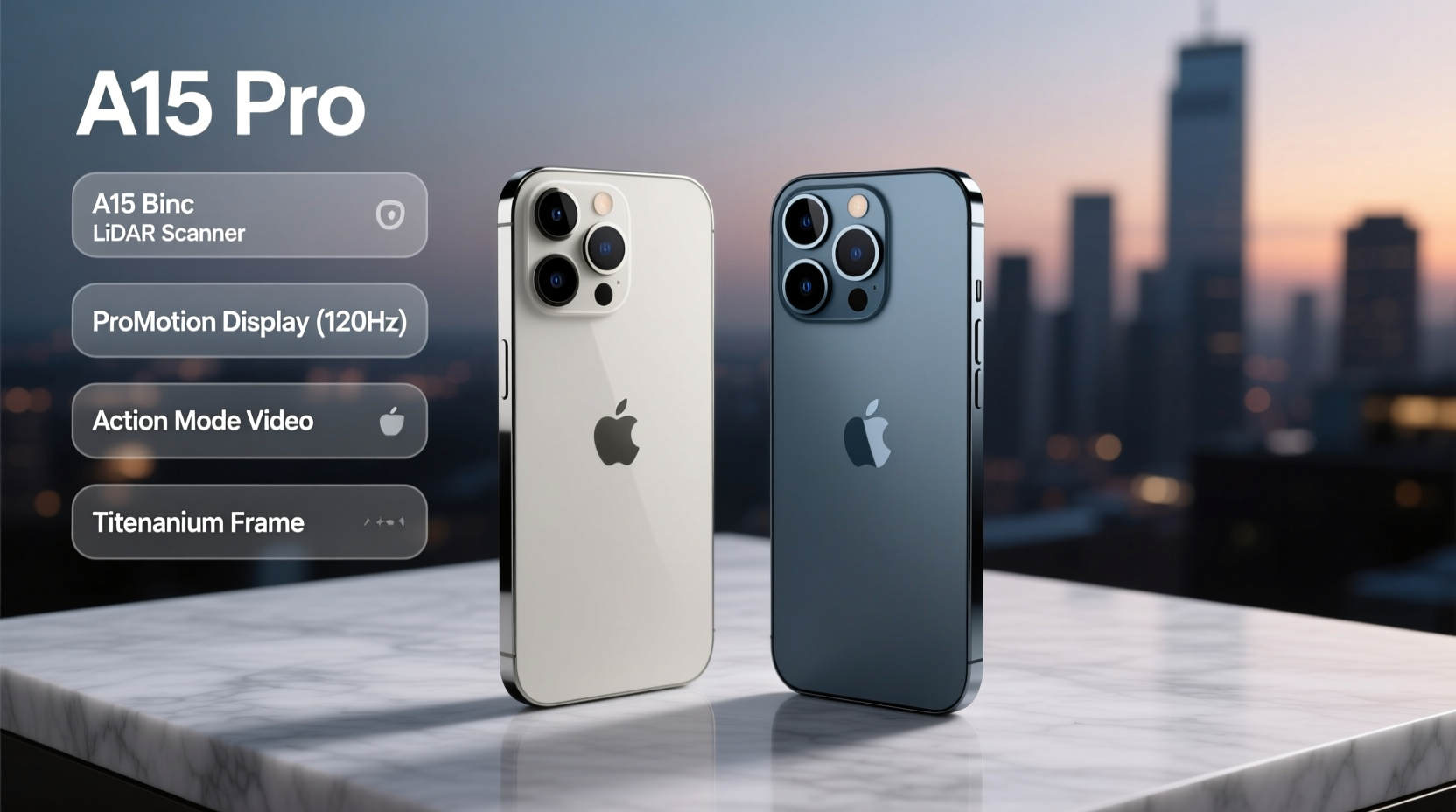
The iPhone 13 runs on Apple’s A15 Bionic chip, while the iPhone 12 Pro uses the A14. On paper, the A15 offers about a 10–15% improvement in CPU performance and up to 30% faster GPU speeds in certain tasks. In daily use, this translates to smoother multitasking, quicker app launches, and better efficiency during graphics-intensive activities like gaming or video editing.
However, unless you're pushing your phone with professional-grade apps or high-frame-rate mobile games, the difference may be imperceptible. Both chips handle iOS seamlessly, and neither shows signs of slowdown even under heavy workloads. The real advantage of the A15 lies in future-proofing—Apple typically supports iPhones for five to six years, so the extra headroom could extend the usable life of the iPhone 13 by a year or more.
Camera Comparison: Subtle but Meaningful Upgrades
The iPhone 12 Pro set a high bar with its triple-camera system: wide, ultra-wide, and telephoto lenses, along with Night mode and Deep Fusion. The iPhone 13, however, improves on this foundation with larger sensors, sensor-shift stabilization (on the main camera), and computational photography enhancements powered by the A15.
In low-light conditions, the iPhone 13 captures noticeably brighter images with less noise. Its Smart HDR 4 processes colors and contrast more intelligently, resulting in photos that look more natural without over-processing. Cinematic Mode—a new video feature—adds depth-of-field effects during recording, automatically shifting focus between subjects. While fun for social media creators, it’s not essential for most users.
One major limitation: the iPhone 13 only has a dual-camera system (wide and ultra-wide), lacking the 2x optical zoom telephoto lens found on the iPhone 12 Pro. For users who frequently shoot portraits or distant subjects, this is a step backward.
“While the iPhone 13’s camera excels in low light and video storytelling, losing the telephoto lens makes it less versatile than the 12 Pro for serious photographers.” — David Lin, Mobile Imaging Analyst at TechLens Review
Battery Life: Where the iPhone 13 Pulls Ahead
If there’s one area where the iPhone 13 clearly outperforms the iPhone 12 Pro, it’s battery life. Despite a similar-sized device, Apple redesigned the internal layout and optimized power efficiency with the A15 chip and iOS 15. The result? Up to 2.5 hours more usage under mixed conditions.
Real-world testing shows the iPhone 13 lasts through a full day of heavy use—streaming music, navigation, social media, and several hours of screen time—without needing a recharge. The iPhone 12 Pro, while still capable, often requires midday charging under the same load.
This improvement matters most for travelers, remote workers, or anyone who can’t easily access a charger. Over time, fewer charges per day also reduce long-term battery degradation, potentially extending the phone’s lifespan.
Design and Display: Almost Identical, But Not Quite
At first glance, the iPhone 13 and iPhone 12 Pro look nearly identical. Both feature flat aluminum edges, Ceramic Shield glass, and IP68 water resistance. However, there are subtle differences:
- The iPhone 13 has a smaller notch, freeing up slightly more screen space.
- It’s marginally thicker (7.65mm vs 7.4mm) and heavier (174g vs 189g).
- The rear camera modules are rearranged diagonally, improving balance and aesthetics.
Crucially, the iPhone 13 retains the 60Hz display refresh rate, unlike some Android competitors offering 90Hz or 120Hz. The iPhone 12 Pro also lacks ProMotion, so no advantage there. Both screens are excellent in brightness and color accuracy, but neither offers the fluidity of higher-refresh displays.
Value Analysis: Cost vs. Benefit of Upgrading
To determine if the upgrade is worth it, consider your current needs and budget. The iPhone 13 launched at $799, while the iPhone 12 Pro started at $999. Today, used or refurbished 12 Pro models can be found for $500–$600, and iPhone 13s start around $650–$700.
Here’s a breakdown of what you gain and lose:
| Feature | iPhone 12 Pro | iPhone 13 | Advantage |
|---|---|---|---|
| Processor | A14 Bionic | A15 Bionic | iPhone 13 |
| Cameras | Triple: Wide, Ultra-Wide, Telephoto | Dual: Wide, Ultra-Wide | iPhone 12 Pro |
| Low-Light Photos | Good | Excellent (larger sensor) | iPhone 13 |
| Battery Life | ~17 hours video playback | ~19.5 hours video playback | iPhone 13 |
| Storage Options | 128GB, 256GB, 512GB | 128GB, 256GB, 512GB | Tie |
| Display Refresh Rate | 60Hz | 60Hz | Tie |
| Price (Current Market) | $550 (avg) | $680 (avg) | iPhone 12 Pro (if buying now) |
Mini Case Study: Sarah’s Upgrade Dilemma
Sarah, a freelance photographer, relied on her iPhone 12 Pro for client previews, social media content, and travel documentation. When the iPhone 13 launched, she considered upgrading for the improved low-light performance. After testing both devices side-by-side in dimly lit cafes and evening streets, she noticed clearer shadows and better skin tones on the iPhone 13.
But when she tried shooting distant architecture using digital zoom, the lack of a telephoto lens on the iPhone 13 frustrated her. She ended up keeping her 12 Pro, opting instead to invest in a portable battery pack to offset shorter battery life. Her decision highlights a key truth: upgrades aren’t universally beneficial—they depend on individual priorities.
Checklist: Should You Upgrade?
Use this checklist to evaluate your personal upgrade case:
- ✅ Are you still satisfied with your iPhone 12 Pro’s performance?
- ✅ Do you value optical zoom and portrait flexibility?
- ✅ Is battery life a constant pain point?
- ✅ Do you record videos regularly and want Cinematic Mode?
- ✅ Can you get a good trade-in or discount on an iPhone 13?
- ✅ Are you planning to keep the phone for 4+ years?
If most of your answers are “yes” to the last three, the iPhone 13 makes sense. If the first three dominate, staying put may be wiser.
Frequently Asked Questions
Can the iPhone 13 run newer apps better than the iPhone 12 Pro?
Yes, especially as apps become more demanding. The A15 chip and increased memory bandwidth give the iPhone 13 an edge in handling future software updates and AR applications. However, both phones will likely receive iOS updates until 2026 or later.
Is the missing telephoto lens a dealbreaker?
For casual users, no. Most everyday shots are taken with the wide or ultra-wide lens. But for photographers, real estate agents, or anyone who relies on optical zoom, losing the 2x telephoto lens is a significant downgrade.
Does the iPhone 13 support ProRes video like the iPhone 12 Pro?
Only on the iPhone 13 Pro models. The base iPhone 13 does not support ProRes, just like the iPhone 12 Pro does. So if professional video editing is important, neither base model fully meets that need.
Final Verdict: Is the Upgrade Worth It?
The iPhone 13 is not a revolutionary leap over the iPhone 12 Pro. It refines existing strengths—better battery, improved low-light photography, and a more efficient processor—but removes a valuable feature in the telephoto lens. Whether it’s worth upgrading depends entirely on your usage patterns.
If you’re someone who drains your battery by noon, shoots lots of night photos, or wants a phone that will stay fast for years, the iPhone 13 delivers tangible benefits. But if you rely on optical zoom, already own a 12 Pro, or prefer not to pay a premium for modest gains, holding onto your current device—or switching to a refurbished 12 Pro at a lower price—is a financially sound choice.




 浙公网安备
33010002000092号
浙公网安备
33010002000092号 浙B2-20120091-4
Comments
No comments yet. Why don't you start the discussion?