
Watches have evolved far beyond simple timekeeping devices. From traditional mechanical models to advanced smartwatches and eco-friendly solar-powered designs, each type comes with unique charging requirements. Charging your watch improperly can lead to reduced battery life, internal damage, or even safety hazards. Understanding the correct method for your specific watch ensures longevity, performance, and reliability.
This guide breaks down the safest and most effective ways to charge various watch types, offering practical advice backed by industry standards and user experience.
Understanding Watch Power Sources
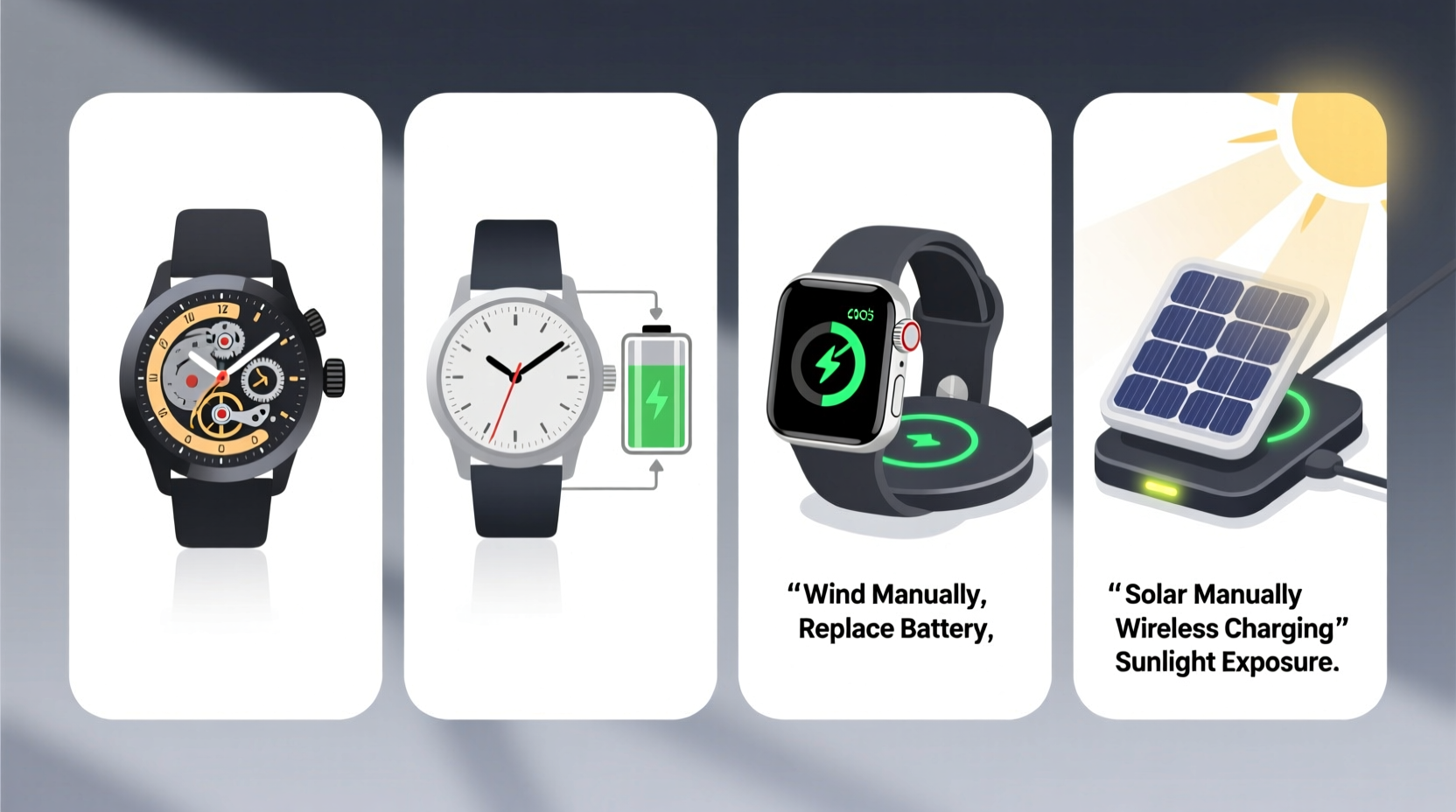
Before diving into charging methods, it’s essential to recognize that not all watches require external charging in the traditional sense. The power source determines how energy is replenished:
- Battery-Powered Quartz Watches: Use disposable batteries; no recharging needed.
- Mechanical & Automatic Watches: Powered by movement; winding replaces “charging.”
- Solar-Powered Watches: Convert light into electrical energy stored in a rechargeable cell.
- Kinetic Watches: Generate power from wrist motion, storing it in a capacitor.
- Smartwatches: Require regular external charging via magnetic docks or USB cables.
Each category demands a distinct approach to maintenance and energy management.
Charging Smartwatches: Best Practices
Smartwatches like the Apple Watch, Samsung Galaxy Watch, and Garmin devices rely on lithium-ion batteries that degrade faster if mishandled. To maximize efficiency and lifespan:
- Use only manufacturer-approved chargers to avoid voltage mismatches.
- Charge in a cool, dry environment—avoid placing on beds or under pillows.
- Keep the watch between 20% and 80% battery when possible; avoid full discharges.
- Remove thick cases during charging to prevent heat buildup.
- Unplug once fully charged to reduce strain on the battery.
Step-by-Step: Charging an Apple Watch Safely
- Place the magnetic charger on a stable surface near an outlet.
- Connect the charging puck to the USB power adapter (preferably 5W or 10W).
- Align the back of the Apple Watch with the magnetic dock until it snaps into place.
- Wait for the green lightning bolt icon to confirm charging has started.
- Allow 60–90 minutes for a full charge, then disconnect promptly.
Avoid using third-party fast chargers unless certified. Excessive current can overheat the device and shorten battery cycle life.
Solar and Kinetic Watch Charging Explained
Solar-powered watches, such as those from Citizen Eco-Drive and Seiko Solar, harness ambient or direct sunlight through photovoltaic cells beneath the dial. These models do not plug in but still require proper exposure to maintain charge.
Optimal Light Exposure Guidelines
| Light Source | Charging Efficiency | Recommended Duration |
|---|---|---|
| Direct Sunlight | High | 1–2 hours for full charge |
| Indoor Fluorescent | Moderate | 4–6 hours daily |
| LED Lighting | Low | Extended exposure required |
| Complete Darkness | None | Power loss after days/weeks |
To keep a solar watch running optimally, wear it regularly and expose it to natural daylight when possible. If stored long-term, fully charge it first and reactivate every 6 months.
Kinetic watches, like Seiko’s Kinetic line, convert arm motion into electrical energy. They store power in a rechargeable cell and can run for months on a full charge. However, prolonged inactivity causes discharge.
“Kinetic watches thrive on consistent use. Wearing them daily is the best way to keep them powered without manual intervention.” — James Reed, Horology Technician at Precision Timeworks
Maintenance Checklist for All Rechargeable Watches
Regardless of type, follow this universal checklist to ensure safe and efficient charging:
- ✅ Clean charging contacts weekly with a dry cotton swab.
- ✅ Avoid charging in humid or wet environments.
- ✅ Never leave devices on charge overnight routinely.
- ✅ Store watches in partial charge (around 50%) if unused for weeks.
- ✅ Replace worn cables or damaged docks immediately.
- ✅ Monitor for swelling, overheating, or slow charging—signs of battery failure.
- ✅ Follow manufacturer guidelines for charging cycles and storage.
Real-World Example: Recovering a Dormant Solar Watch
Mark inherited his father’s Citizen Eco-Drive chronograph, which had been stored in a drawer for two years. The watch was completely dead, hands frozen at 3:17. Instead of assuming it was broken, he placed it under a bright desk lamp (fluorescent) for 8 continuous hours. By the next morning, the second hand began ticking slowly, then normalized. After 24 hours of light exposure, the watch kept accurate time again.
This case illustrates that solar watches can often be revived with patience and proper light exposure—even after extended dormancy. However, repeated deep discharges may degrade the storage cell over time.
Common Charging Mistakes to Avoid
Even experienced users make errors that compromise watch performance. Below are frequent missteps and their consequences:
| Mistake | Risk | Solution |
|---|---|---|
| Using non-OEM chargers | Voltage spikes, circuit damage | Stick to brand-certified accessories |
| Leaving smartwatches on charge for days | Battery degradation | Unplug at 100%; use timers if needed |
| Storing solar watches in dark drawers | Cell depletion, reset issues | Charge monthly if not worn |
| Exposing watches to water while charging | Short circuits, corrosion | Dry thoroughly before connecting |
Frequently Asked Questions
Can I overcharge a smartwatch?
Most modern smartwatches have built-in safeguards that stop charging once the battery reaches 100%. However, leaving them plugged in for extended periods increases heat exposure, which accelerates battery aging. It’s best practice to unplug shortly after full charge.
How long do solar watch batteries last?
The rechargeable cells in solar watches typically last 10–15 years before needing replacement. Unlike disposable batteries, they aren’t meant to be swapped frequently. Proper care extends their functional life significantly.
Do automatic watches need charging?
Automatic watches don’t charge electrically but rely on rotor movement from wrist motion to wind the mainspring. If not worn for 1–2 days, they stop. For regular use, wearing them daily suffices. For collectors, a watch winder maintains tension and keeps them running.
Final Thoughts: Charge Smart, Wear Longer
Charging a watch isn’t one-size-fits-all. Whether you’re plugging in a high-tech smartwatch or relying on sunlight to power a durable field watch, understanding your device’s needs is key. Safe charging habits protect internal components, preserve accuracy, and extend service life—sometimes by decades.
Adopt these methods consistently, respect manufacturer guidelines, and treat your watch not just as a tool, but as a precision instrument worthy of careful maintenance.




 浙公网安备
33010002000092号
浙公网安备
33010002000092号 浙B2-20120091-4
Comments
No comments yet. Why don't you start the discussion?