
In an age where digital footprints are nearly impossible to avoid, managing your online privacy starts with something simple: controlling your search history. Every query you type into a search engine, every page you visit, and every autocomplete suggestion you accept contributes to a detailed profile of your interests, habits, and even location. While this data powers personalized experiences, it also poses risks if left unchecked—especially on shared or compromised devices. The good news is that clearing your search history doesn’t require technical expertise. With the right approach, you can securely erase traces of your browsing activity across smartphones, tablets, laptops, and desktops—without disrupting your essential online functions.
Why Clearing Search History Matters for Digital Privacy
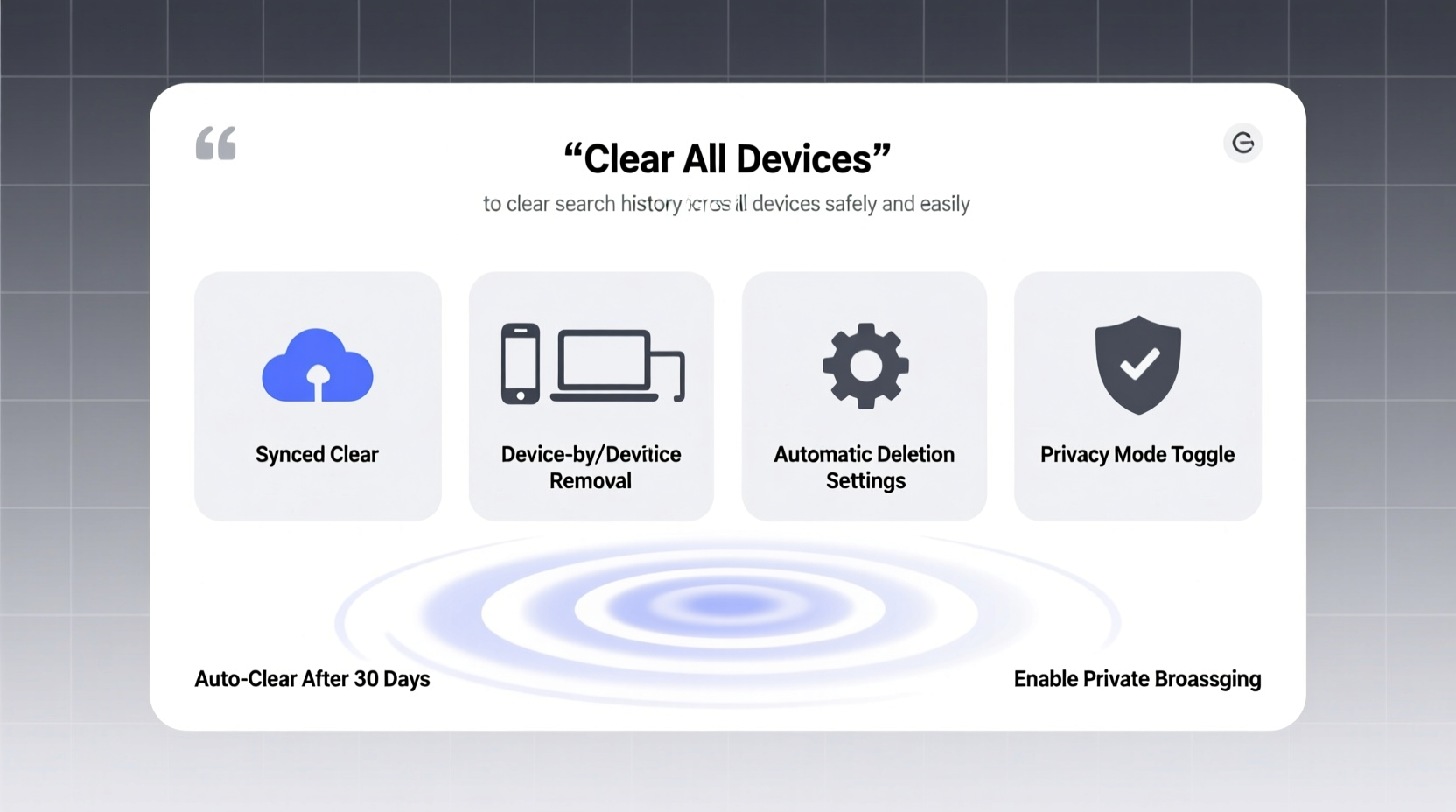
Your search history isn’t just a list of past queries—it’s a roadmap of your behavior. Search engines like Google, Bing, and DuckDuckGo store records of what you’ve searched, when you searched, and often from which device. This information fuels targeted ads, auto-complete suggestions, and sometimes even influences search results. More critically, if someone gains access to your device or account, they can reconstruct sensitive details about your health, finances, relationships, or travel plans.
According to Dr. Lena Patel, cybersecurity researcher at the Institute for Digital Ethics:
“Search history is one of the most revealing datasets in personal computing. It combines intent, timing, and context—making it a goldmine for both marketers and malicious actors.” — Dr. Lena Patel, Cybersecurity Researcher
Regularly clearing this data reduces exposure and limits tracking, especially when using public Wi-Fi, shared devices, or cloud-synced accounts.
Step-by-Step Guide to Clear Search History by Device Type
Different devices and platforms handle search history differently. Below is a systematic method for removing traces across major ecosystems.
1. On Desktop Browsers (Chrome, Firefox, Safari, Edge)
- Google Chrome: Open Chrome → Click the three dots → \"History\" → \"History\" again → Select time range (e.g., \"All time\") → Click \"Clear data\". Ensure \"Browsing history\" and \"Search history in Chrome\" are checked.
- Mozilla Firefox: Menu → Library → History → \"Clear Recent History\" → Choose duration and check \"Browsing & Download History\".
- Apple Safari: Safari menu → Preferences → Privacy → Manage Website Data → Remove All. Also, go to History → Clear History and choose a timeframe.
- Microsoft Edge: Three dots → Settings → Privacy → Clear browsing data → Select \"Browsing history\" and \"Search history\" → Clear now.
2. On Mobile Devices (iOS and Android)
iOS (Safari):
Settings → Safari → Clear History and Website Data. Confirm action. This removes history synced across iCloud-connected devices.
Android (Chrome):
Open Chrome → Tap three dots → History → Clear browsing data → Check \"Browsing history\" and \"Search history\" → Clear data.
If you're signed into a Google account, your search activity may also be stored in Google’s Web & App Activity. To delete that:
- Visit myactivity.google.com.
- Select “Filter by date & product” and choose Chrome or Search.
- Select time range (e.g., Last 7 days, All time).
- Click the trash icon to delete entries.
3. On Smart TVs and Streaming Devices
Many smart TVs (Samsung, LG, Roku) and streaming apps (YouTube, Netflix) track search behavior. To clear:
- Samsung TV: Settings → General → Reset Smart Hub → Clear search history.
- Roku: Settings → Privacy → Advanced system settings → Clear search history.
- YouTube App: Sign in → Settings → History & privacy → Clear watch and search history.
Cross-Device Syncing: Managing Cloud-Based Search Logs
If you use a unified account (Google, Apple ID, Microsoft), your search history may sync automatically across devices. Simply deleting history on one device won’t remove it everywhere unless you address the central account dashboard.
For Google users, Web & App Activity stores not only search but also voice searches, location data, and app usage. To disable future logging:
- Go to Activity Controls.
- Turn off “Web & App Activity”.
- Choose whether to include past activity in your device history.
Similarly, Apple users can manage Siri and Dictation history via Settings → Siri & Search → Disable “Improve Siri & Dictation” to stop recording voice searches.
| Platform | Where History Is Stored | How to Delete Centrally |
|---|---|---|
| Google Account | Web & App Activity, YouTube searches | myactivity.google.com |
| Apple ID | Safari, Siri, Spotlight | Settings → Privacy → Analytics & Improvements |
| Microsoft Account | Bing searches, Edge history | account.microsoft.com/privacy |
| Amazon Fire TV | Search in Alexa, Prime Video | Alexa app → Settings → Manage Your Content |
Best Practices for Ongoing Privacy Maintenance
Deleting history once isn’t enough. Consistent habits ensure long-term protection.
Checklist: Monthly Search History Cleanup Routine
- ✅ Log into your primary Google/Apple/Microsoft account and review activity dashboard.
- ✅ Delete search history older than 30 days (or all-time).
- ✅ Clear browser history on all personal devices (desktop, phone, tablet).
- ✅ Review permissions for apps with access to search or voice input.
- ✅ Disable auto-sync if not needed, or enable auto-delete (e.g., Google’s “Auto-delete after 3 months”).
Consider using privacy-focused search engines like DuckDuckGo or Startpage, which do not track user queries or build profiles. These tools eliminate the need for frequent cleanups since no history is stored in the first place.
Real Example: Recovering Control After a Security Scare
Sophie, a freelance writer from Portland, noticed unusual ad targeting after lending her tablet to her teenager. Ads began appearing for therapy services, pregnancy tests, and debt relief—topics she had only searched privately. Alarmed, she realized her Google account was syncing across devices, and her child had used her login. She immediately visited myactivity.google.com, filtered by “Today,” reviewed the flagged searches, and deleted them. She then turned off Web & App Activity and set up a separate family profile. Within hours, the invasive ads disappeared. Her experience highlights how easily cross-device syncing can expose private data—and how quickly it can be corrected.
Frequently Asked Questions
Will clearing search history log me out of websites?
No. Clearing history only removes records of visited pages and searches. You’ll stay logged in unless you specifically choose to clear cookies or site data.
Can deleted search history be recovered by hackers or service providers?
Once deleted through official channels (like Google’s My Activity), the data is permanently removed from your view. However, service providers may retain anonymized logs for internal analytics, though they cannot tie them directly to your identity after deletion.
Does incognito mode prevent all tracking?
No. While incognito or private browsing prevents local history storage, your ISP, employer, or website operators may still track your activity. For stronger anonymity, combine incognito mode with a trusted VPN.
Take Control of Your Digital Trail Today
Your search history shapes more than your next Google result—it influences your digital identity. By taking regular, deliberate steps to clear and manage this data across all devices, you reclaim control over your privacy. Whether you’re protecting sensitive information, avoiding awkward ad retargeting, or simply maintaining digital hygiene, the tools are readily available. Start today: open your activity dashboard, delete outdated logs, adjust your settings, and establish a routine that keeps your online presence truly yours.




 浙公网安备
33010002000092号
浙公网安备
33010002000092号 浙B2-20120091-4
Comments
No comments yet. Why don't you start the discussion?