
Air bubbles in your pool pump may seem like a minor annoyance, but they can significantly impair your filtration system’s efficiency. When air enters the pump, it reduces water flow, increases strain on the motor, and can lead to premature wear or even catastrophic failure. Left unaddressed, this issue compromises water circulation, diminishes chemical distribution, and ultimately affects water quality. Fortunately, most causes of air intrusion are preventable and often easy to diagnose and fix with the right knowledge.
Understanding how your pool’s circulation system works is the first step toward solving air-related issues. The pump relies on a sealed suction line to draw water from the pool, pass it through the filter, and return it cleanly. Any breach in this closed system—no matter how small—can introduce air, disrupting prime and reducing performance. This guide walks through proven techniques to identify, correct, and prevent air bubbles in your pool pump, ensuring consistent operation and extending the life of your equipment.
Understanding How Air Enters the Pump System
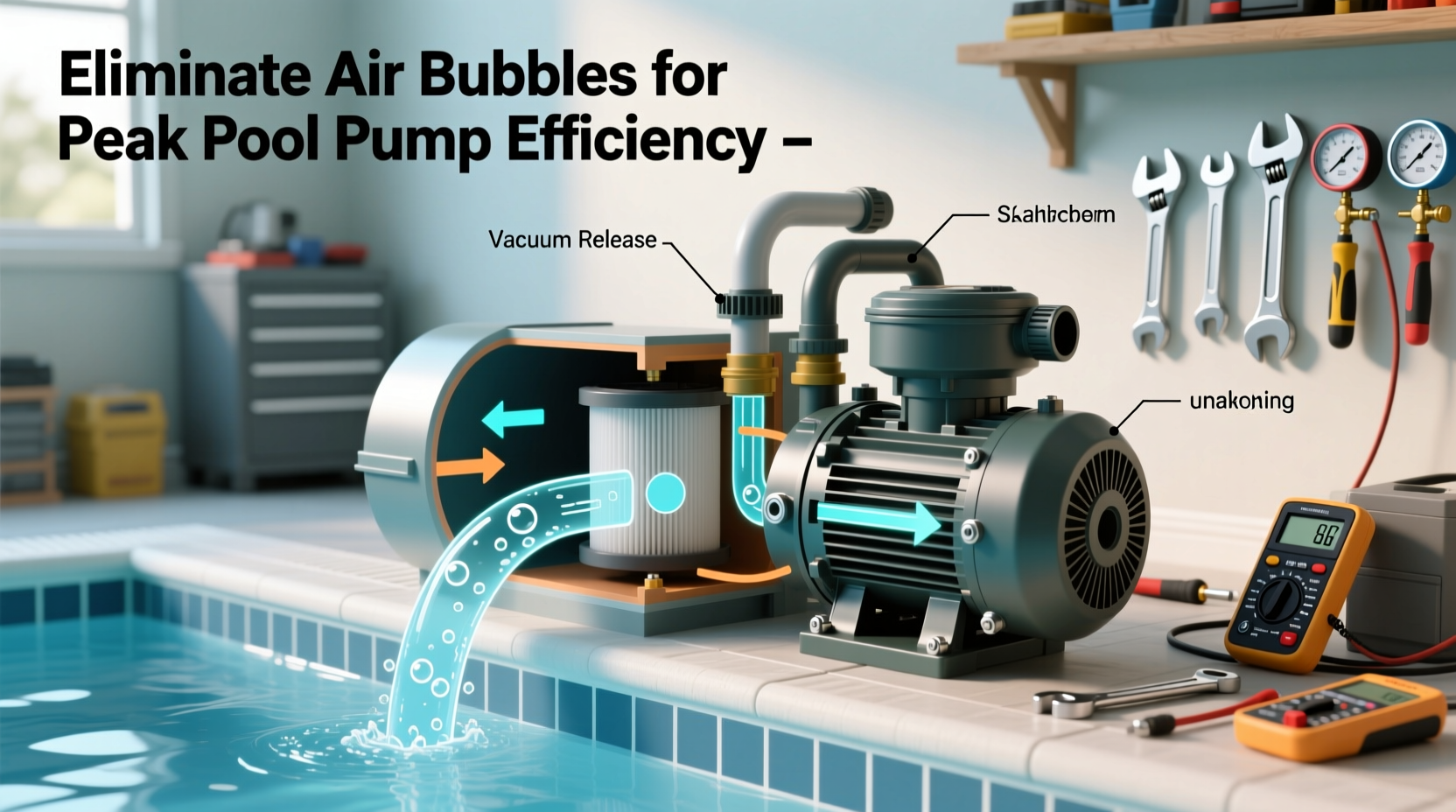
Air infiltration typically occurs on the suction side of the pump—the section between the pool and the pump inlet. Common entry points include loose fittings, cracked pipes, worn O-rings, or low water levels in the pool. When the system loses its prime, you’ll notice visible bubbles in the pump basket housing, reduced water pressure, or a rattling sound from the motor.
The most frequent culprits include:
- Loose or damaged pump lid or O-ring
- Clogged skimmer or pump basket
- Cracked or improperly sealed plumbing joints
- Low water level in the pool (below the skimmer intake)
- Faulty valves or unions on the suction line
- Air leaks in underground piping (less common but serious)
Before attempting repairs, ensure the pump is turned off and the power supply disconnected for safety. Begin by visually inspecting accessible components for obvious signs of damage or looseness.
Step-by-Step Guide to Bleeding Air from the Pump
If your pump has lost prime due to air buildup, re-priming is essential. Follow this sequence to restore proper function:
- Turn off the pump at the circuit breaker to ensure safety.
- Open the pump lid and inspect the impeller basket. Remove any debris blocking water flow.
- Fill the pump chamber completely with water using a garden hose or bucket. This displaces trapped air and helps re-establish prime.
- Reinstall the lid and ensure the O-ring is properly seated and lubricated.
- Open the air relief valve on top of the filter tank (if equipped). This allows air to escape once the system restarts.
- Turn the pump back on and allow it to run. Watch for water spraying from the relief valve.
- Once a steady stream of water emerges, close the air relief valve. The system should now be fully primed.
This process usually takes 1–3 minutes. If the pump fails to prime or continues drawing air, there is likely an underlying leak that needs attention.
Common Leak Sources and How to Fix Them
Even small leaks on the suction side can introduce enough air to disrupt pump performance. Here’s how to locate and repair the most frequent problem areas:
Pump Lid and O-Ring
The transparent lid on the pump strainer basket is a common source of air leaks. Over time, the rubber O-ring degrades, dries out, or becomes misaligned. Inspect it regularly for cracks or flattening. Clean the groove where the O-ring sits and apply a silicone-based lubricant before reassembly. Never use petroleum-based products, as they degrade rubber seals.
Plumbing Fittings and Unions
Check all threaded connections, especially PVC unions near the pump. These can loosen due to vibration or thermal expansion. Use a wrench to gently tighten them, but avoid cracking the plastic. If a fitting is cracked or brittle, replace it with a new PVC joint, using appropriate cement for a watertight seal.
Skimmer and Suction Lines
If the water level in your pool drops below the skimmer opening, the skimmer will suck in air instead of water. Maintain the water level at the midpoint of the skimmer intake. Additionally, inspect the skimmer weir (the floating door inside) to ensure it moves freely and seals properly.
| Component | Common Issue | Solution |
|---|---|---|
| Pump Lid O-Ring | Dry, cracked, or missing seal | Replace and lubricate with silicone grease |
| Union Fitting | Loose or hairline crack | Tighten or replace with PVC cement |
| Drain Plug | Missing or loose plug on pump housing | Inspect and tighten or replace |
| Valve Stem | Worn gasket allowing air ingress | Replace valve or rebuild kit |
| Pool Water Level | Below skimmer intake | Refill to mid-skimmer level |
Expert Insight: Preventive Maintenance Matters
Regular inspection and maintenance are key to avoiding recurring air issues. Seasonal changes, freeze-thaw cycles, and normal wear all contribute to system degradation. Addressing small problems early prevents costly repairs later.
“Many pool owners wait until the pump fails completely before investigating air leaks. A five-minute monthly check of the pump seal and plumbing can save hundreds in motor repairs.” — Carlos Mendez, Certified Pool Operator and HVAC-Pool Systems Technician
Mini Case Study: Resolving Chronic Air Issues in a Backyard Pool
A homeowner in Austin, Texas, reported persistent air bubbles in their Hayward pump despite repeated priming. Water flow was weak, and the motor overheated after short runs. Initial checks revealed a clean basket and properly filled pump chamber, but bubbles continued to appear.
Upon closer inspection, a hairline crack was found in the PVC union connecting the skimmer line to the pump. The crack was not visible when dry but expanded under suction, pulling in air. The union was replaced with a new solvent-welded joint, and the system was re-primed. After the repair, the pump achieved full prime within 90 seconds and operated silently with strong water return. The owner now performs quarterly visual inspections of all above-ground plumbing joints to catch similar issues early.
Prevention Checklist: Keep Your Pump Air-Free
To maintain optimal pump performance and prevent future air intrusion, follow this routine checklist:
- ✅ Check water level weekly; keep it at mid-skimmer height
- ✅ Inspect pump lid O-ring for wear and lubricate monthly
- ✅ Clean pump and skimmer baskets every 7–10 days
- ✅ Examine visible plumbing for cracks, warping, or loose fittings
- ✅ Tighten unions and connections as needed (avoid over-tightening)
- ✅ Bleed air from filter tank after winterization or service
- ✅ Listen for unusual noises (gurgling, knocking) indicating air entry
- ✅ Schedule professional inspection annually, especially before summer
Frequently Asked Questions
Why is my pump making a loud noise and shooting bubbles?
This usually indicates air being drawn into the suction line. Common causes include a loose pump lid, cracked pipe, or low water level. Turn off the pump immediately to prevent motor damage and inspect all seals and connections.
Can air in the pump damage the motor?
Yes. Running a pump without adequate water flow—known as “dry running”—causes rapid overheating. The motor’s internal components, including the shaft seal, can fail within minutes. Always ensure the pump is primed and flowing before extended operation.
How do I know if I have an underground leak?
If all above-ground components are sealed and you still experience air issues, the leak may be in buried suction lines. Signs include persistent loss of prime, wet spots near plumbing routes, or dropping water levels unrelated to evaporation. A pressure test by a licensed technician can confirm subsurface leaks.
Conclusion: Take Action for a Healthier Pool System
Eliminating air bubbles from your pool pump isn’t just about restoring water flow—it’s about protecting your investment and ensuring clean, safe swimming conditions. By understanding how air enters the system, applying targeted fixes, and adopting a preventive mindset, you can keep your pump running efficiently for years. Small habits like regular basket cleaning, O-ring care, and water level monitoring pay off in reliability and performance.




 浙公网安备
33010002000092号
浙公网安备
33010002000092号 浙B2-20120091-4
Comments
No comments yet. Why don't you start the discussion?