
Finding a person when you only know their first name can feel like searching for a needle in a digital haystack. Whether you're reconnecting with an old acquaintance, tracking down a distant relative, or verifying someone’s identity, limited information presents a challenge. However, modern tools, public records, and strategic research techniques make it possible to narrow the search—even with just a single piece of data. The key lies in combining persistence with smart, ethical methods that respect privacy while maximizing results.
Understanding the Limitations of a First Name Search
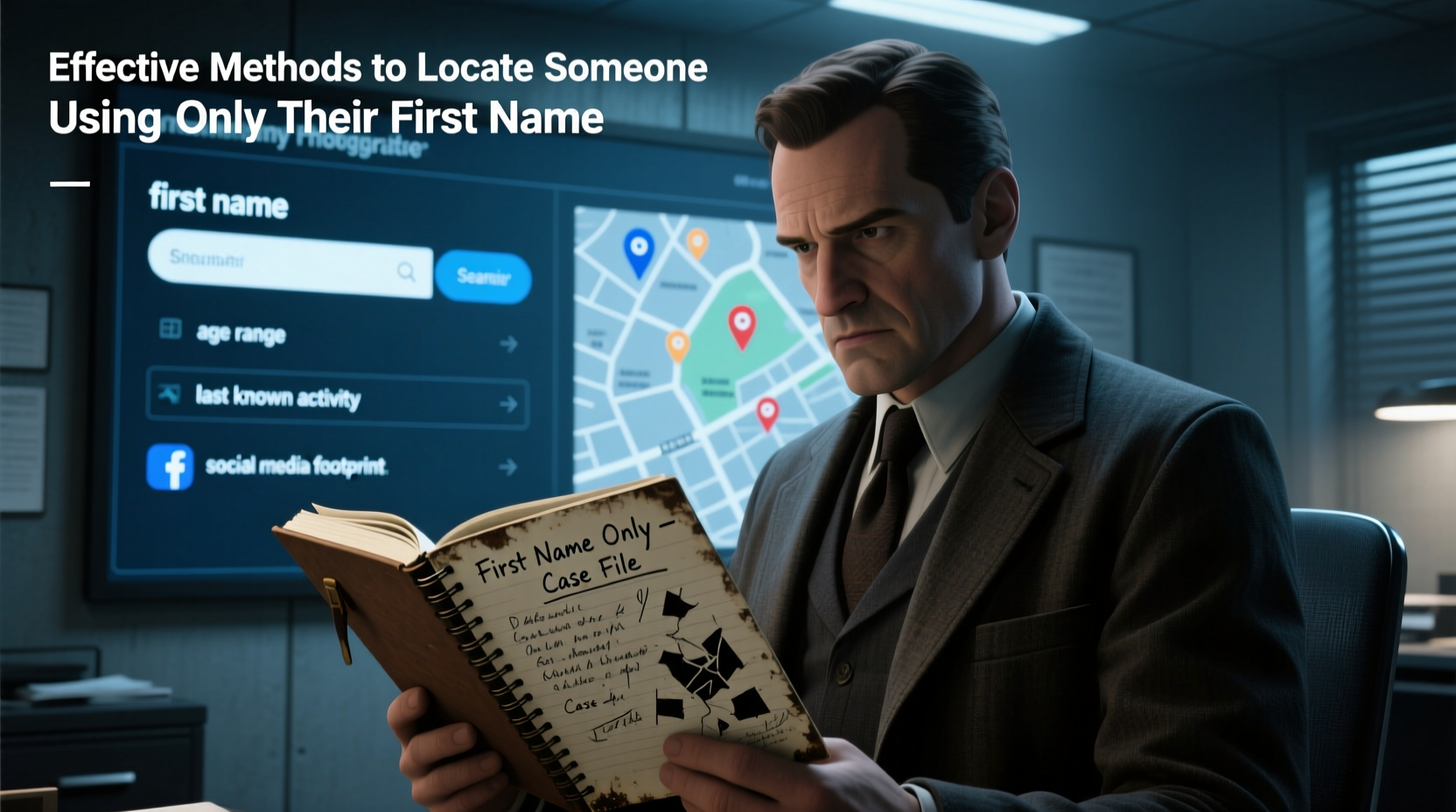
A first name alone is rarely enough to identify a specific individual due to its commonality. Names like “John,” “Sarah,” or “Michael” appear millions of times across public databases, social networks, and directories. Without additional context—such as a last name, location, age, profession, or associated email address—the risk of misidentification increases significantly.
That said, a first name is still a valuable starting point. When paired with even small details—like where the person might live, their approximate age, or mutual connections—it becomes a viable anchor for deeper investigation.
Step-by-Step Guide to Finding Someone Using Only Their First Name
Locating someone with minimal information requires a structured approach. Follow this timeline to methodically expand your search without wasting time on dead ends.
- Gather what you know: Note any additional clues—city, age range, former school, employer, or mutual friends—even if they seem minor.
- Search social media platforms: Use Facebook, LinkedIn, Instagram, and Twitter with filters like location, education, or job title to narrow results.
- Use people search engines: Enter the first name into services like Whitepages, Spokeo, or Pipl, adding known details to refine matches.
- Explore public records: Check voter registration, property ownership, or court records via government sites or aggregators.
- Leverage reverse image search (if available): If you have a photo, use Google Images or TinEye to find associated profiles.
- Reach out through mutual contacts: If you share a connection, ask discreetly for assistance or confirmation.
- Verify findings: Cross-reference multiple sources to avoid false positives.
Why This Approach Works
This sequence prioritizes accessibility and privacy compliance. Starting with publicly available platforms reduces the risk of overstepping legal boundaries, while each step builds on the previous one to gradually isolate likely candidates. Patience and attention to detail are essential—rushing often leads to confusion or contacting the wrong person.
Top Tools and Platforms for Effective Searches
Different tools offer unique advantages depending on the type of information you seek. Below is a comparison of reliable resources for locating individuals based on a first name and supplementary clues.
| Tool | Type | Best For | Limitations |
|---|---|---|---|
| Social Media | Finding personal connections, photos, locations | Requires login; privacy settings limit visibility | |
| Professional Network | Identifying careers, companies, education history | Less useful for non-professionals or younger users | |
| Spokeo | People Search Engine | Aggregated public records and contact info | Paid reports required for full details |
| Whitepages | Directory Service | Phone numbers, addresses, background checks | Data may be outdated or incomplete |
| FamilySearch.org | Genealogy Database | Historical records, family trees, birth data | Mostly U.S.-focused; slower for recent individuals |
Using these tools in tandem increases the chances of success. For example, discovering a possible match on Facebook can lead to a LinkedIn profile, which may then confirm employment details visible in a Spokeo report.
Real Example: Reconnecting with a Childhood Friend
Mark wanted to find his childhood friend “Elena,” whom he hadn’t seen since elementary school in Portland, Oregon. He remembered she attended Lincoln High School and had moved away around 2005. With only her first name and rough timeline, Mark began his search.
He started by searching “Elena + Lincoln High School + Portland” on Facebook and LinkedIn. On Facebook, he found several women named Elena who listed the school, but none matched the age group. Switching to LinkedIn, he filtered by school and location, narrowing results to those who graduated between 2000 and 2006. One profile stood out: Elena Martinez, now a graphic designer in Seattle.
To verify, Mark searched her full name on Google and found a portfolio site linking her to Portland roots. He sent a connection request with a note explaining their shared past. Within days, Elena responded, confirming they were classmates. The reunion was successful—all from a single name and a few contextual clues.
“Even the most limited information can yield results when combined with patience and the right digital tools.” — Dr. Alan Reyes, Digital Privacy Researcher, University of Washington
Checklist: How to Maximize Your Search Success
- ✅ Write down every detail you recall about the person, no matter how small
- ✅ Use quotation marks in search engines (e.g., “First Name” + “City”) to improve accuracy
- ✅ Filter social media searches by school, workplace, or location
- ✅ Try variations of the first name (e.g., “Mike” vs. “Michael”)
- ✅ Avoid sharing sensitive details during initial outreach
- ✅ Double-check identities using at least two confirming factors
- ✅ Respect privacy—do not persist if someone does not respond
Privacy and Ethical Considerations
While finding someone online is technically feasible, it must be done responsibly. Publicly available information doesn’t mean it’s intended for unrestricted use. Aggressive tracking, unsolicited contact, or misuse of personal data can cross legal and moral lines.
In the U.S., laws like the Fair Credit Reporting Act (FCRA) restrict how certain data can be used, especially for employment or tenant screening. Even casual searches should follow basic ethical guidelines: pursue only legitimate reasons (reconnection, gratitude, clarification), avoid deception, and cease efforts if the person expresses disinterest.
FAQ
Can I find someone with just a first name and no other details?
It’s extremely difficult and often unreliable. A first name alone yields too many results. You’ll need at least one additional clue—like a city, age, or shared connection—to meaningfully narrow the field.
Are free people search websites accurate?
Free sites like Whitepages or PeekYou provide basic data, but accuracy varies. Information may be outdated or belong to someone with a similar name. Paid services typically offer more current and verified details, though they’re not foolproof.
Is it legal to look up someone online?
Yes, accessing publicly available information is legal. However, using that data for harassment, fraud, stalking, or impersonation is not. Always ensure your intent is respectful and lawful.
Conclusion
Locating someone using only their first name demands strategy, patience, and a commitment to ethical practices. While technology has made information more accessible than ever, it also requires greater responsibility. By leveraging social networks, public records, and targeted search techniques—and by respecting privacy at every step—you can successfully reconnect with someone while maintaining integrity.




 浙公网安备
33010002000092号
浙公网安备
33010002000092号 浙B2-20120091-4
Comments
No comments yet. Why don't you start the discussion?