
Modern web browsers are powerful tools, but over time they can become bogged down by unnecessary add-ons, extensions, and background processes. These elements often run silently in the background, consuming memory, slowing page loads, and increasing vulnerability to security threats. Whether you're using Chrome, Firefox, Edge, or Safari, removing unused or harmful add-ons is one of the most effective ways to restore speed and stability. This guide walks through practical, tested strategies to declutter your browser and optimize its performance.
Why Browser Add-Ons Degrade Performance
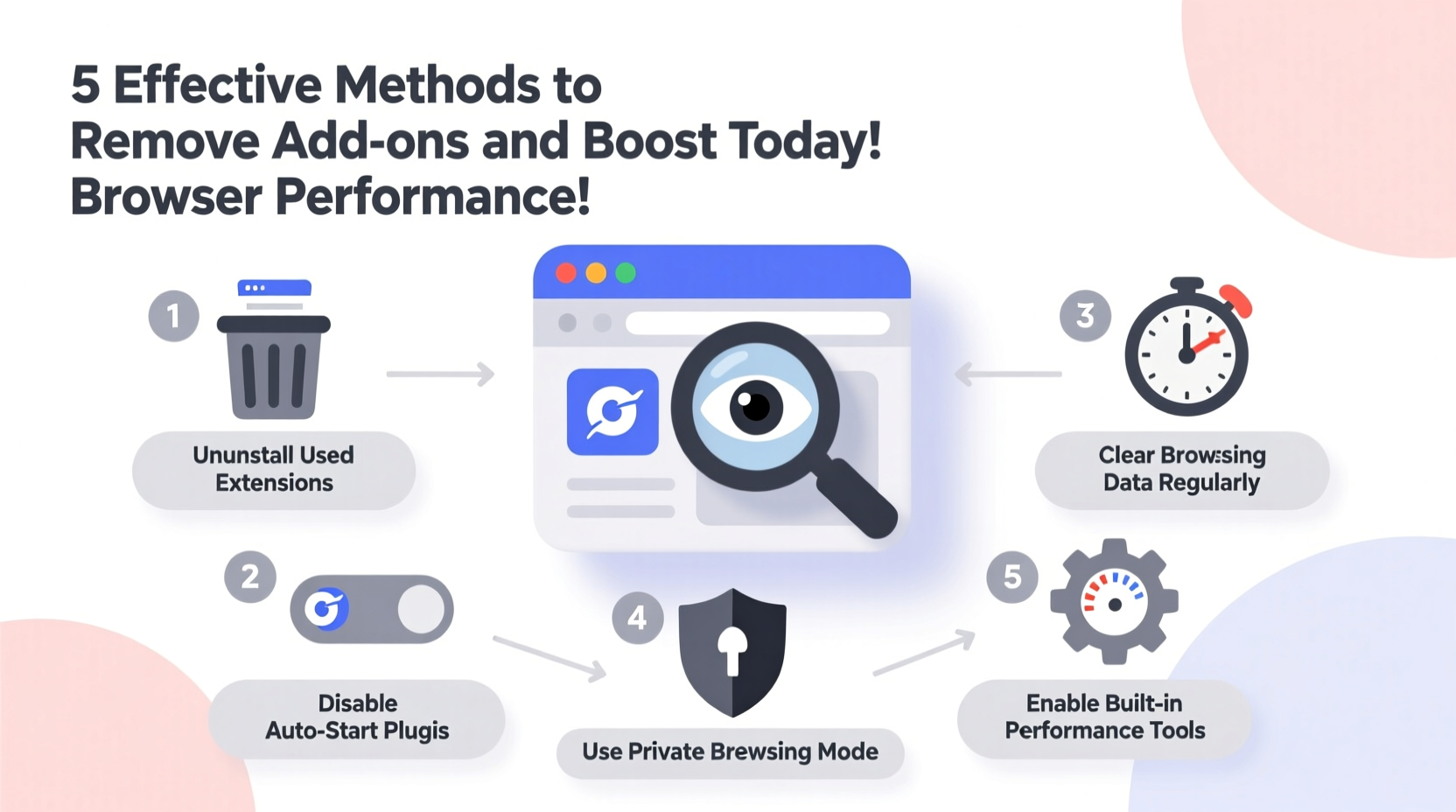
Add-ons—also known as extensions or plugins—are small software programs that enhance browser functionality. While some, like password managers or ad blockers, provide real value, others operate without delivering noticeable benefits. Many run scripts every time a page loads, track browsing behavior, or inject ads into web pages. Each active extension consumes system resources, including RAM and CPU cycles. When too many are enabled, especially poorly coded ones, they create lag, increase crash frequency, and reduce battery life on laptops.
A study by Mozilla found that users with more than 10 active extensions experienced up to 30% slower startup times and higher memory usage. Google has also reported that malicious extensions are a leading cause of browser instability and data leaks.
“Every extension you install is essentially granting third-party code access to your browsing activity. The fewer you have, the more control and performance you retain.” — Sarah Lin, Senior Browser Security Analyst at Firefox
Step-by-Step Guide to Removing Unwanted Add-Ons
Removing unnecessary add-ons is simple but requires attention to detail. Follow this timeline to clean your browser effectively:
- Open your browser’s extension manager: In Chrome, go to Settings > Extensions. In Firefox, click the menu button > Add-ons and Themes. On Edge, navigate to Settings > Extensions.
- Review each installed extension: Look at the name, developer, permissions, and last update date. Unknown developers or outdated extensions are red flags.
- Disable first, then delete: Temporarily disable an extension instead of immediately deleting it. Test browsing for a day to ensure no critical function is broken.
- Delete confirmed unused extensions: Click “Remove” or “Uninstall” on extensions you no longer need.
- Clear residual data: Some extensions leave behind cookies or cached files. Go to Settings > Privacy and Security > Clear Browsing Data and select “Cookies and other site data” and “Cached images and files.”
- Restart the browser: A full restart ensures all background processes from removed add-ons are terminated.
Best Practices for Managing Extensions Long-Term
Maintaining a lean, efficient browser requires ongoing discipline. Here’s how to avoid clutter buildup:
- Adopt a one-in, one-out rule: Before installing a new extension, remove an existing one.
- Limit total extensions to five or fewer: Stick to essential tools only—password managers, privacy protectors, and productivity enhancers.
- Regularly audit your add-ons: Set a monthly reminder to review what’s installed.
- Use built-in features when possible: Modern browsers include native translation, screenshot tools, and dark mode—avoid adding extensions that duplicate these.
- Install only from official stores: Avoid third-party download sites that bundle malware-infected extensions.
Do’s and Don’ts of Extension Management
| Do | Don't |
|---|---|
| Install extensions with high user ratings and recent updates | Click “Add to Chrome” without reviewing permissions |
| Check what data an extension accesses before installing | Keep extensions you haven’t used in over 30 days |
| Use incognito mode to test new extensions safely | Allow extensions to run in the background indefinitely |
| Enable developer mode only when necessary | Download .crx files from untrusted sources |
Real Example: Recovering a Sluggish Work Browser
Jamal, a digital marketer, noticed his laptop was overheating and Chrome was taking over two minutes to start. His tab loading times had worsened, and video conferences frequently froze. After checking Task Manager, he discovered that \"Tab Suspender,\" \"Coupon Finder Pro,\" and \"Social Media Notifier\" were consuming over 700MB of RAM collectively—even when idle.
He disabled all non-essential extensions, cleared cache, and re-enabled only LastPass and Grammarly. Within minutes, startup time dropped to under 15 seconds, and system temperature normalized. Over the next week, he monitored performance and found his battery lasted nearly 40% longer during remote meetings. By trimming excess, Jamal restored both speed and reliability without upgrading hardware.
Additional Performance Optimization Techniques
While removing add-ons is crucial, combining it with other optimizations delivers maximum results:
Enable Hardware Acceleration (Carefully)
This setting uses your GPU to render web content, improving video playback and animation smoothness. However, if your system is older or drivers are outdated, it may cause crashes. To enable: Settings > System > Use hardware acceleration when available. Restart and monitor stability.
Manage Startup Behavior
Prevent your browser from launching at startup unless needed. On Windows, open Task Manager > Startup tab and disable the browser entry. On macOS, go to System Settings > General > Login Items and toggle off the browser.
Use Built-In Cleanup Tools
Chrome includes a dedicated cleanup tool (Settings > Reset settings > Clean up computer) that scans for harmful software. Firefox offers Troubleshoot Mode to identify problematic components. Run these periodically.
Switch to a Lightweight Profile
If you use your browser for different purposes (work, personal, shopping), create separate profiles. Each profile can have its own minimal set of extensions, reducing cross-contamination and bloat.
FAQ
How do I know if an extension is malicious?
Signs include sudden redirects, unfamiliar toolbars, excessive permission requests (e.g., reading all website data), and negative reviews mentioning scams or slowdowns. Check the extension’s page in the official store for warnings or removal notices.
Can disabling extensions improve battery life?
Yes. Background scripts from extensions prevent your CPU from entering low-power states. Disabling even two or three resource-heavy extensions can extend laptop battery life by 20–30%, especially on Chromebooks and ultrabooks.
Will removing extensions delete my saved passwords or bookmarks?
No. Extensions don’t store core browser data like bookmarks or passwords unless explicitly designed to (e.g., password managers). If you remove a password manager, your login details remain in your browser’s native password saver—if previously synced or saved there.
Final Checklist: Optimize Your Browser in One Session
- Open your browser’s extensions/settings panel.
- List all installed add-ons and note their purpose.
- Disable any unfamiliar or unused extensions.
- Delete extensions confirmed as unnecessary.
- Clear browsing data (cache, cookies, site data).
- Turn off hardware acceleration if experiencing crashes.
- Restart the browser and test performance.
- Re-enable only mission-critical extensions.
- Bookmark alternatives for deleted tools.
- Schedule a monthly review reminder.
Conclusion
A fast, secure browser doesn’t require expensive upgrades—just smart maintenance. By regularly auditing and removing redundant or harmful add-ons, you reclaim speed, reduce security risks, and extend device lifespan. The steps outlined here are simple but profoundly effective. Start today: spend 15 minutes cleaning your browser, and experience the difference immediately. A leaner browser isn’t just faster—it’s safer, cooler, and more reliable.




 浙公网安备
33010002000092号
浙公网安备
33010002000092号 浙B2-20120091-4
Comments
No comments yet. Why don't you start the discussion?