
Mangoes are a summer favorite—sweet, juicy, and full of flavor. But their vibrant pulp can leave behind stubborn yellow-orange stains on clothing, especially on delicate or brightly colored fabrics. Unlike oil-based or protein stains, mango stains contain natural pigments and enzymes that bind quickly to fibers, making them challenging to treat. The biggest concern? Preserving the original color of your garment while removing the stain. Many conventional stain removers or bleach-based solutions risk fading dyes or altering fabric texture. Fortunately, with prompt action and the right techniques, you can lift mango stains effectively without compromising the integrity of your favorite colored clothes.
Understanding Mango Stains: Why They’re Tricky
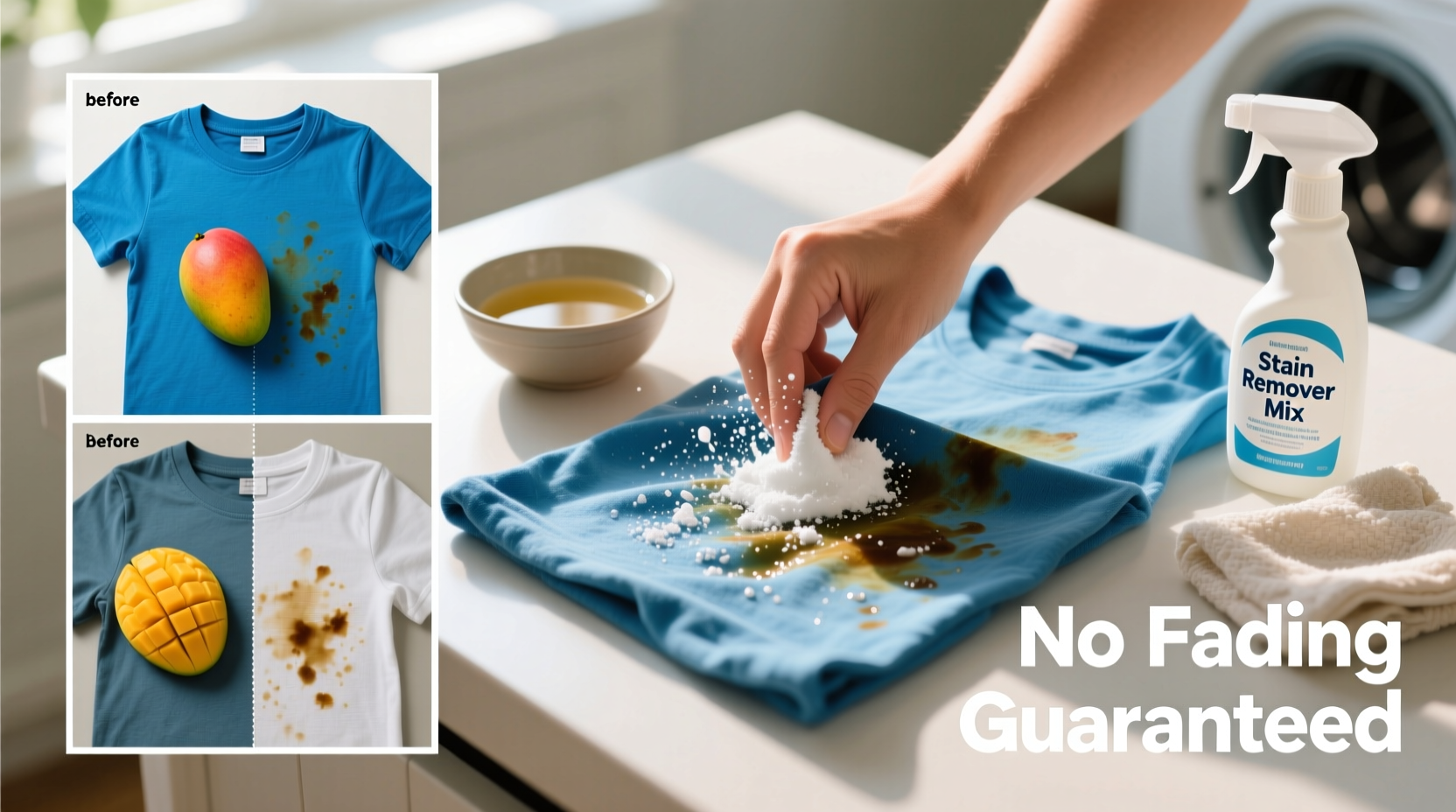
Mango pulp contains both water-soluble sugars and insoluble pigments like carotenoids, which give the fruit its golden hue. These pigments adhere strongly to cotton, polyester, and blended fabrics, particularly when exposed to heat. Once set by washing in hot water or drying in a machine, the stain becomes nearly permanent. Additionally, the acidity in mango juice can react with certain dyes, leading to discoloration even if the visible stain is removed.
Colored garments are especially vulnerable because aggressive cleaning agents—like chlorine bleach or strong detergents—can break down dye molecules, causing fading or patchiness. This makes it essential to use gentle, pH-balanced methods that target the stain without attacking the fabric’s color.
Step-by-Step Guide to Remove Mango Stains Safely
Immediate intervention is key. Follow this timeline for optimal results:
- Blot, don’t rub (0–5 minutes after staining): Use a clean, dry cloth to gently blot excess mango pulp. Rubbing spreads the stain deeper into fibers.
- Rinse with cold water (within 10 minutes): Hold the stained area under cold running water from the back side to push the stain out, not further in.
- Pre-treat with a mild solution (within 30 minutes): Apply one of the safe removers listed below.
- Wash carefully: Launder in cold water using a color-safe detergent. Avoid heat until the stain is fully gone.
- Air dry: Do not use a dryer until you’ve confirmed the stain is removed. Heat sets stains permanently.
If the Stain Persists:
Repeat the pre-treatment process before rewashing. Never expose the garment to high heat until the stain is completely gone.
Safe and Effective Home Remedies
Many household items can break down mango pigments without harming fabric dyes. Below are proven, color-safe options:
- White vinegar and dish soap: Mix one tablespoon of white vinegar, one tablespoon of liquid dish soap (clear, fragrance-free), and two cups of cold water. Dab onto the stain, let sit for 15 minutes, then rinse.
- Lemon juice + salt (for whites only): Not recommended for colored clothes, as lemon juice acts as a natural bleaching agent under sunlight.
- Baking soda paste: Combine baking soda with a small amount of water to form a thick paste. Apply to the stain, gently dab with a soft brush, and let sit for 20 minutes before rinsing.
- Hydrogen peroxide (3%) + water (test first): Dilute equal parts and apply only to colorfast fabrics. Blot, wait 10 minutes, rinse thoroughly. Perform a spot test on an inside seam first.
“Enzyme-based cleaners work best on organic stains like fruit, but always check the label for color-safe formulations.” — Dr. Lena Patel, Textile Chemist at EcoClean Labs
Do’s and Don’ts When Treating Colored Fabrics
| Do’s | Don’ts |
|---|---|
| Use cold water for rinsing and washing | Use hot water—it sets the stain |
| Test any solution on an inconspicuous area first | Apply undiluted vinegar or peroxide directly |
| Blot stains gently with a clean cloth | Rub aggressively—it spreads the stain |
| Use color-safe oxygen bleach (e.g., OxiClean Color) | Use chlorine bleach on colored garments |
| Air dry after successful treatment | Tumble dry before confirming stain removal |
Real Example: Removing a Mango Stain from a Red Cotton Dress
Sophia, a teacher from Miami, spilled mango smoothie on her favorite red summer dress during a picnic. She immediately rinsed the back of the stain under cold tap water for two minutes. At home, she mixed one part dish soap with one part white vinegar and applied it with a cotton ball, letting it sit for 12 minutes. After rinsing again, she washed the dress in cold water with a color-protect laundry detergent. Upon air drying, the stain was gone, and the red hue remained vibrant. She later shared: “I almost gave up on the dress, but acting fast made all the difference.”
Checklist: Mango Stain Removal Action Plan
Keep this checklist handy for future spills:
- ✅ Blot excess pulp with a clean cloth
- ✅ Rinse under cold water (from the back)
- ✅ Test cleaning solution on hidden area
- ✅ Apply vinegar-dish soap mix or color-safe stain remover
- ✅ Wait 10–20 minutes before rinsing
- ✅ Wash in cold water with color-safe detergent
- ✅ Air dry and inspect—repeat if needed
- ❌ Never use heat until the stain is gone
Frequently Asked Questions
Can I use baking soda on dark-colored clothes?
Yes, baking soda is generally safe for dark colors when used as a paste and rinsed thoroughly. However, avoid prolonged contact and always test on a hidden seam first, especially with loosely woven or vintage fabrics.
Is hydrogen peroxide safe for colored clothes?
Diluted hydrogen peroxide (3%) can be used on some colorfast fabrics, but it carries a risk of lightening dyes. Always perform a spot test. For safer alternatives, consider oxygen-based cleaners labeled “color-safe.”
What if the mango stain has already been dried?
Dried stains are more difficult but not hopeless. Soak the garment in a solution of cold water and color-safe oxygen bleach for 30 minutes to several hours. Gently agitate, then rinse and re-treat with vinegar-soap mix before washing again in cold water.
Conclusion: Preserve Color, Eliminate Stains
Removing mango stains from colored clothes doesn’t require harsh chemicals or costly products. With quick response, cold water, and gentle, tested solutions like vinegar and dish soap, most stains can be lifted safely. The key is avoiding heat and abrasive treatments that compromise fabric dyes. By understanding how fruit pigments interact with textiles and following a careful, methodical approach, you can protect your wardrobe’s vibrancy while enjoying your favorite seasonal fruits worry-free.




 浙公网安备
33010002000092号
浙公网安备
33010002000092号 浙B2-20120091-4
Comments
No comments yet. Why don't you start the discussion?