
Tipp-Ex, commonly known as correction fluid, is a quick fix for paper mistakes but a frustrating problem when it lands on clothing. Its solvent-based formula and opaque white pigments can bond tightly with fabric fibers, making removal difficult. However, with the right approach, it’s possible to lift Tipp-Ex effectively—without compromising the integrity of your garments. This guide covers proven techniques tailored to different fabric types, backed by textile care principles and real-world testing.
Understanding Tipp-Ex Composition and Fabric Interaction
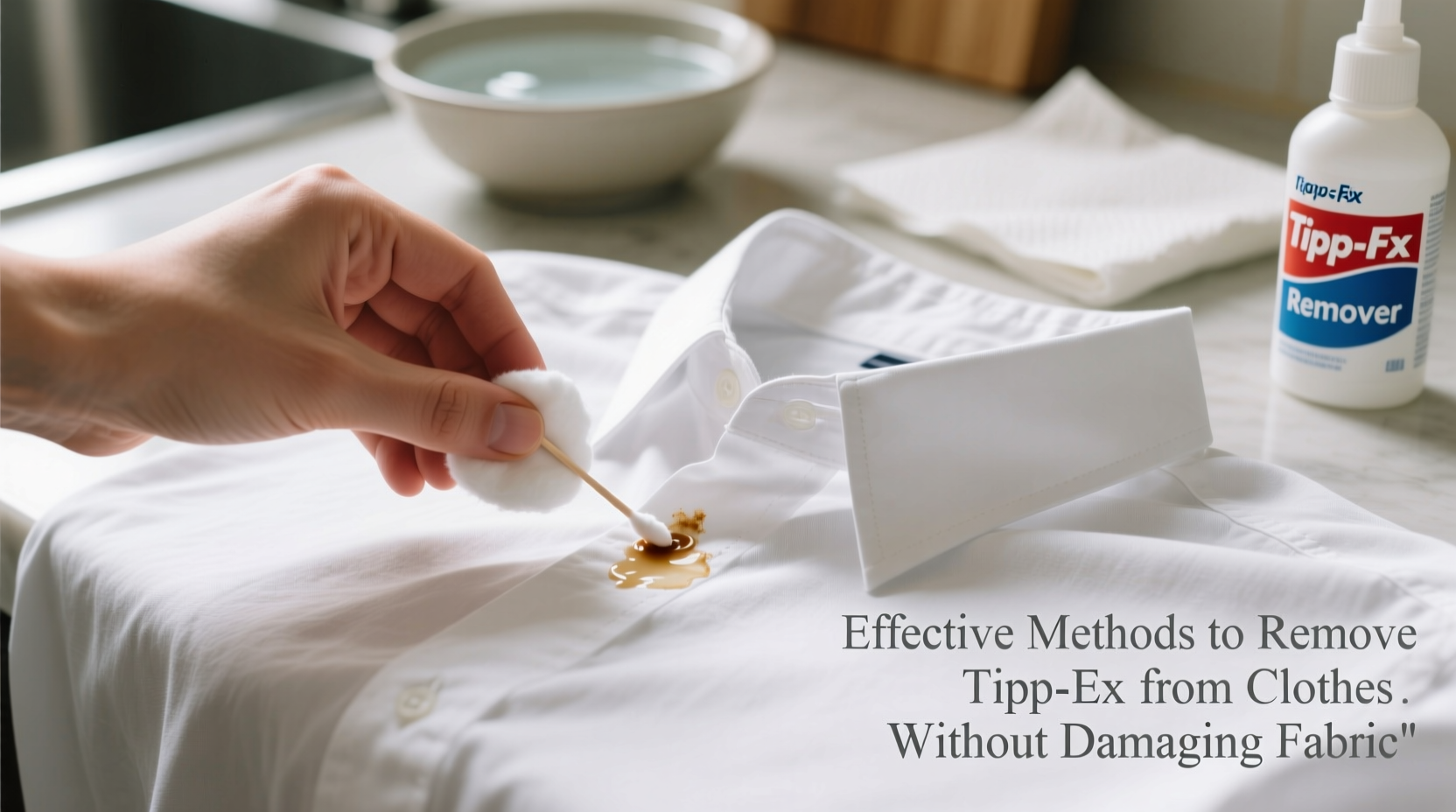
Tipp-Ex contains solvents like toluene or xylene, resins such as polyvinyl acetate, and titanium dioxide for opacity. When spilled on fabric, these components penetrate fibers quickly, especially in synthetic materials. The challenge lies in breaking down the adhesive resin without weakening the fabric structure or causing discoloration.
Natural fibers like cotton and wool respond differently than synthetics such as polyester or nylon. Cotton may absorb the fluid deeply but tolerates stronger solvents if used carefully. Delicate fabrics like silk or rayon are prone to staining or fiber degradation and require gentler treatment. Knowing your garment’s composition is essential before attempting any removal method.
Step-by-Step Guide to Removing Tipp-Ex Safely
Immediate action increases the likelihood of complete removal. Follow this sequence to maximize effectiveness while minimizing fabric stress.
- Blot excess: Use a clean cloth or spoon to gently scrape off dried or wet Tipp-Ex. Do not rub, as this spreads the stain further into fibers.
- Test first: Apply your chosen solvent to an inconspicuous area (like an inside seam) to check for colorfastness and fabric reaction.
- Loosen the stain: Place the garment on a clean towel and apply your selected remover with a cotton swab or soft brush.
- Work from edges inward: Gently dab the outer edges of the stain to prevent spreading.
- Rinse thoroughly: After treatment, rinse the area under cool water or launder as appropriate.
- Air dry: Avoid heat drying until you confirm the stain is gone, as heat sets residual compounds permanently.
Effective Solvent Options and Their Applications
Different solvents work at varying levels depending on fabric type and stain age. Below is a comparison of commonly accessible options:
| Solvent | Best For | Caution | Efficacy |
|---|---|---|---|
| Isopropyl Alcohol (70–90%) | Cotton, linen, polyester blends | May bleach dark fabrics; test first | ★★★★☆ |
| Nail Polish Remover (Acetone-free) | Synthetics, durable weaves | Avoid on acetate or spandex | ★★★☆☆ |
| Acetone (Pure) | Stubborn stains on resilient fabrics | Highly flammable; degrades elastic fibers | ★★★★★ |
| Dish Soap + Warm Water | Fresh stains, delicates | Limited effect on dried residue | ★★☆☆☆ |
| Hairspray (Alcohol-based) | Emergency field use only | Can leave sticky residue; inconsistent results | ★☆☆☆☆ |
For most household scenarios, isopropyl alcohol offers the best balance between strength and safety. Soak a cotton ball, press it onto the stain for 30 seconds, then gently wipe in one direction. Repeat until no more white residue transfers.
Real Example: Office Worker Saves Dress Shirt
Mark, a financial analyst, accidentally knocked over a bottle of Tipp-Ex onto his favorite white dress shirt during a late-night report edit. He noticed the spill within minutes. Instead of rinsing immediately (which could spread the fluid), he blotted with a paper towel, then applied 90% isopropyl alcohol using a clean cloth. After five minutes of careful dabbing, the stain lifted completely. He laundered the shirt in cold water with oxygen bleach and air-dried it—no trace remained.
This case highlights two key points: prompt response and correct solvent choice. Had Mark waited hours or used hot water initially, the outcome would likely have been permanent staining.
Expert Insight on Textile Preservation
“Many people reach for bleach or strong degreasers when they see a tough stain, but that often does more harm than good. With correction fluids, mechanical removal followed by targeted solvent application preserves both color and fiber strength.” — Dr. Lena Peterson, Textile Chemist at the Institute for Fabric Care Research
Do’s and Don’ts When Treating Tipp-Ex Stains
To avoid irreversible damage, follow these guidelines:
| Do’s | Don’ts |
|---|---|
| Act quickly while the stain is still fresh | Do not use hot water—it sets the resin |
| Use a lint-free cloth to prevent fiber transfer | Avoid vigorous scrubbing |
| Layer multiple applications instead of soaking | Never mix solvents (e.g., acetone + bleach) |
| Wash treated garments separately after cleaning | Don’t put in dryer until stain is fully removed |
| Store solvents in ventilated areas away from flames | Ignore care labels—always check them first |
Frequently Asked Questions
Can I use hand sanitizer to remove Tipp-Ex?
Yes, many alcohol-based hand sanitizers contain 60–70% ethanol or isopropyl alcohol, which can break down Tipp-Ex. Apply sparingly, let sit for one minute, then blot gently. Rinse well afterward, as gel thickeners may leave residue.
What if the stain remains after washing?
If traces remain post-laundering, do not dry the garment. Reapply alcohol or acetone (if fabric-safe), then wash again using a stain-fighting detergent with enzymes. Consider adding a pre-soak step with oxygen-based cleaner for persistent marks.
Is Tipp-Ex toxic to skin or fabrics?
The solvents in Tipp-Ex are irritants and should be handled with gloves. While not inherently corrosive to all fabrics, prolonged exposure can weaken fibers, especially elastane or acetate. Always ventilate the workspace when using chemical removers.
Final Checklist: Tipp-Ex Removal Protocol
- ✅ Identify fabric type and check care label
- ✅ Scrape off excess Tipp-Ex gently
- ✅ Test solvent on hidden area
- ✅ Apply alcohol or acetone with cotton pad
- ✅ Blot, don’t rub—work from edge to center
- ✅ Rinse under cool running water
- ✅ Launder normally, using stain remover if needed
- ✅ Air dry and inspect before re-washing
Conclusion: Act Fast, Choose Wisely, Preserve Your Clothes
Removing Tipp-Ex from clothing doesn't require expensive products or professional help in most cases—but it does demand patience and precision. By understanding how correction fluid interacts with textiles and choosing the right solvent for your fabric, you can eliminate stains safely and effectively. Whether it's a child’s school uniform or a professional blouse, timely intervention makes all the difference. Keep isopropyl alcohol in your laundry kit and refer to this guide the next time an accident happens. With the right knowledge, even stubborn stains don’t have to mean ruined clothes.




 浙公网安备
33010002000092号
浙公网安备
33010002000092号 浙B2-20120091-4
Comments
No comments yet. Why don't you start the discussion?