
Maintaining the correct pH level in an aquarium is essential for the health and longevity of fish, plants, and beneficial bacteria. While tap water often has a neutral or slightly alkaline pH (7.0–8.0), many popular freshwater species—such as tetras, angelfish, and discus—thrive in softer, more acidic conditions between 6.0 and 6.8. Sudden or improper pH adjustments can stress or even kill aquatic life. The goal isn’t just to lower pH, but to do so gradually and sustainably, ensuring long-term stability. This guide explores proven, safe techniques to reduce aquarium pH while preserving biological balance.
Understanding pH and Its Importance in Aquatic Systems
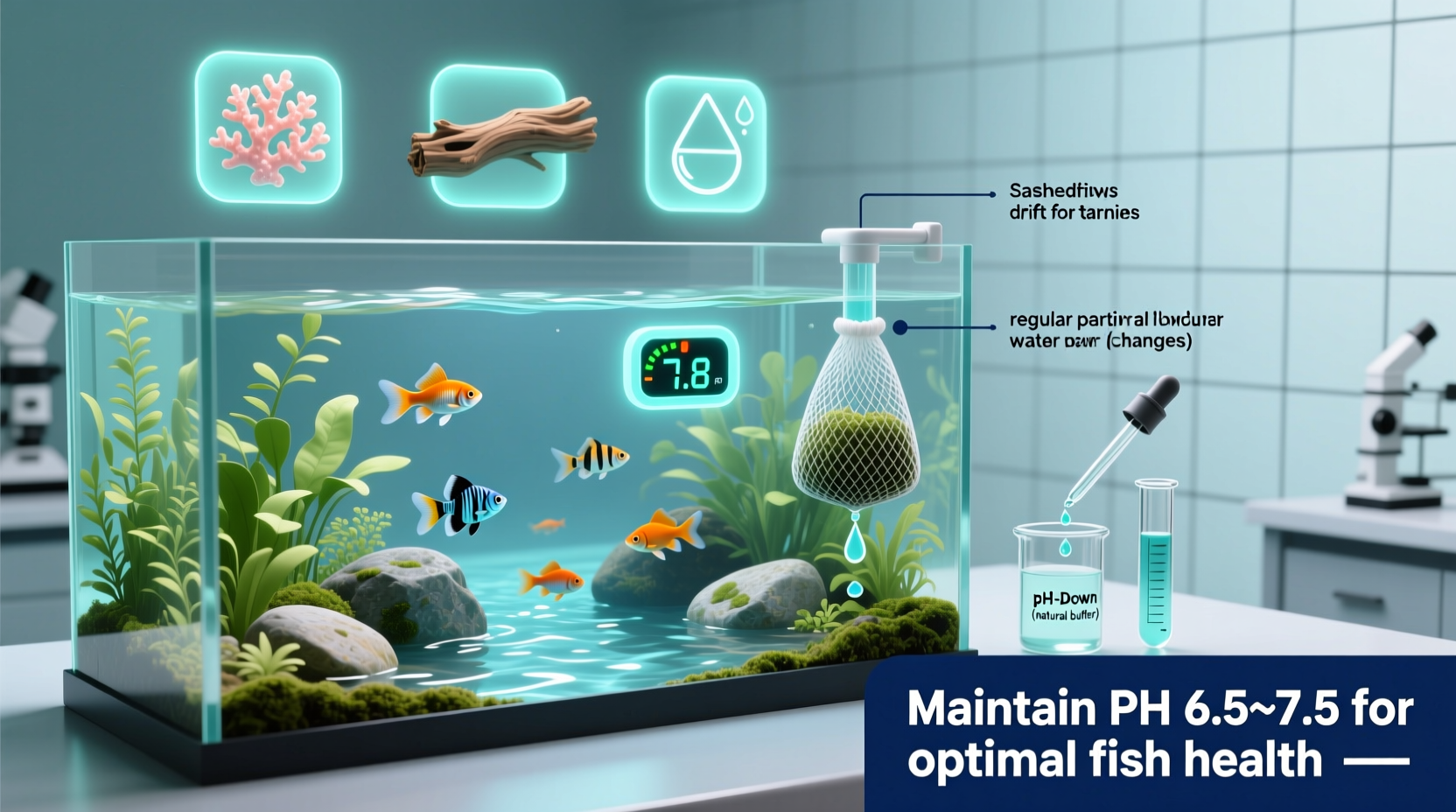
pH measures how acidic or alkaline water is on a scale from 0 to 14, with 7 being neutral. Most tropical fish evolved in environments with specific pH ranges influenced by natural organic materials like decaying leaves, peat, and low-mineral rainwater. When aquarium water is too alkaline for these species, it can impair gill function, reduce reproductive success, and increase susceptibility to disease.
However, pH does not act alone. It's closely linked to carbonate hardness (KH), which buffers against rapid changes. High KH stabilizes pH but makes it harder to lower. Conversely, low KH allows pH to fluctuate easily, creating instability. Therefore, adjusting pH effectively requires managing both pH and KH together.
“Stability matters more than perfection. A steady pH of 7.0 is safer than a fluctuating 6.5.” — Dr. Lisa Chen, Aquatic Biologist
Safe and Effective Methods to Lower Aquarium pH
The key to lowering pH safely lies in gradual change—never attempt to shift pH by more than 0.3 units per day. Rapid changes disrupt osmoregulation in fish and can collapse the nitrogen cycle. Below are reliable methods that work with natural processes rather than against them.
1. Use Peat Moss
Peat moss releases tannic and humic acids, gently lowering pH and softening water. It’s one of the most time-tested methods used in blackwater aquariums. To use:
- Rinse peat thoroughly before use.
- Place in a filter media bag inside the filter.
- Start with a small amount (½ cup per 20 gallons) and monitor pH daily.
2. Add Driftwood
Natural driftwood leaches tannins, which mildly acidify water over time. Different types vary in effectiveness; Malaysian driftwood and mopani wood are particularly active. Soak new wood for several days to minimize initial cloudiness.
3. Introduce Indian Almond Leaves (Catappa Leaves)
These dried leaves not only lower pH but also possess antimicrobial properties beneficial for fish health. One medium leaf per 10–15 gallons typically suffices. They decompose within 1–3 weeks, so replace monthly for consistent effect.
4. Perform Water Changes with Conditioned Soft Water
If your tap water is hard and alkaline, consider using reverse osmosis (RO) water or rainwater (properly filtered and tested). Mix RO water with tap water to achieve desired hardness and pH. Always re-mineralize RO water slightly to support fish health and bacterial activity.
5. Increase Carbon Dioxide (CO₂) Levels
In planted tanks, injecting CO₂ lowers pH through carbonic acid formation. This method is precise and beneficial for plant growth, but requires monitoring. Aim for 20–30 ppm CO₂, which typically brings pH down by 0.5–1.0 unit depending on KH.
What Not to Do: Common Mistakes That Harm Your Tank
Many well-intentioned aquarists make errors that destabilize their systems. Avoid these practices:
| Don’t | Why It’s Harmful | Do Instead |
|---|---|---|
| Use vinegar or lemon juice directly | Causes sudden pH crash; toxic at high concentrations | Use slow-release acids via peat or leaves |
| Add baking soda to raise pH after overcorrection | Indicates poor planning; leads to swings | Test first, adjust slowly, avoid over-treatment |
| Replace all water at once with low-pH water | Causes osmotic shock and death | Change 20–30% weekly with pre-adjusted water |
| Ignore KH levels | Low KH = unstable pH; high KH = resistance to change | Test KH and adjust buffer capacity if needed |
Step-by-Step Guide to Lowering pH Safely Over Time
Follow this timeline to reduce pH without endangering your aquarium inhabitants:
- Week 1: Test and Assess – Measure current pH, KH, and GH. Identify target range based on fish species.
- Day 1–3: Introduce Passive Methods – Add 1–2 Indian almond leaves or a small mesh bag of rinsed peat to filter.
- Day 4–7: Monitor Daily – Record pH and KH each morning. Look for trends, not single readings.
- Week 2: Adjust Dosage if Needed – If pH hasn’t dropped slightly, add another leaf or increase peat by 25%.
- Week 3–4: Stabilize – Once near target, stop adding new materials. Continue testing weekly.
- Ongoing: Maintain Consistency – Replace decomposing leaves, rinse peat monthly, and avoid abrupt changes during water changes.
Real Example: Lowering pH in a Community Tetra Tank
A hobbyist in Florida maintained a 40-gallon community tank housing neon tetras, rams, and dwarf cichlids. His tap water had a pH of 7.8 and KH of 8 dKH, causing breeding issues and dull coloration. After researching species needs (ideal pH 6.2–6.8), he began a gradual adjustment plan.
He added two pieces of cured Malaysian driftwood and a filter bag with ¾ cup of boiled peat. He also started using a 50/50 mix of RO and tap water for biweekly 25% changes. Within three weeks, pH stabilized at 6.6, KH dropped to 4 dKH, and fish began displaying brighter colors and spawning behavior. No fish showed signs of stress throughout the process.
Checklist: Preparing to Lower Your Aquarium pH
- ✅ Test current pH, KH, and GH
- ✅ Research ideal pH range for your fish species
- ✅ Choose one gentle method (peat, leaves, driftwood, or RO water)
- ✅ Prepare materials (rinse peat, soak driftwood, source RO water)
- ✅ Set up a log to track daily pH and KH
- ✅ Avoid combining multiple strong methods at once
- ✅ Have a backup bucket of conditioned tap water ready in case of emergency
Frequently Asked Questions
Can I use distilled water to lower pH?
Distilled water lacks minerals and has no buffering capacity, making pH unstable. It can be used in small amounts mixed with tap water, but it’s better to use reverse osmosis (RO) water with trace mineral supplementation to maintain stability and fish health.
Will live plants help lower pH?
During photosynthesis, plants absorb CO₂, which can cause pH to rise during the day. However, at night, they release CO₂, slightly lowering pH. While not a primary method, dense planting combined with CO₂ injection can help maintain a lower, stable pH in planted tanks.
How often should I test pH when trying to adjust it?
When actively adjusting pH, test once daily at the same time each morning before feeding. Once stable, reduce to weekly checks. Always test KH alongside pH, as it determines how resistant your water is to change.
Conclusion: Prioritize Stability and Species Compatibility
Successfully lowering aquarium pH isn't about achieving a number—it's about creating a sustainable, species-appropriate environment. The safest approach combines natural materials like peat, driftwood, and catappa leaves with careful monitoring and gradual change. Remember that consistency trumps speed. Fish adapt well to suboptimal but stable conditions far better than to rapidly shifting parameters.




 浙公网安备
33010002000092号
浙公网安备
33010002000092号 浙B2-20120091-4
Comments
No comments yet. Why don't you start the discussion?