
A strong core goes far beyond aesthetics. While visible obliques are often associated with fitness goals, their real value lies in functional strength, spinal stability, and injury prevention. The obliques—comprising the external and internal abdominal muscles on either side of your torso—are essential for rotation, lateral flexion, and maintaining posture during everyday movements. Whether you're lifting groceries, twisting to reach the back seat, or playing sports, well-conditioned obliques support nearly every dynamic motion.
The good news? You don’t need a gym membership or expensive equipment to train them effectively. With consistent effort and proper technique, you can develop powerful obliques using just your body weight and a small amount of floor space. This guide breaks down the science-backed principles of oblique training and delivers a practical routine anyone can follow at home.
Anatomy and Function: Why Obliques Matter
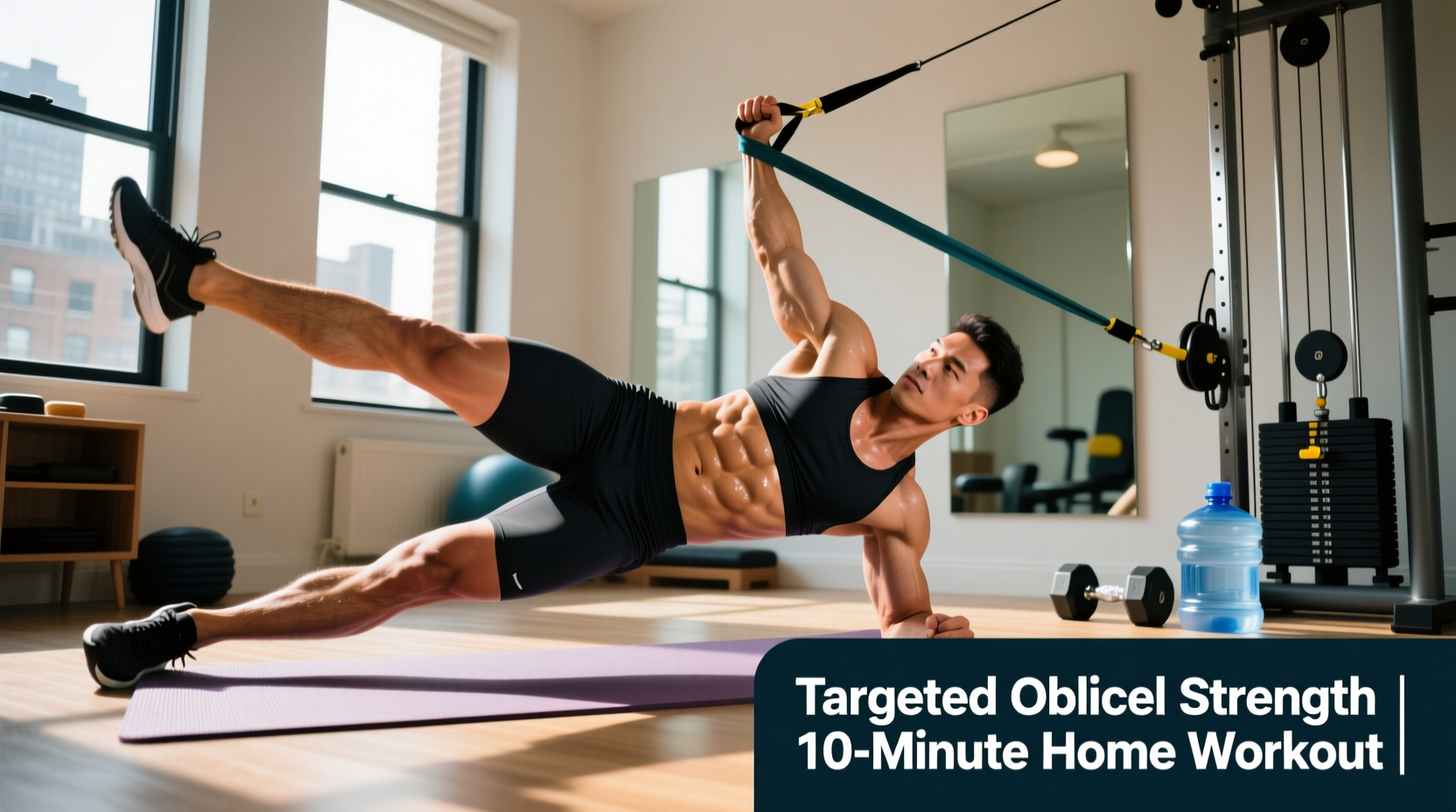
The core is more than just six-pack abs. It's an integrated system of muscles including the rectus abdominis, transverse abdominis, erector spinae, and the internal and external obliques. The obliques run diagonally along the sides of your abdomen and play two primary roles:
- Rotation: Turning your torso left or right (e.g., swinging a golf club).
- Lateral Flexion: Bending sideways (e.g., reaching across your body).
Weak obliques can lead to poor balance, lower back pain, and inefficient movement patterns. Strengthening them improves athletic performance, enhances posture, and reduces the risk of strain during physical activity. According to Dr. Sarah Lin, a certified strength and rehabilitation specialist:
“Most people overemphasize forward crunches but neglect rotational and anti-rotational work. That imbalance leads to weak lateral stability. Training the obliques through their full range—not just side bends—is critical for a resilient core.” — Dr. Sarah Lin, DPT, CSCS
Principles of Effective At-Home Oblique Training
To maximize results without equipment, focus on three key training principles:
- Mind-Muscle Connection: Engage your obliques deliberately. Visualize squeezing the side of your waist during each rep.
- Controlled Tempo: Slow down the movement. A 3-second eccentric (lowering) phase increases time under tension and activates deeper muscle fibers.
- Progressive Overload: Gradually increase difficulty by adding reps, sets, or instability (e.g., lifting a leg during a side plank).
Top 5 Bodyweight Oblique Exercises for Home
The following exercises require no equipment and can be performed in a compact space. Aim for 3 sets of each, adjusting reps based on your fitness level.
1. Side Plank with Hip Dips
Targets: Internal/external obliques, quadratus lumborum
How to do it:
- Lie on your side, propped up on your elbow directly beneath your shoulder.
- Stack your feet or place one in front for balance.
- Lift hips until your body forms a straight line from head to heels.
- Lower hips slightly toward the floor, then lift back up—this is one rep.
Beginners: 8–10 reps per side | Advanced: 15–20 reps or hold for 45 seconds with dips
2. Standing Russian Twist (No Weight)
Targets: Rotational strength, oblique endurance
How to do it:
- Stand with feet shoulder-width apart, knees slightly bent.
- Clasp hands together at chest level.
- Rotate your torso fully to the right, then to the left—this is one rep.
- Keep hips stable; only your upper body should turn.
Focus on speed control. Avoid momentum-driven swings.
3. Dead Bug with Rotation
Targets: Anti-rotation stability, deep core engagement
How to do it:
- Lie on your back, arms extended toward the ceiling, legs in tabletop position (knees over hips).
- Extend your right arm overhead while simultaneously straightening your left leg toward the floor.
- Return to start, then repeat on the opposite side.
- Keep your lower back pressed into the floor throughout.
This move challenges coordination and prevents compensatory arching.
4. Bicycle Crunches with Pause
Targets: Dynamic oblique contraction, coordination
How to do it:
- Lie on your back, hands behind your head (don’t pull on neck), legs lifted.
- Bring your right elbow toward your left knee while extending the right leg.
- Add a 1-second pause at the peak of each twist for greater activation.
- Alternate sides in a slow, controlled rhythm.
Quality over quantity: 15 controlled reps per side beat 50 sloppy ones.
5. Standing Side Bend with Isometric Hold
Targets: Lateral flexion, mind-muscle connection
How to do it:
- Stand tall, feet hip-width apart.
- Place right hand behind your head, left hand at your side.
- Gently bend sideways to the right, feeling a stretch along the left oblique.
- Hold the contracted position for 3 seconds, then return slowly.
- Repeat on the other side.
Do not lean forward or backward—movement should be purely lateral.
Weekly Oblique Workout Plan (Beginner to Intermediate)
| Exercise | Sets | Reps / Duration | Frequency |
|---|---|---|---|
| Side Plank with Hip Dips | 3 | 10 per side | Mon, Thu |
| Standing Russian Twist | 3 | 20 total (10/side) | Tue, Fri |
| Dead Bug with Rotation | 3 | 12 alternating | Wed |
| Bicycle Crunches with Pause | 3 | 15 per side | Mon, Wed, Fri |
| Standing Side Bend + Hold | 2 | 12 per side | Daily (as finisher) |
Common Mistakes to Avoid
- Using Neck Muscles: In crunch variations, avoid pulling your head forward with your hands. Keep elbows wide and initiate movement from the core.
- Relying on Momentum: Fast, jerky twists reduce muscle activation. Slow down to feel the burn where it counts.
- Holding Your Breath: Exhale during exertion (e.g., when twisting). Proper breathing stabilizes intra-abdominal pressure.
- Neglecting the Non-Dominant Side: Most people favor one side. Match reps and effort equally to prevent imbalances.
Real Progress: A Mini Case Study
Jamal, a 34-year-old remote worker, experienced chronic lower back tightness after long hours at his desk. He avoided ab workouts, thinking they required equipment. After learning about bodyweight oblique training, he committed to five minutes daily using the above exercises. Within three weeks, he noticed improved sitting posture and reduced discomfort. By week six, he could perform 45-second side planks and reported feeling “more connected” to his midsection during movement. His experience underscores how targeted, consistent effort—even in short bursts—can yield tangible benefits.
Frequently Asked Questions
Can I lose love handles by doing oblique exercises?
No. Spot reduction—the idea that you can burn fat from a specific area—is a myth. Oblique workouts strengthen underlying muscles, but visible definition comes from overall body fat reduction through nutrition and full-body exercise. However, building muscle enhances shape and supports metabolism.
How long before I see results?
With consistent training (3–4x/week) and proper recovery, most people notice improved core endurance within 2–3 weeks. Visible toning typically takes 6–10 weeks depending on starting point, diet, and overall activity level.
Are these safe for people with back pain?
Many oblique exercises can be therapeutic for mild back issues by improving stability. However, acute pain or diagnosed conditions (e.g., herniated disc) require medical clearance. Start with low-intensity moves like dead bugs and consult a physical therapist if unsure.
Final Thoughts: Build a Core That Works for You
Strong obliques aren't just about appearance—they’re foundational to how your body moves, balances, and protects your spine. The beauty of at-home training is its accessibility. You don’t need machines or memberships; you need consistency, intention, and intelligent movement. Start with the basics, master form, and gradually challenge yourself. Over time, you’ll develop a core that’s not only stronger but more resilient in everything you do.




 浙公网安备
33010002000092号
浙公网安备
33010002000092号 浙B2-20120091-4
Comments
No comments yet. Why don't you start the discussion?