
Noise pollution is more than a nuisance—it disrupts focus, affects sleep, and can even impact long-term health. Whether you're working from home, living in a noisy apartment, or sharing walls with thin drywall, unwanted sound seeps into your life when you least want it. The good news? You don’t need a six-figure renovation to create a quieter space. With smart, affordable strategies, you can significantly reduce noise transmission using materials and methods accessible to anyone.
Soundproofing isn't about eliminating all sound—it's about managing it. By understanding how sound travels and where it enters, you can apply targeted solutions that deliver real results. From sealing gaps to rethinking furniture placement, the most effective techniques often cost less than $100 and require no specialized tools.
Understanding How Sound Travels
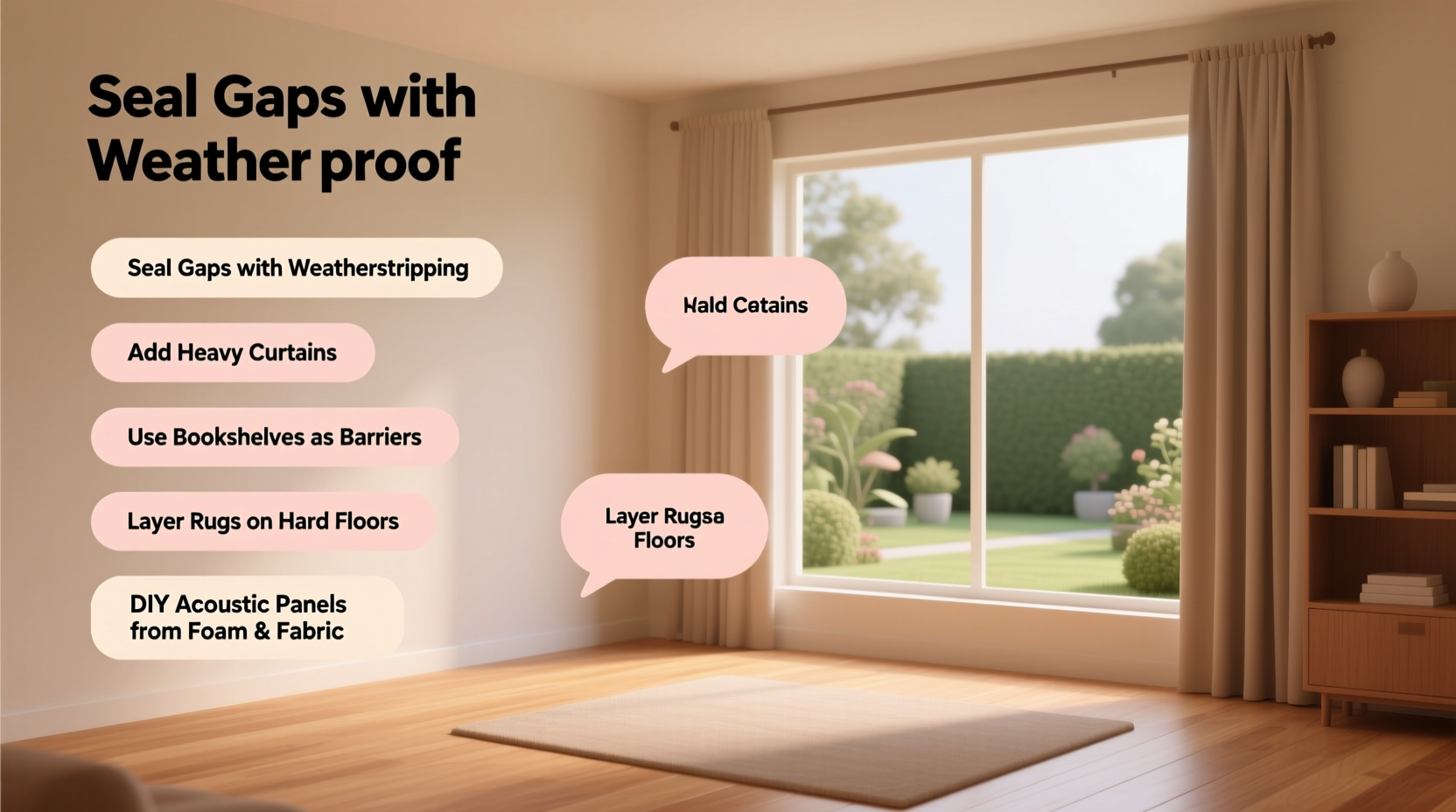
Before applying fixes, it helps to understand the two main types of noise: airborne and impact. Airborne sound includes voices, music, and TV audio—waves that travel through the air and penetrate walls, doors, and windows. Impact noise (also called structure-borne) comes from physical vibrations, like footsteps above or slamming doors, which transfer through floors, ceilings, and framing.
Most DIY soundproofing focuses on blocking airborne noise because it’s easier to manage. The principles are simple: add mass, seal leaks, dampen vibrations, and absorb sound. You don’t need high-tech materials to do this effectively. Everyday items like rugs, weatherstripping, and even books can play a role in reducing noise.
“Sound doesn’t just come through walls—it sneaks through cracks, outlets, and even light fixtures. The weakest point in a room is often not the wall, but the gaps around it.” — David Lin, Acoustic Consultant at QuietSpaces Lab
Budget-Friendly Soundproofing Techniques That Work
You don’t need to rebuild your home to make it quieter. Many proven methods rely on layering, sealing, and smart material use—all achievable on a tight budget.
1. Seal All Air Gaps
Air leaks are major culprits in sound transmission. Even a small gap under a door or around a window can let in a surprising amount of noise. Use acoustic caulk or weatherstripping to seal these openings.
2. Upgrade Your Door
Hollow-core doors offer almost no sound resistance. If replacing the door isn’t an option, install a door sweep and use adhesive foam seals around the frame. For better results, hang a heavy moving blanket or tapestry over the door—temporary but surprisingly effective.
3. Use Thick Rugs and Heavy Curtains
Hard floors reflect sound, making rooms echo and feel louder. Lay down thick rugs with padding underneath to absorb both airborne noise and footstep impact. Similarly, thermal blackout curtains lined with dense fabric can reduce outside noise when hung over windows.
4. Add Bookshelves and Furniture Strategically
Position large bookshelves filled with books against shared walls. Books act as mass-loaded barriers, disrupting sound waves. Avoid placing them flush against the wall—leave a small gap to create an air cavity, which further dampens sound.
5. Install Mass-Loaded Vinyl (MLV) Where It Matters
MLV is a flexible, dense material used in professional sound studios. While not free, a 4x8 sheet costs around $60–$80 and can be cut to fit behind headboards, under carpets, or inside closet walls. It’s especially useful for blocking low-frequency noise like bass or traffic rumble.
Step-by-Step Guide: Soundproof a Room in One Weekend
Follow this practical timeline to transform a noisy room into a peaceful retreat over a single weekend using under-$150 worth of materials.
- Saturday Morning: Assess and Plan
Walk around the room and identify noise sources. Is sound coming from the door? Window? Wall? Make a list of problem areas. - Saturday Afternoon: Seal Gaps
Use acoustic caulk to seal cracks around windows, baseboards, and outlets. Apply weatherstripping to the door. Install a door sweep if needed. - Sunday Morning: Add Absorption Layers
Lay down a thick rug with padding. Hang heavy curtains over windows using extended rods to wrap fabric around the edges. - Sunday Afternoon: Maximize Mass
Place a bookshelf filled with books against the noisiest wall. Consider tacking MLV behind it if available. Hang tapestries or foam panels on other walls.
Do’s and Don’ts of DIY Soundproofing
| Do | Don't |
|---|---|
| Seal all visible gaps with acoustic caulk | Use regular silicone caulk—it dries rigid and cracks over time |
| Add mass with rugs, books, or blankets | Assume thicker walls are always better—gaps matter more than thickness |
| Use soft furnishings to absorb sound | Overlook doors and windows—they’re weak points |
| Test changes incrementally | Expect complete silence—realistic reduction is 60–70% |
Real Example: Quieting a Home Office in Brooklyn
Jamal, a freelance editor in a Brooklyn walk-up, struggled with noise from his upstairs neighbor and street traffic. His bedroom doubled as a workspace, but constant interruptions made recording voiceovers impossible. He spent just $112 on a solution:
- $28 – Door sweep and weatherstripping
- $35 – Thermal curtains with triple lining
- $40 – Area rug with thick foam pad
- $9 – Acoustic caulk for outlets and baseboards
He also rearranged his desk so his back faced a bookshelf full of hardcover novels. After one weekend of work, he reported a dramatic improvement: calls were clearer, recordings had less background noise, and his sleep improved. “I didn’t think such small things would make a difference,” he said. “But now I actually enjoy working from home.”
Essential Soundproofing Checklist
Use this checklist to ensure you’ve covered all critical areas:
- ✅ Seal gaps around doors, windows, and baseboards
- ✅ Install a door sweep or draft stopper
- ✅ Apply weatherstripping to door and window frames
- ✅ Caulk electrical outlets on shared walls
- ✅ Add a thick rug with padding on hardwood floors
- ✅ Hang heavy curtains over windows
- ✅ Place bookshelves or furniture against noisy walls
- ✅ Use soft decor—tapestries, pillows, blankets—to absorb sound
- ✅ Consider MLV for high-noise zones (optional)
- ✅ Test improvements with consistent sound sources
Frequently Asked Questions
Can I soundproof a room without remodeling?
Yes. Most effective DIY soundproofing requires no construction. Sealing gaps, adding mass, and using absorption materials can reduce noise significantly without touching walls or wiring.
Will foam panels block outside noise?
No. Acoustic foam panels are designed to reduce echo and improve room acoustics, not block external sound. For noise reduction, focus on mass and sealing instead.
What’s the cheapest way to quiet a bedroom?
Start with a door sweep ($15), weatherstripping ($10), and a thick rug ($30). These three steps alone can reduce noise by up to 60% and are easy to install.
Take Control of Your Environment
Quiet isn’t a luxury—it’s a necessity for focus, rest, and well-being. You don’t need expensive contractors or structural changes to reclaim peace in your space. With thoughtful, incremental upgrades, you can dramatically reduce unwanted noise using affordable, accessible tools. Start small: seal one door, hang one curtain, lay down one rug. Measure the difference. Then keep going.




 浙公网安备
33010002000092号
浙公网安备
33010002000092号 浙B2-20120091-4
Comments
No comments yet. Why don't you start the discussion?