
Maintaining your air conditioning unit isn’t just about comfort—it’s about efficiency, longevity, and indoor air quality. Over time, dust, debris, and grime accumulate in both the indoor and outdoor components of your AC system, reducing airflow, increasing energy consumption, and potentially leading to costly repairs. A well-maintained unit can operate up to 15% more efficiently than a neglected one, according to the U.S. Department of Energy. The good news? Most of the essential cleaning tasks can be done at home with basic tools and a little time. This comprehensive guide walks you through every step to safely clean your AC unit and keep it running at peak performance.
Why Regular AC Cleaning Matters
Your air conditioner works hardest during summer months, continuously cycling air and removing heat from your home. As it runs, airborne particles like dust, pollen, pet dander, and mold spores pass through the system. Many of these settle on internal components such as the evaporator coil, blower fan, and air filter. When these parts become clogged, the system must work harder to cool your space, which increases wear and tear and raises utility bills.
Additionally, a dirty condenser unit outside can struggle to release heat effectively. Blocked airflow due to leaves, dirt, or bent fins reduces heat exchange efficiency, causing the compressor to overheat and possibly fail prematurely. Routine cleaning prevents these issues and helps maintain consistent cooling, better air quality, and lower energy costs.
“Homeowners who perform seasonal maintenance on their AC units typically see fewer breakdowns and longer equipment lifespans.” — James Liao, HVAC Technician with 18 years of field experience
Essential Tools and Safety Precautions
Before starting any cleaning procedure, gather the necessary supplies and prioritize safety. Working with electrical appliances requires caution, especially when dealing with outdoor units that are exposed to weather and high-voltage components.
What You’ll Need:
- Screwdriver (Phillips and flathead)
- Vacuum with hose attachment
- Soft brush or fin comb
- Garden hose with spray nozzle
- Mild detergent or coil cleaner (non-acidic)
- Microfiber cloths
- Protective gloves and goggles
- Step ladder (if accessing rooftop or elevated units)
Ensure the outdoor unit is on stable ground and not wobbly. Avoid using pressure washers, which can damage delicate fins and internal wiring. Use only gentle water pressure when rinsing.
Step-by-Step Guide to Cleaning Your AC Unit
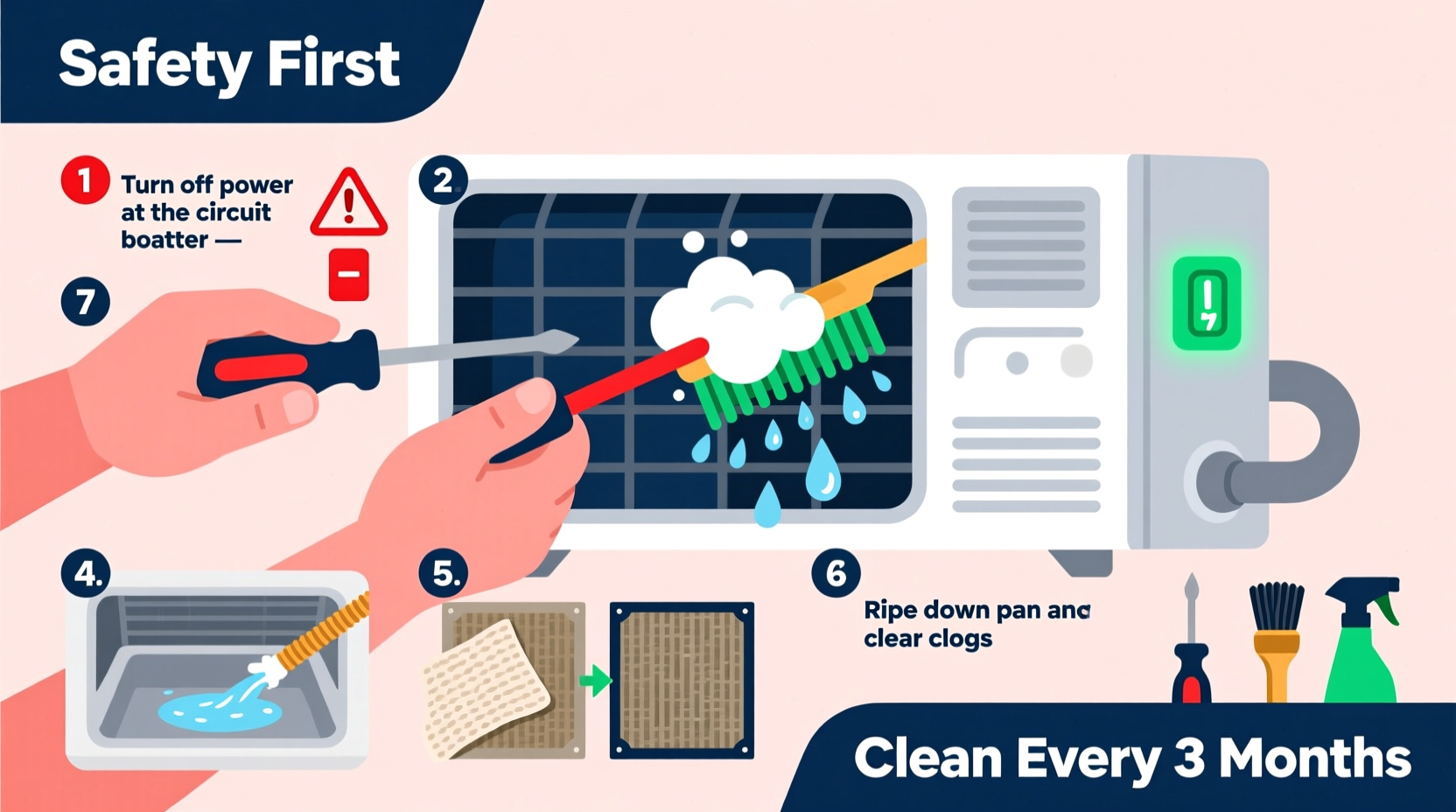
Cleaning your AC involves two main areas: the indoor components (air filter, evaporator coil, blower) and the outdoor condenser unit. Follow this timeline-based approach for best results.
- Turn Off Power (5 minutes)
Locate your home’s circuit breaker and shut off electricity to both the indoor air handler and outdoor condenser. Verify power is off using a voltage tester if available. - Replace or Clean the Air Filter (10 minutes)
Remove the return air grill and inspect the filter. If disposable, replace it with a new one matching the size and MERV rating recommended by your system’s manufacturer. If reusable, wash it with warm water and mild soap, then let it dry completely before reinstalling. - Clear Debris Around the Outdoor Unit (15 minutes)
Trim back shrubs, remove leaves, grass clippings, and any obstructions within at least 2 feet of the unit. This ensures proper airflow and prevents overheating. - Open and Inspect the Condenser Unit (10 minutes)
Remove the top grille using a screwdriver. Be gentle—wires may connect the cover. Look for signs of corrosion, damaged fins, or animal nests inside. - Coil and Fin Cleaning (20 minutes)
Spray the evaporator and condenser coils with a commercial coil cleaner following product instructions. Let it sit for 5–10 minutes to break down grime. Gently rinse with a garden hose using low pressure, spraying from the inside out to avoid bending fins. - Straighten Bent Fins (Optional, 10 minutes)
If fins are bent, use a fin comb to carefully straighten them. Proper alignment improves airflow and heat dissipation. - Clean the Drain Line (15 minutes)
Locate the condensate drain line (usually a PVC pipe near the indoor unit). Pour 1 cup of distilled white vinegar or a mixture of bleach and water (1:1 ratio) into the access point to prevent algae buildup and clogs. - Reassemble and Restore Power (5 minutes)
Secure the outer cover, reconnect any wires, and restore power at the breaker. Test the system by turning on the thermostat to cooling mode.
Do’s and Don’ts of AC Maintenance
| Do’s | Don’ts |
|---|---|
| Inspect filters monthly during peak season | Use harsh chemicals like acid-based cleaners |
| Clean the outdoor unit twice a year (spring and fall) | Run the system without a filter |
| Keep plants at least 18 inches away from the condenser | Ignore signs of reduced cooling or strange noises |
| Vacuum around vents and registers indoors | Delay professional servicing beyond 2 years |
Real-World Example: How One Family Prevented Costly Repairs
The Thompson family in Austin, Texas, noticed their upstairs rooms weren’t cooling properly in early June. Their energy bill had also spiked by 22% compared to the previous year. Instead of calling a technician immediately, they followed a DIY cleaning process similar to the one outlined here. After clearing vegetation around the outdoor unit, replacing the air filter, and flushing the drain line, they restored normal operation. A follow-up check revealed the issue was primarily restricted airflow due to a clogged filter and blocked condensate line—problems costing nothing to fix but potentially leading to compressor failure if ignored. By investing two hours and less than $20, they avoided a service call and saved hundreds in potential repair costs.
Frequently Asked Questions
How often should I clean my AC unit?
At minimum, clean the outdoor condenser unit and replace the air filter every spring before heavy usage begins. In dusty environments or homes with pets, consider checking and cleaning filters every 4–6 weeks during peak season. Indoor components like the evaporator coil should be professionally cleaned every 2–3 years.
Can I use a leaf blower to clean the condenser coils?
No. While it may seem efficient, a leaf blower forces debris deeper into the unit and can bend or damage the delicate aluminum fins. Stick to soft brushing and low-pressure rinsing instead.
Is it safe to clean the AC unit myself?
Yes, as long as you disconnect power and follow proper procedures. However, avoid opening sealed refrigerant lines or working on electrical components beyond basic inspection. For complex issues like refrigerant leaks or motor problems, always consult a licensed HVAC technician.
Final Thoughts and Call to Action
A clean air conditioning system doesn’t just cool better—it lasts longer, uses less energy, and contributes to healthier indoor air. The steps outlined here are simple, cost-effective, and within reach of most homeowners. By dedicating a few hours each season to proper maintenance, you protect a major home investment and ensure reliable comfort year after year.
Don’t wait for a breakdown to act. Take charge of your AC’s health today. Perform the next cleaning yourself, track improvements in cooling performance, and share your experience. Have questions or tips from your own routine? Join the conversation below and help others keep their systems running smoothly.




 浙公网安备
33010002000092号
浙公网安备
33010002000092号 浙B2-20120091-4
Comments
No comments yet. Why don't you start the discussion?