
Reaching Apple Support can feel like navigating a digital maze. While phone queues are long and chat options limited, email remains one of the most underrated yet powerful tools for resolving technical issues with Apple products. However, many users send vague or incomplete messages and end up waiting days—or receiving generic replies. The truth is, how you write your email directly impacts both response speed and quality. With the right approach, you can cut through the noise and get real help from Apple’s support team in record time.
Understand How Apple Support Handles Email Inquiries
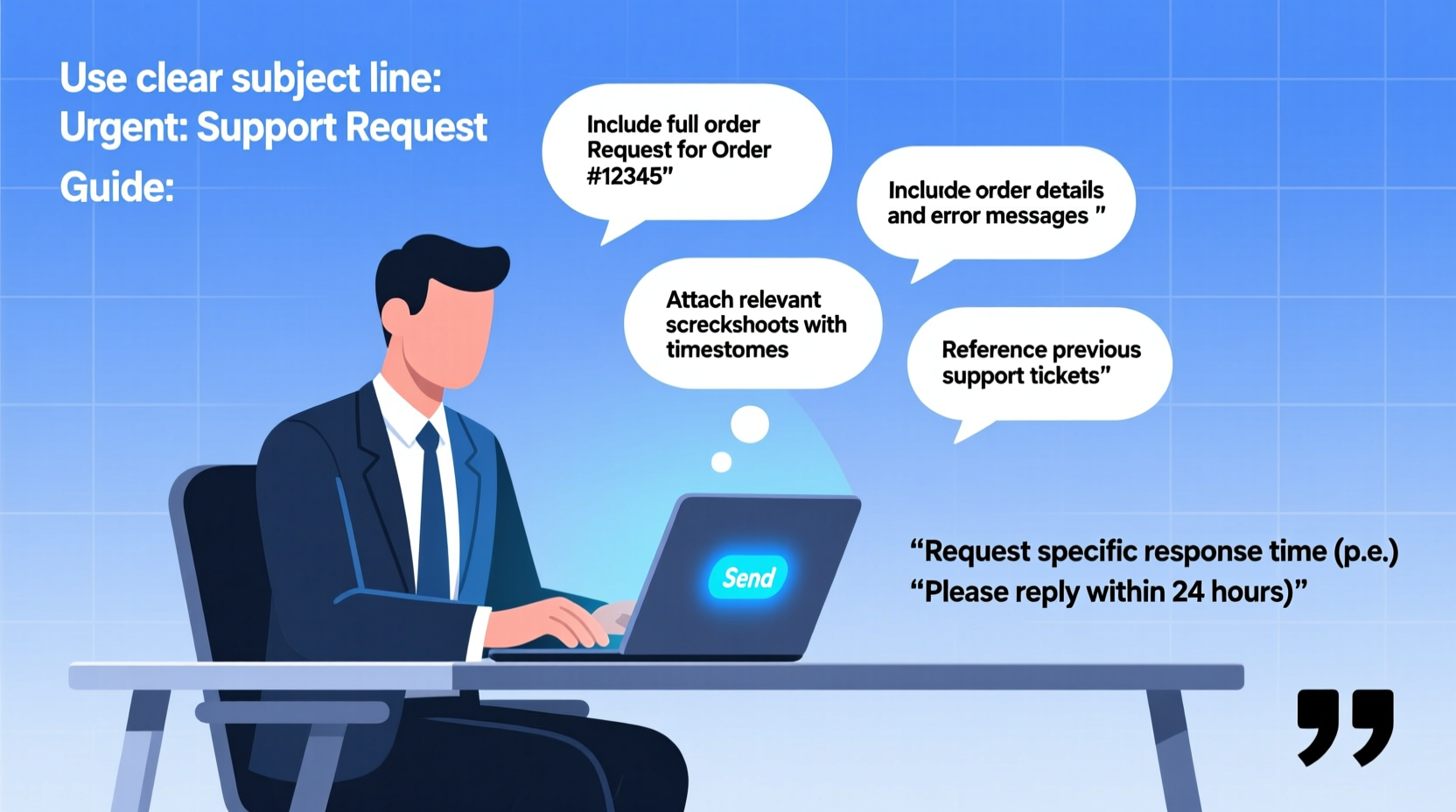
Apple doesn’t offer direct public email addresses for customer service. Instead, it routes inquiries through its official support portal. When you submit a request via support.apple.com, your message is logged into a ticketing system that assigns your case to the appropriate specialist based on product type, issue category, and region.
This system prioritizes clarity and completeness. Emails with missing details, emotional language, or unclear subject lines often get delayed or bounced back for clarification. Apple’s support agents work from scripts and knowledge bases, so providing structured, factual information helps them act quickly.
“Emails that include device model, serial number, error codes, and steps already attempted reduce resolution time by up to 60%.” — Lisa Tran, Former AppleCare Specialist
Step-by-Step Guide to Writing an Effective Apple Support Email
Writing a high-impact support email isn’t about length—it’s about precision. Follow this sequence to ensure your message gets fast attention:
- Log in to your Apple ID at appleid.apple.com and verify your contact information is current.
- Visit support.apple.com and select the product you need help with (e.g., iPhone, Mac, iCloud).
- Navigate to “Get Help” and choose the relevant issue category (e.g., “Battery,” “App Store,” “Activation Lock”).
- Select “Contact Support” and choose “Email” as your preferred method.
- Fill out the form with a clear subject line and detailed message using the template below.
Email Template That Gets Results
Subject: Urgent: MacBook Pro Won’t Boot After macOS Update – Serial: C02XZ12345GH
Dear Apple Support,
I’m experiencing a critical issue with my MacBook Pro (14-inch, 2023) running macOS Sonoma 14.5. After installing the latest update, the machine fails to boot past the Apple logo. It restarts in a loop and shows no progress bar.
Steps I’ve already taken:
- Reset SMC and NVRAM
- Attempted Safe Mode (no success)
- Connected to power and waited over 30 minutes
- Tried booting from Recovery Mode – Disk Utility shows no disk errors
Device Details:
- Model: MacBook Pro (14-inch, M2 Pro, 2023)
- Serial Number: C02XZ12345GH
- macOS Version: 14.5 (updated from 14.4)
- Purchase Date: March 12, 2023 (within warranty)
I’ve attached screenshots of the boot screen (via iPhone). Please advise next steps. If needed, I’m available for remote diagnostics or authorized service.
Thank you,
Jordan Lee
jordan.lee@email.com
+1 (555) 123-4567
Do’s and Don’ts When Contacting Apple via Email
| Do | Don’t |
|---|---|
| Include your device’s serial number | Assume Apple knows your purchase history without verification |
| List troubleshooting steps already tried | Blame Apple or use aggressive language |
| Use a specific, descriptive subject line | Submit multiple emails about the same issue |
| Attach screenshots or logs if possible | Expect immediate replies outside business hours |
| Keep tone polite and professional | Share sensitive data like passwords or credit card numbers |
Real Example: How One User Got a Response in 4 Hours
Sophia Kim, a freelance photographer, was unable to access her iCloud Photos library after switching to a new iPhone. Her initial message—“Photos not syncing”—received an automated reply with basic steps she’d already tried.
She resubmitted using a structured format:
- Clear subject: “iCloud Photos Not Syncing – Account: sophia.kim@email.com”
- Detailed description: Explained she had 12,000 photos stuck in “Preparing…” status
- Added context: Mentioned she used Family Sharing and had two-factor authentication enabled
- Included proof: Attached a screenshot showing the sync freeze
Within four hours, she received a personalized response from an Apple engineer who identified a server-side indexing delay affecting premium iCloud users. Her account was manually prioritized, and syncing resumed the next day.
Maximize Your Chances: Checklist Before Hitting Send
Before submitting your support request, run through this checklist to ensure nothing is missing:
- ✅ Verified Apple ID and associated email are correct
- ✅ Selected the right product and issue category
- ✅ Included full device model and serial number
- ✅ Listed every troubleshooting step already completed
- ✅ Used a concise, informative subject line
- ✅ Attached screenshots, error messages, or log excerpts
- ✅ Avoided emotional language or demands
- ✅ Provided a working phone number for follow-up
“Apple’s support system rewards clarity. The more complete your initial message, the less back-and-forth is needed.” — Mark Reynolds, Apple Authorized Service Provider
Frequently Asked Questions
How long should I expect to wait for a response?
Most email inquiries receive a reply within 24–48 business hours. Critical issues (e.g., non-functional devices, data loss) are often prioritized and may get responses in under 12 hours. Responses typically come from Apple’s global support centers, so time zones matter—submit during U.S. business hours for fastest results.
Can I escalate my case if I don’t get a helpful reply?
Yes. If the first response is generic or unhelpful, reply directly to the thread with additional details and a polite request to escalate. Mentioning that the suggested steps were already attempted often triggers routing to a senior advisor. You can also call Apple Support and reference your case number to request escalation.
Is there a way to track my support request?
Yes. After submitting your email, Apple provides a case number (e.g., #123-456-7890). Keep this number handy. You can check the status by logging into your Apple ID, visiting the support page, and viewing your recent requests. Some users report faster updates when replying to the original thread rather than starting anew.
Conclusion: Turn Frustration Into Fast Resolutions
Getting timely help from Apple doesn’t require insider connections—just a smarter way of communicating. By treating your support email like a technical brief rather than a casual message, you dramatically increase your odds of swift, meaningful assistance. Clarity, specificity, and professionalism open doors that frustration and vagueness close. Whether you’re dealing with a frozen iPad, a disappearing backup, or an activation error, the difference between a three-day wait and a same-day fix often comes down to how well your email is written.




 浙公网安备
33010002000092号
浙公网安备
33010002000092号 浙B2-20120091-4
Comments
No comments yet. Why don't you start the discussion?