
Securing a job interview is a significant milestone in any job search. But what happens afterward can be just as critical. The way you follow up—timely, thoughtful, and professional—can influence hiring decisions more than many candidates realize. A well-crafted follow-up not only reinforces your interest but also keeps you top of mind during final deliberations.
In competitive job markets, subtle differences in communication often separate the hired from the passed-over. Done right, post-interview follow-ups demonstrate professionalism, attention to detail, and genuine enthusiasm. Done poorly—or not at all—they can signal disinterest or lack of initiative.
Why Follow-Up Matters More Than You Think
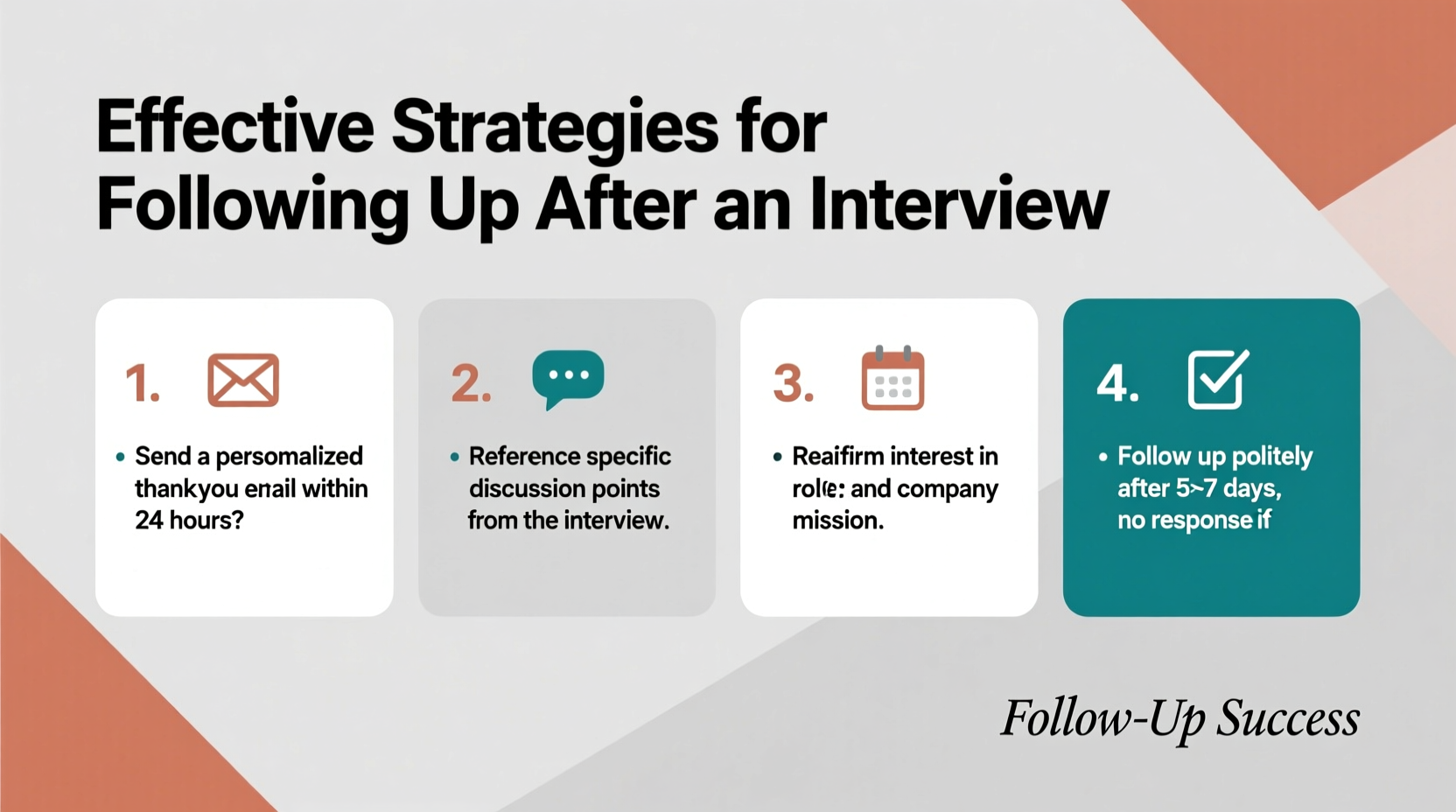
Hiring managers often conduct multiple interviews over several days. By the time they’re ready to make a decision, candidate details begin to blur. A strategic follow-up reactivates their memory, reminds them of your strengths, and subtly positions you as organized and proactive.
According to LinkedIn’s Global Talent Trends report, 83% of hiring professionals say a strong follow-up positively impacts their perception of a candidate. Yet fewer than half of applicants actually send one. That gap represents a powerful opportunity.
“Candidates who follow up thoughtfully show emotional intelligence and persistence—two traits we prioritize.” — Sarah Lin, HR Director at NexaTech Solutions
Step-by-Step Guide: The 72-Hour Follow-Up Timeline
Timing is everything. Following up too soon may seem pushy; waiting too long risks being forgotten. Use this structured timeline to stay on track:
- Within 24 hours: Send a personalized thank-you email to each interviewer. Mention something specific from your conversation to reinforce engagement.
- Day 2–3: If you haven’t heard back, consider a light check-in via email. Reaffirm your interest and offer to provide additional information if needed.
- Day 5–7: If still no response, send a concise second follow-up. Avoid sounding impatient; instead, frame it as continued enthusiasm.
- After 10 days: If silence persists, it may be appropriate to call the hiring manager or HR contact directly—especially if previous communication was warm.
Do’s and Don’ts of Interview Follow-Ups
| Do | Don’t |
|---|---|
| Personalize each message based on the interviewer and role | Send a generic “Dear Hiring Manager” email |
| Reference a key discussion point (e.g., project, challenge, team dynamic) | Repeat your entire resume or cover letter |
| Keep emails under 200 words | Write lengthy paragraphs that rehash the interview |
| Use a professional tone with warmth and clarity | Use slang, emojis, or overly casual language |
| Follow up once every 5–7 days until you receive closure | Email daily or send multiple messages in one day |
Real Example: How One Candidate Secured the Role
Jamal applied for a marketing strategist position at a mid-sized tech firm. After his final-round interview, he sent a thank-you email within four hours. He referenced a brainstorming session about customer retention campaigns and included a brief one-page concept idea inspired by their discussion—without overstepping.
Two days later, he followed up with a short note: “I’ve been reflecting on our conversation about user engagement, and I remain very excited about the opportunity to contribute.”
The hiring manager later told him, “Your follow-up stood out because it showed initiative without pressure. The extra idea wasn’t required, but it proved you were thinking critically about our challenges.” Jamal received the offer three days later.
Essential Checklist for Every Post-Interview Follow-Up
- ✅ Send a thank-you email within 24 hours to each interviewer
- ✅ Personalize content: include names, roles, and conversation highlights
- ✅ Proofread carefully—typos undermine professionalism
- ✅ Attach work samples or portfolio links if relevant and previously mentioned
- ✅ Wait 5–7 days before a polite second follow-up
- ✅ Track all communications in a spreadsheet (date, method, response)
- ✅ Prepare a phone script in case you need to call HR or the hiring manager
Frequently Asked Questions
Should I follow up if the job posting said “no phone calls”?
Yes—but stick to email. Respect the employer’s boundaries while still demonstrating interest. A single, well-written follow-up email is unlikely to violate policy. Avoid calling unless they initiate contact or provide a direct line for inquiries.
What if I don’t have the interviewer’s email address?
Use LinkedIn to find their profile and send a connection request with a brief note: “It was a pleasure speaking with you earlier today. I’d like to share a quick follow-up message if you’re open to it.” Alternatively, email the company’s general HR address with your message addressed to the individual, asking them to forward it.
Is it okay to follow up after receiving a rejection?
Absolutely. Respond with grace: “Thank you for letting me know. I appreciate the opportunity to learn more about [Company] and your team. I’d welcome any feedback you could share to help me grow professionally.” This leaves the door open for future roles and shows maturity.
Crafting the Perfect Thank-You Email
Your first follow-up email should strike a balance between gratitude, professionalism, and subtle reinforcement of your fit. Here’s a template you can adapt:
Subject: Thank You – [Your Name] – [Job Title] Interview

Dear [Interviewer’s Name],

It was a pleasure meeting with you today to discuss the [Job Title] role. I especially enjoyed learning about [specific topic discussed], and I’m even more excited about the opportunity to contribute to [Team/Project Name].

I appreciated your insights into [challenge or goal mentioned], and I believe my experience in [relevant skill or achievement] would allow me to hit the ground running.

Thank you again for your time and consideration. I look forward to the possibility of working together.

Best regards,
[Your Full Name]
[Phone Number]
[LinkedIn Profile or Portfolio Link]
Customize each version. The more specific you are, the more authentic and memorable your message becomes.
Conclusion: Turn Follow-Up Into Your Competitive Edge
Following up after an interview isn’t just a courtesy—it’s a strategic move. In a landscape where qualifications are often similar across candidates, how you communicate afterward can tip the scales in your favor. A thoughtful, timely, and personalized approach demonstrates confidence, care, and commitment.
You don’t need to be pushy or persistent to the point of annoyance. You simply need to be present, professional, and prepared. Whether it’s a thank-you email, a polite check-in, or a gracious response to rejection, every interaction shapes your personal brand.




 浙公网安备
33010002000092号
浙公网安备
33010002000092号 浙B2-20120091-4
Comments
No comments yet. Why don't you start the discussion?