
There’s nothing worse than a blister-riddled hike that forces you off the trail early. For many outdoor enthusiasts, the culprit isn’t overexertion or poor weather—it’s ill-fitting or unbroken-in hiking boots. While modern hiking footwear offers excellent support and protection, even the best pair can cause discomfort if not properly broken in. The key to enjoyable long-distance hikes lies not just in fitness or gear selection, but in foot comfort. With the right approach, breaking in hiking boots becomes a strategic process that prevents blisters and builds confidence on rugged terrain.
Why Breaking In Hiking Boots Matters
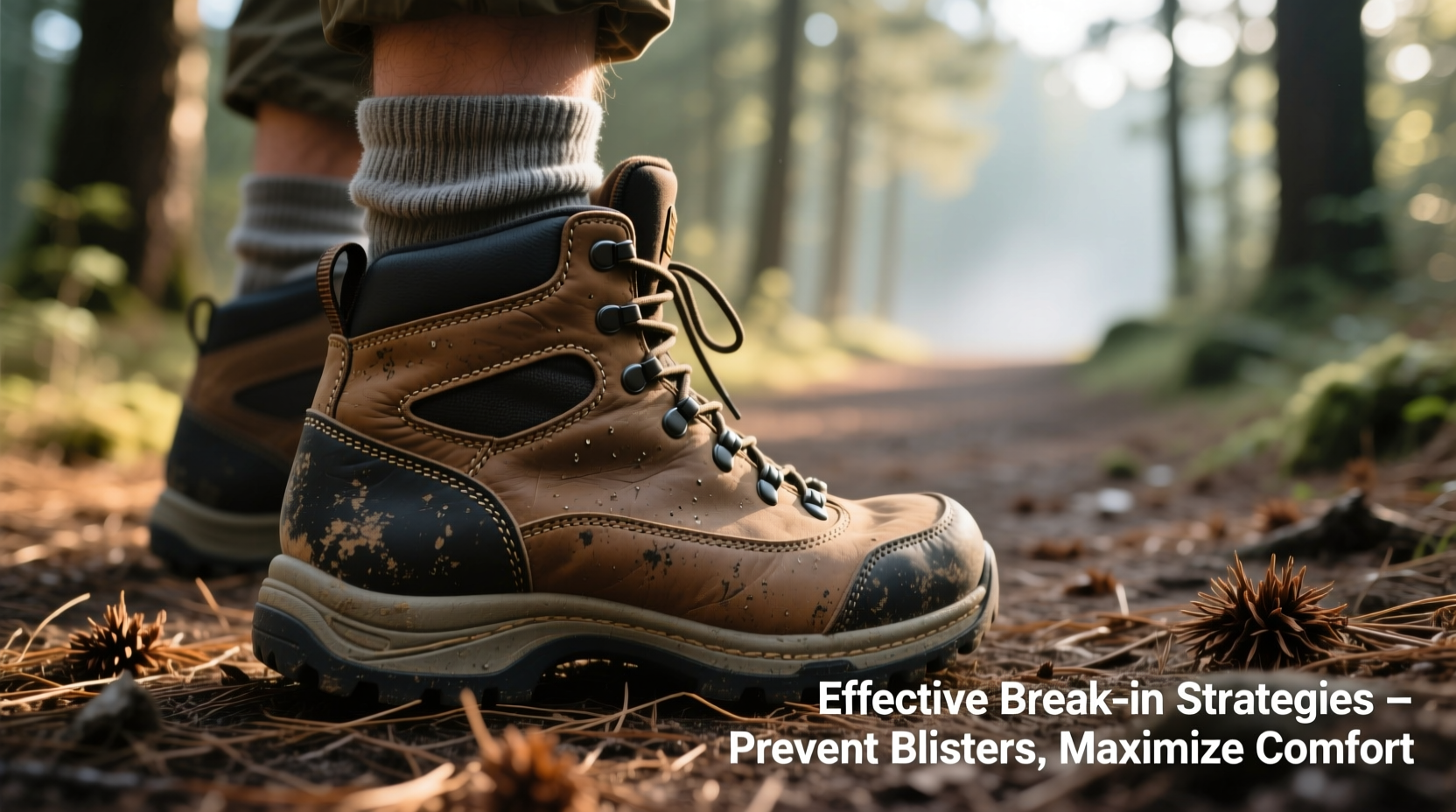
New hiking boots are often stiff, especially in the heel counter, tongue, and sole. Leather models may need time to mold to your foot shape, while synthetic uppers might require flexing to reduce friction points. Without proper conditioning, these rigid areas create hot spots that evolve into painful blisters—particularly during extended use or on uneven ground.
The goal of breaking in isn’t to wear down the boot prematurely, but to gradually adapt it to your gait and foot anatomy. This process ensures optimal fit, enhances breathability, and minimizes pressure on sensitive zones like the Achilles tendon and ball of the foot.
“Skipping the break-in phase is one of the most common mistakes hikers make. A well-broken-in boot doesn’t just feel better—it performs better under load.” — Dr. Lena Torres, Podiatrist & Outdoor Medicine Specialist
A Step-by-Step Guide to Breaking In Your Hiking Boots
Breaking in hiking boots should be a progressive, controlled process. Rushing it risks injury; neglecting it leads to avoidable pain. Follow this 3–4 week timeline to prepare your boots—and feet—for real trail conditions.
- Indoor Wear (Days 1–3): Start by wearing your boots around the house with hiking socks for 1–2 hours daily. Walk on hard floors to test stiffness and identify immediate pressure points.
- Short Outdoor Walks (Days 4–10): Take them on paved sidewalks or gentle gravel paths for 30–60 minutes. Pay attention to heel slippage and toe wiggle room.
- Hilly Terrain Practice (Days 11–20): Gradually increase distance and elevation. Try walking up and down stairs or inclines to simulate trail dynamics.
- Weighted Testing (Days 21–28): Carry a light backpack (10–15 lbs) on moderate trails. This mimics actual hiking load and reveals how the boot supports your ankle under stress.
- Final Trail Test (Day 29+): Complete a full-day hike on varied terrain before any major expedition. Inspect your feet afterward for redness or tenderness.
Blisters: Causes and Prevention Tactics
Blisters form due to repeated friction, heat, and moisture—often exacerbated by poor boot fit or improper lacing. They typically appear on heels, toes, and the balls of feet. Preventing them requires both proactive gear preparation and attentive foot care.
- Moisture Control: Use merino wool or synthetic blend socks that wick sweat efficiently. Consider double-layer socks designed to reduce internal friction.
- Lacing Techniques: Adjust laces to eliminate heel lift and relieve pressure on the top of the foot. Surgeon’s loop or parallel lacing can help distribute tension evenly.
- Boot Fit Check: Ensure there’s about a thumb’s width between your longest toe and the end of the boot when standing downhill. Your heel should remain stable without slipping.
- Pre-Tape Hot Spots: Apply leukotape or moleskin to areas prone to rubbing before hikes, especially during early use.
Do’s and Don’ts of Blister Prevention
| Do | Don't |
|---|---|
| Wear moisture-wicking, seamless socks | Use cotton socks that trap sweat |
| Break in boots gradually over several weeks | Wear brand-new boots on a 10-mile hike |
| Carry blister treatment supplies (e.g., hydrocolloid patches) | Ignore early signs of redness or warmth |
| Keep toenails trimmed straight across | Allow toenails to press against the boot tip |
| Use foot powder or antiperspirant to reduce sweating | Rely solely on boot dryness in humid climates |
Real-World Example: Sarah’s Appalachian Trial Run
Sarah, an experienced day hiker, decided to attempt her first multi-day trek on the Appalachian Trail. She bought premium waterproof hiking boots two weeks before departure and wore them only once—on the morning of her hike. By mile five, she felt intense rubbing behind her left heel. By mile eight, a fluid-filled blister forced her to stop. She completed the trip limping, using duct tape and bandages as makeshift padding.
The following season, Sarah took a different approach. She started breaking in a new pair four weeks ahead. She walked her dog in them daily, climbed stadium steps, and did a trial overnight hike with a loaded pack. On race day—so to speak—her feet felt secure, dry, and blister-free. “The difference wasn’t the trail,” she said. “It was the preparation.”
Essential Checklist Before Hitting the Trail
Before embarking on a serious hike, ensure your boots and feet are ready. Use this checklist to verify readiness:
- ✅ Worn boots indoors and on short walks for at least 20 hours total
- ✅ Tested on varied terrain (uphill, downhill, rocky surfaces)
- ✅ Carried weight in a backpack during at least one test session
- ✅ No persistent pressure points or hot spots after wear
- ✅ Paired with correct hiking socks and insoles (if used)
- ✅ Feet inspected post-walk for redness, swelling, or abrasions
- ✅ Emergency blister kit packed (hydrocolloid patches, tape, clean wipes)
Frequently Asked Questions
Can I speed up the break-in process?
While some try methods like soaking boots or using a hairdryer to soften materials, these can compromise waterproof membranes and structural integrity. It’s safer to stick with gradual wear. If you're short on time, consider buying pre-conditioned or \"broken-in\" models from reputable resellers specializing in outdoor gear.
What if my boots still cause blisters after break-in?
Persistent blisters may indicate a fit issue rather than insufficient break-in. Visit a specialty outdoor retailer for a professional fitting. Factors like arch support mismatch, volume differences, or asymmetrical foot shapes often require adjustments such as custom orthotics or trying a different model altogether.
Should I treat leather boots differently than synthetic ones?
Yes. Leather boots benefit from occasional application of conditioner to maintain flexibility and water resistance. Synthetics generally require less maintenance but may degrade faster under UV exposure. Both types should be cleaned after muddy outings and air-dried away from direct heat.
Conclusion: Comfort Starts Before the Trailhead
Breaking in hiking boots isn’t just a preliminary chore—it’s foundational to every successful adventure. Blisters don’t just ruin hikes; they erode confidence and discourage future exploration. By investing time in proper boot preparation, choosing the right socks, and learning your body’s signals, you set the stage for miles of enjoyment instead of agony.
Whether you're preparing for a weekend summit or a thru-hike spanning hundreds of miles, start today. Put on those new boots, take a walk around the block, and begin building the foundation for truly comfortable trails.




 浙公网安备
33010002000092号
浙公网安备
33010002000092号 浙B2-20120091-4
Comments
No comments yet. Why don't you start the discussion?