
Visible abs are often seen as the ultimate symbol of fitness, but achieving them—especially a defined four-pack—requires more than just endless crunches. It demands a strategic blend of targeted training, intelligent nutrition, and consistent lifestyle habits. While genetics influence how your abdominal muscles appear, everyone can improve muscle definition with the right approach. The key lies not in spot reduction, which is a myth, but in lowering overall body fat while building and sculpting the rectus abdominis through progressive overload and metabolic conditioning.
The Science Behind Visible Abs
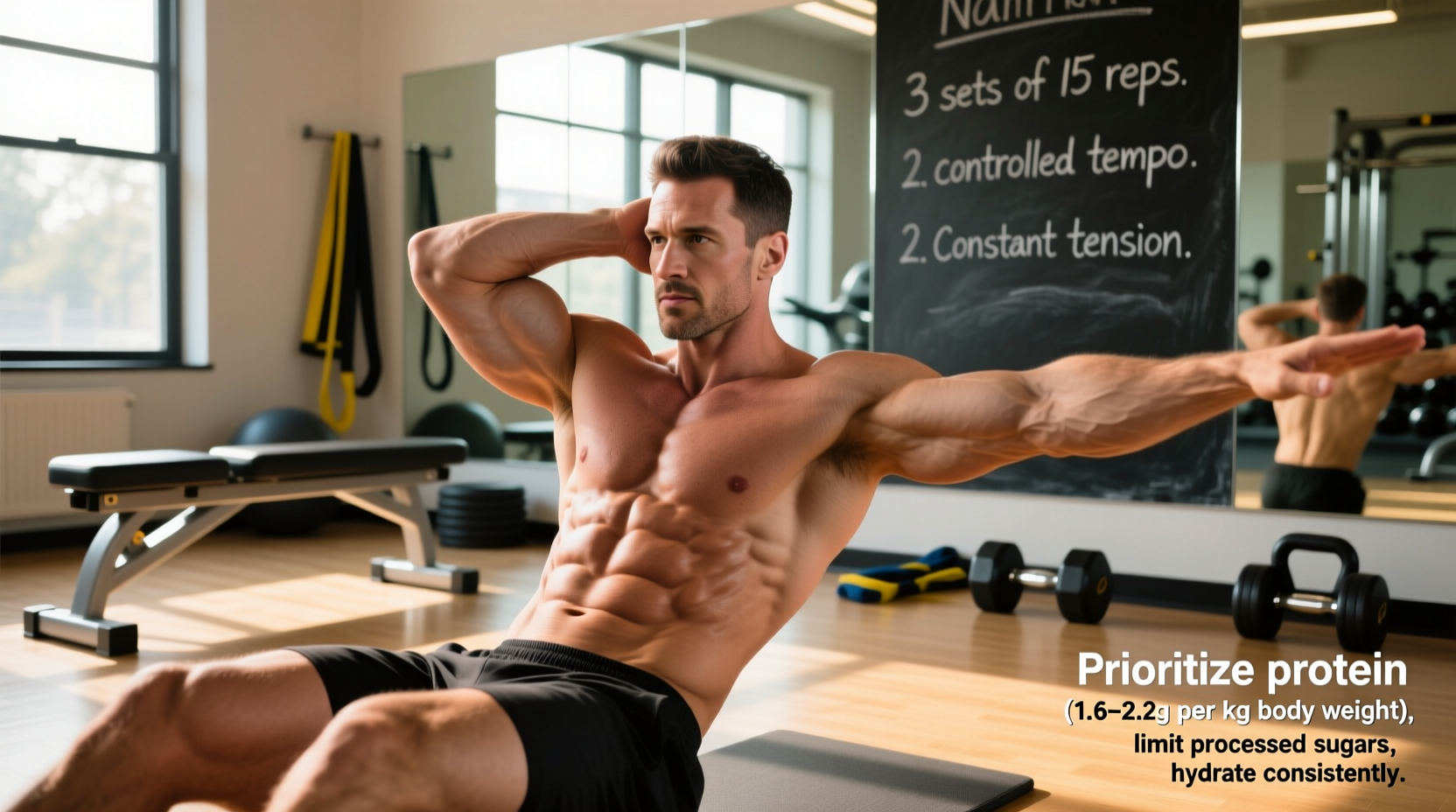
Your abdominal muscles are always there, even if you can’t see them. What hides them is a layer of subcutaneous fat. For most men, abs become visible at around 10–12% body fat; for women, it’s typically between 16–19%. A four-pack becomes noticeable when body fat drops low enough to reveal the tendinous intersections that segment the rectus abdominis into distinct sections.
Unlike popular belief, doing thousands of sit-ups won’t burn the fat covering your abs. Fat loss occurs systemically, meaning your entire body burns fat based on genetics, hormones, and caloric balance. However, you can enhance abdominal definition by combining resistance training to increase muscle size (hypertrophy) with cardiovascular exercise and precise nutrition to reduce body fat.
“Abdominal definition is built in the gym but revealed in the kitchen.” — Dr. Sarah Mitchell, Sports Nutritionist and Strength Coach
Workout Strategies for a Defined Four-Pack
To develop a strong, visible four-pack, focus on three core training principles: progressive overload, full-range motion, and compound integration. Isolation exercises have their place, but the best results come from integrating ab work into functional movements that challenge stability and endurance.
1. Prioritize Core Engagement in Compound Lifts
Exercises like deadlifts, squats, overhead presses, and pull-ups require intense core stabilization. When performed correctly, they engage the transverse abdominis, obliques, and rectus abdominis far more effectively than isolated crunches. These movements also boost metabolism due to high energy demand, aiding fat loss.
2. Incorporate Hypertrophy-Focused Ab Exercises
Just like any other muscle group, abs respond to resistance and volume. Use weighted or advanced variations to progressively challenge the muscles:
- Hanging Leg Raises (Weighted): Targets lower abs with full range of motion.
- Cable Crunches: Allows adjustable resistance for progressive overload.
- Ab Wheel Rollouts: Builds strength and endurance while engaging deep core stabilizers.
- Plank Variations (Side Plank with Hip Dips, Weighted Planks): Enhance muscular endurance and definition.
3. Add Metabolic Finishers
Finish your workouts with short, high-intensity ab circuits to elevate heart rate and burn additional calories. Example:
- Mountain Climbers – 30 seconds
- Bicycle Crunches – 30 seconds
- Plank to Toe Tap – 30 seconds
- Rest 30 seconds, repeat circuit 3 times
Nutrition: The Real Key to Visible Abs
No amount of training will reveal your abs without proper nutrition. Your diet must create a sustainable calorie deficit while preserving lean muscle mass. This requires attention to macronutrients, meal timing, and food quality.
Macronutrient Balance for Fat Loss
A balanced intake supports muscle retention during fat loss. Here’s a general guideline:
| Nutrient | Recommended Intake | Purpose |
|---|---|---|
| Protein | 1.6–2.2g per kg of body weight | Preserves muscle, increases satiety |
| Fat | 20–30% of total calories | Hormone regulation, energy |
| Carbohydrates | Remaining calories | Fuel for workouts, brain function |
Choose whole-food sources: lean meats, eggs, legumes, vegetables, fruits, oats, quinoa, nuts, and seeds. Minimize processed foods, added sugars, and refined carbs, which contribute to fat storage and inflammation.
Hydration and Fiber
Water and fiber play underappreciated roles in revealing abs. Adequate hydration improves metabolic efficiency and reduces water retention, which can mask definition. Aim for 3–4 liters daily. Fiber from vegetables, fruits, and whole grains supports digestion and helps regulate blood sugar, reducing fat storage signals.
Realistic Timeline and Case Study
Meet James, a 32-year-old office worker who wanted visible abs after years of sedentary routine. He wasn’t overweight—just carrying 18% body fat with no core definition. His plan included:
- Strength training 4x/week with compound lifts and dedicated ab sessions
- Cardio: 3x/week (20-minute HIIT, 2x moderate-paced walks)
- Diet: 500-calorie daily deficit, 180g protein, whole foods, no sugary drinks
- Sleep: Consistent 7–8 hours per night
After 12 weeks, James dropped to 13% body fat. His lower abs became visible, and his upper four-pack was clearly defined. Progress photos showed dramatic changes, even though he only lost 9 pounds—most of it fat, while gaining slight muscle mass.
This case illustrates that consistency trumps intensity. James didn’t follow extreme diets or do 2-hour workouts. He focused on sustainability, tracking progress weekly, and adjusting as needed.
Common Mistakes to Avoid
Many people sabotage their efforts unknowingly. Watch out for these pitfalls:
| Mistake | Why It Hurts Progress | Better Alternative |
|---|---|---|
| Only doing crunches | Limited muscle activation, no progressive overload | Add resistance and full-range movements |
| Starving to lose fat | Loses muscle, slows metabolism | Moderate deficit with high protein |
| Ignoring sleep and stress | Elevated cortisol increases belly fat storage | Prioritize 7+ hours of sleep, manage stress |
Action Checklist: Build Your Four-Pack Plan
Follow this checklist to stay on track:
- ✅ Assess current body composition (use photos, measurements, or body fat calipers)
- ✅ Set a realistic goal: 3–5 months to reveal a four-pack
- ✅ Design a 4-day weekly training plan including compound lifts and ab-specific work
- ✅ Calculate maintenance calories and set a 300–500 calorie deficit
- ✅ Prioritize protein: include it in every meal
- ✅ Drink 3+ liters of water daily
- ✅ Sleep 7–8 hours consistently
- ✅ Take progress photos every 4 weeks
Frequently Asked Questions
Can I get a four-pack in 30 days?
For most people, no—not if you’re starting above 15% body fat. Rapid fat loss leads to muscle loss and rebound weight gain. Sustainable progress takes 10–16 weeks. Focus on long-term habits, not quick fixes.
Do women need different ab workouts?
No. Ab anatomy is the same across genders. Women may carry slightly more fat around hips and lower abdomen due to hormones, so fat loss may take longer. But the training principles—progressive overload, full range of motion, and metabolic support—are identical.
Is fasting helpful for visible abs?
Intermittent fasting can help some people control calorie intake, but it’s not required. The key is a consistent energy deficit. If fasting fits your lifestyle and doesn’t disrupt energy or recovery, it can be a tool—but not a magic solution.
Final Thoughts: Make It Last
Building a defined four-pack isn’t about perfection—it’s about consistency, patience, and smart strategy. You don’t need a six-pack to succeed; a clean, strong four-pack reflects real progress. The habits you build along the way—better eating, regular training, quality sleep—are what truly transform your health and confidence.
Start today. Pick one change: add a weekly ab session, increase protein at breakfast, or cut out sugary drinks. Small steps compound into visible results. And once you see those first lines emerge, you’ll know every effort was worth it.




 浙公网安备
33010002000092号
浙公网安备
33010002000092号 浙B2-20120091-4
Comments
No comments yet. Why don't you start the discussion?