
Cat urine odor on clothing is more than just unpleasant—it’s persistent. The proteins in feline urine break down over time, releasing ammonia and creating a stubborn stench that can linger long after washing. Standard detergents often fail because they mask rather than eliminate the root cause. To truly eradicate the smell, you need a targeted approach that breaks down uric acid crystals and neutralizes bacteria. This guide delivers a science-backed, step-by-step process to fully remove cat pee smell from any garment, including delicate fabrics and machine-washable items.
Why Cat Urine Smell Lingers on Clothes
Cat urine contains urea, urobilin, hormones, and pheromones, but the primary culprit behind the lasting odor is uric acid. When urine dries, uric acid crystallizes and embeds into fabric fibers. These crystals reactivate when exposed to moisture or humidity, releasing that unmistakable ammonia-like stench. Most household cleaners only address surface-level smells and don’t dissolve these crystals, which is why the odor returns even after multiple washes.
Additionally, synthetic fabrics like polyester are especially prone to trapping odors due to their chemical structure, while natural fibers such as cotton can absorb large amounts of liquid, allowing urine to penetrate deeply.
“Uric acid is highly stable and resistant to regular laundering. Only enzymatic or acidic treatments can effectively degrade it.” — Dr. Linda Harper, Textile Biochemist
Step-by-Step Guide to Eliminate Cat Pee Smell
Follow this detailed, five-phase method to ensure complete odor removal. Timing matters—treat stains as soon as possible for best results.
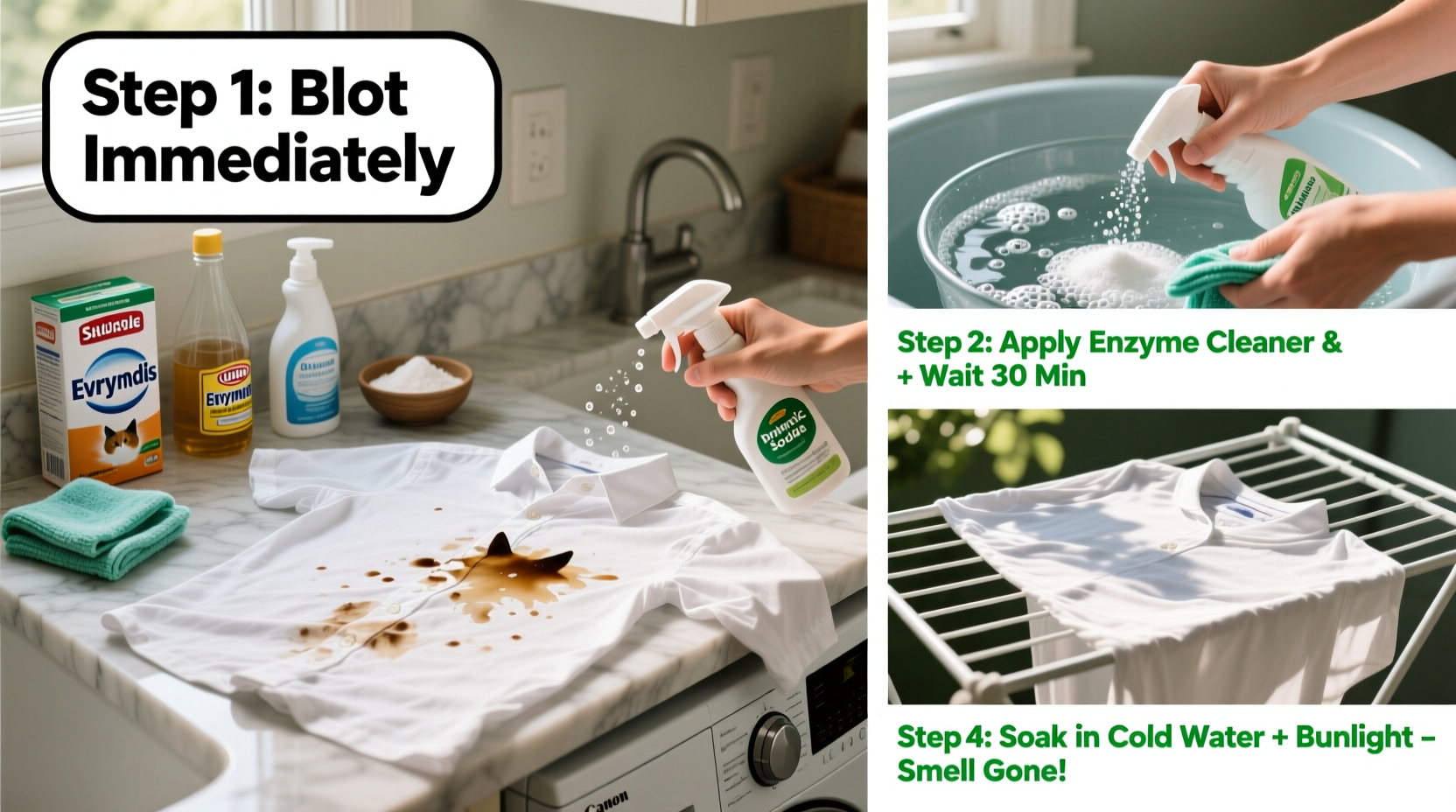
- Blot and Extract Excess Moisture
Use a clean, dry cloth or paper towel to blot the affected area. Press firmly to absorb as much liquid as possible. Do not rub—this spreads the urine deeper into fibers. - Rinse with Cold Water
Hold the stained area under cold running water for 3–5 minutes. This dilutes the urine and flushes out water-soluble components before treatment. Hot water sets proteins and worsens the stain. - Apply an Enzymatic Cleaner
Spray or pour a pet-safe enzymatic cleaner directly onto the stain. These products contain bacteria that consume uric acid. Let sit for 10–15 minutes (follow product instructions). For heavy contamination, soak the entire garment for up to 30 minutes. - Wash with Baking Soda and Vinegar
Add ½ cup baking soda to the detergent compartment and ½ cup white vinegar to the fabric softener dispenser. Wash on a long cycle using cold water. Avoid bleach or ammonia-based cleaners—they react with urine to produce toxic gases. - Air-Dry and Inspect
Hang the garment to dry in direct sunlight if possible. UV light helps break down residual odor compounds. Do not use a dryer until you’re certain the smell is gone—heat can permanently set any remaining traces.
Best Cleaning Agents Compared
Not all cleaners are equally effective. The table below compares common solutions based on their ability to neutralize uric acid, safety for fabrics, and ease of use.
| Product Type | Breaks Down Uric Acid? | Fabric Safety | Notes |
|---|---|---|---|
| Enzymatic Cleaners | Yes | High (for most fabrics) | Most effective; designed specifically for pet stains |
| White Vinegar | Moderate (acidic action) | Medium (can fade dark colors) | Inexpensive; good for mild cases |
| Baking Soda | No (odor absorber only) | High | Use as booster, not standalone solution |
| Hydrogen Peroxide (3%) | Yes (oxidizes compounds) | Low (bleaches some fabrics) | Test on hidden area first; avoid silk/wool |
| Regular Detergent | No | High | Insufficient alone; must be combined with other agents |
Common Mistakes That Make the Problem Worse
- Using hot water: Sets protein-based stains and bonds odor to fibers.
- Skipping pre-treatment: Washing without enzymatic breakdown leaves uric acid intact.
- Drying too soon: Heat locks in odors and makes re-treatment less effective.
- Using ammonia-based cleaners: Chemically similar to urine, so it attracts cats back to the same spot.
- Overloading the washer: Reduces water circulation and cleaning efficiency.
Real-Life Example: Removing Old Urine Stains from Baby Clothes
Sarah, a mother of two in Portland, discovered her cat had urinated on a stack of folded baby onesies stored under a guest bed. The clothes had been sitting for nearly a week, and the smell was overpowering. She washed them twice with regular detergent, but the odor remained.
Following the enzymatic treatment method, she soaked the onesies in a solution of Nature’s Miracle and cold water for 25 minutes, then washed them with vinegar and baking soda. After air-drying in the sun, the garments were completely odor-free. “I was ready to throw them out,” she said. “But this method saved $80 worth of clothes.”
Essential Checklist for Complete Odor Removal
Use this checklist to ensure no step is missed during treatment:
- ☐ Blot fresh urine immediately
- ☐ Rinse with cold water
- ☐ Apply enzymatic cleaner and allow dwell time
- ☐ Wash with baking soda and vinegar (cold water)
- ☐ Air-dry in sunlight
- ☐ Smell-test before drying with heat
- ☐ Repeat if necessary
Frequently Asked Questions
Can I use hydrogen peroxide instead of enzymatic cleaner?
Hydrogen peroxide (3%) can help oxidize odor-causing compounds and works well in combination with baking soda. However, it’s not as reliable as enzymatic cleaners for breaking down uric acid crystals. It also risks bleaching colored fabrics, so always test first and avoid using on wool, silk, or dark dyes.
Will boiling clothes remove cat pee smell?
Boiling may kill bacteria and loosen some contaminants, but it often sets protein residues and damages most modern fabrics. It’s not recommended. Instead, stick to cold-water washing with enzymatic treatment for safer, more effective results.
How do I treat non-washable clothes like suits or coats?
For dry-clean-only items, do not attempt home washing. Blot gently, apply a small amount of enzymatic spray to an inside seam or hem to test for colorfastness, then lightly mist the affected area. Allow to sit for 15 minutes, blot again, and take to a professional cleaner with a note about the bio-contaminant. Inform them it’s organic waste so they can choose appropriate solvents.
Final Thoughts and Prevention Tips
Eliminating cat pee smell from clothes isn’t about masking—it’s about molecular breakdown. Enzymatic cleaners are your most powerful tool, supported by proper rinsing, smart laundry practices, and patience. Never rush the process; incomplete treatment leads to recurring odors.
To prevent future incidents, store clean clothes in sealed containers or closets inaccessible to pets. If your cat is urinating outside the litter box, consult a veterinarian—this could signal stress, infection, or territorial behavior.




 浙公网安备
33010002000092号
浙公网安备
33010002000092号 浙B2-20120091-4
Comments
No comments yet. Why don't you start the discussion?