
Destructive chewing is one of the most common behavioral issues among dogs, especially during teething or periods of high energy. While chewing is a natural instinct, aggressive or inappropriate chewing—on furniture, shoes, or household items—can become costly and frustrating. Rather than relying solely on correction or punishment, modern canine behaviorists emphasize redirection and mental engagement. Interactive dog toys have emerged as a powerful tool in managing and reducing destructive chewing by satisfying a dog’s physical and psychological needs. When used strategically, these toys can transform compulsive chewing into constructive play.
Understanding the Root Causes of Aggressive Chewing
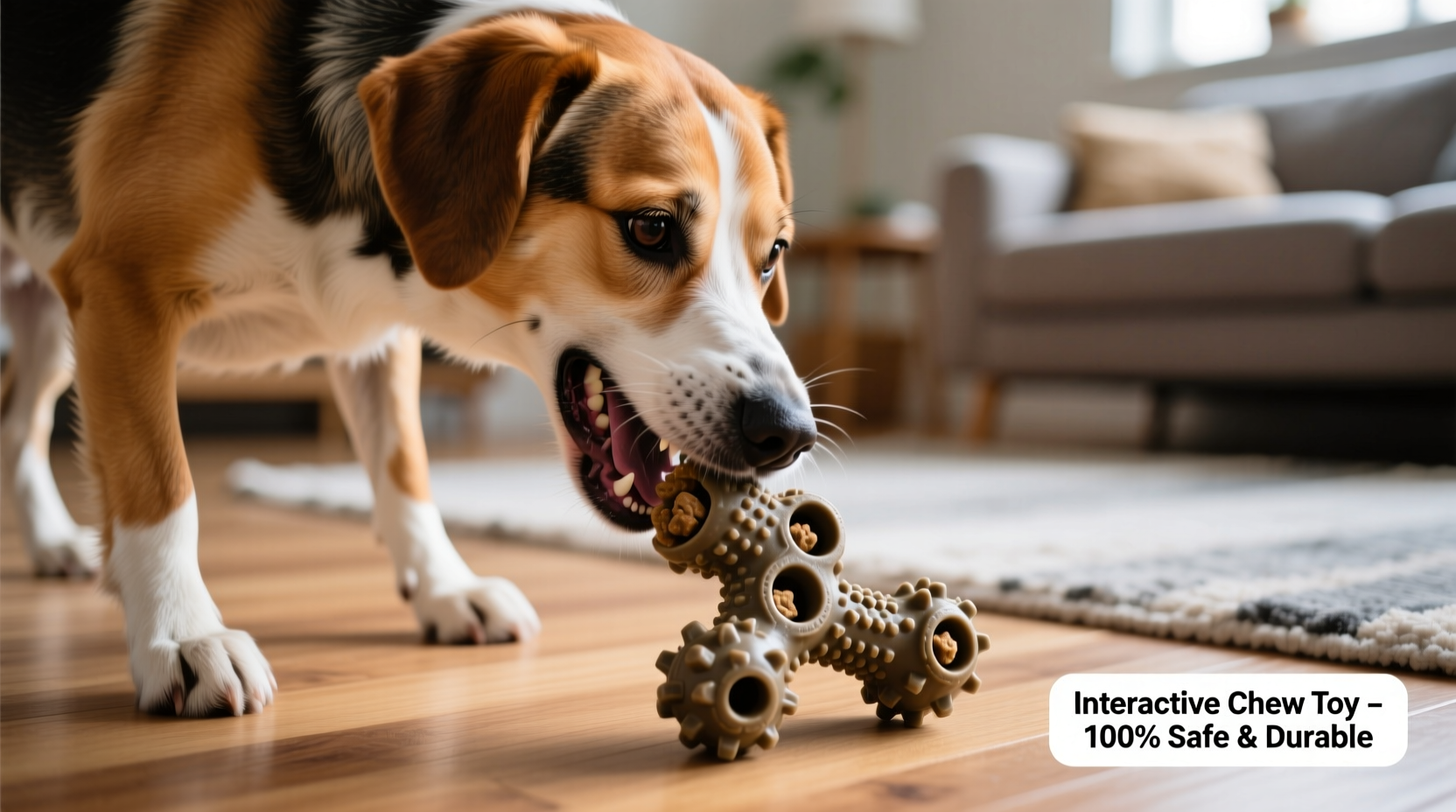
Before addressing the behavior, it's essential to understand why dogs chew excessively. Puppies chew to relieve teething discomfort, typically between 3 and 6 months of age. Adult dogs may chew due to boredom, anxiety, lack of exercise, or insufficient mental stimulation. In some cases, chewing becomes a compulsive behavior linked to separation anxiety or environmental stressors.
Simply removing access to forbidden items isn't enough. Dogs need appropriate outlets for their natural chewing instincts. This is where interactive toys come in—they don’t just distract; they redirect energy toward positive, enriching activities that mimic foraging, problem-solving, and prey drive behaviors.
“Dogs aren’t being ‘bad’ when they chew destructively—they’re responding to unmet needs. The goal isn’t suppression, but substitution.” — Dr. Karen Becker, Integrative Veterinarian and Canine Behavior Advocate
How Interactive Toys Reduce Destructive Chewing
Interactive dog toys are designed to engage a dog’s mind and body. Unlike passive chew bones or plush toys, interactive models require effort, decision-making, and persistence. This level of engagement has several benefits:
- Mental fatigue: Solving puzzles or extracting treats tires the brain faster than physical exercise alone.
- Delayed gratification: Dogs learn to work for rewards, which reduces impulsive behaviors like chewing.
- Instinct fulfillment: Many interactive toys simulate hunting or scavenging, satisfying primal drives in a safe way.
- Positive reinforcement: When dogs receive treats or praise after using a toy appropriately, the behavior becomes self-reinforcing.
Types of Interactive Toys That Work Best
Not all interactive toys are equally effective for curbing aggressive chewing. The right toy depends on your dog’s size, chewing strength, intelligence, and motivation. Below is a comparison of popular types and their suitability for different chewing behaviors.
| Toys | Best For | Chewing Reduction Benefit | Caution |
|---|---|---|---|
| Puzzle feeders (e.g., Nina Ottosson series) | Moderate to high-energy dogs | High – encourages focus over destruction | May frustrate very anxious dogs if too difficult |
| Treat-dispensing balls (e.g., Kong Wobbler) | Dogs who love chasing and rolling | Medium to High – keeps them busy for 15–30 mins | Use only with durable rubber; avoid soft plastic |
| Stuffed Kongs (frozen peanut butter or yogurt) | Power chewers and anxious dogs | Very High – long-lasting engagement | Supervise use; remove if pieces break off |
| Snuffle mats | Dogs with strong scent drives | Medium – redirects energy to searching | Not suitable for heavy chewers unless reinforced |
| Plush puzzle toys with hidden compartments | Gentle chewers and companion breeds | Low to Medium – good for light engagement | Avoid with aggressive chewers; risk of ingestion |
Step-by-Step Guide to Introducing Interactive Toys
Introducing interactive toys effectively requires patience and consistency. Follow this timeline to ensure your dog associates the toys with positive outcomes and gradually shifts away from destructive chewing.
- Week 1: Start simple – Choose an easy puzzle or treat ball. Fill it with kibble or small treats. Let your dog figure it out with minimal difficulty to build confidence.
- Week 2: Increase challenge – Use slightly harder puzzles or freeze a stuffed Kong. Supervise initial use to prevent frustration.
- Week 3: Establish routine – Offer the toy at predictable times, such as before you leave the house or during high-energy periods.
- Week 4: Phase out access to forbidden items – Confine your dog to a safe area with only approved toys when unsupervised.
- Ongoing: Rotate and refresh – Swap toys weekly and vary the treats inside to maintain interest.
Real-Life Example: Turning Around Max, the Lab-Rottweiler Mix
Max, a 10-month-old Lab-Rottweiler mix, was destroying baseboards, shoes, and even electrical cords when left alone. His owner, Sarah, had tried bitter sprays and crate training with limited success. After consulting a certified dog trainer, she introduced a structured toy rotation system.
The trainer recommended starting with a Kong filled with plain yogurt and blueberries, frozen overnight. Max spent nearly 45 minutes working on it the first time. Over the next three weeks, Sarah added a snuffle mat for morning play and a treat-dispensing ball for afternoon use. She also began leaving the TV on for background noise to reduce anxiety.
Within a month, Max’s destructive chewing dropped by over 80%. He now runs to his toy basket when he hears Sarah preparing to leave. “It wasn’t about stopping him from chewing,” Sarah said. “It was about giving him something better to do.”
Checklist: Building an Anti-Chewing Toy Strategy
- ✅ Assess your dog’s chewing intensity and preferences
- ✅ Invest in at least three durable, interactive toys
- ✅ Begin with easy-to-solve puzzles to build confidence
- ✅ Use high-value treats (e.g., cheese, boiled chicken) initially
- ✅ Freeze stuffed toys for longer engagement
- ✅ Supervise early interactions to prevent frustration
- ✅ Rotate toys weekly to maintain interest
- ✅ Combine toy use with a consistent daily routine
- ✅ Remove access to off-limit items during transition
- ✅ Monitor progress and adjust difficulty as needed
Frequently Asked Questions
Can interactive toys replace supervision?
No. While interactive toys are highly effective, they should not replace supervision, especially in the early stages. Always monitor your dog with new toys to ensure safety and proper use. Once trust is established, you can gradually increase unsupervised time with durable options like frozen Kongs.
What if my dog destroys the toy?
If your dog breaks or swallows parts of a toy, discontinue use immediately. Opt for ultra-durable rubber toys labeled “indestructible” or designed for power chewers. Brands like West Paw, GoughNuts, and Kong Extreme are often recommended by trainers. Consider confining your dog to a secure area with only one toy at a time.
How long until I see results?
Most owners notice reduced chewing within 2–3 weeks of consistent use. Full behavioral shifts may take 4–8 weeks, depending on the dog’s age, history, and environment. Pairing toy use with adequate daily exercise and mental stimulation accelerates progress.
Final Thoughts and Call to Action
Aggressive chewing isn’t a flaw—it’s a signal. Your dog is communicating a need for activity, comfort, or engagement. Interactive toys offer more than distraction; they provide a constructive channel for natural instincts. By choosing the right toys, introducing them thoughtfully, and maintaining consistency, you can significantly reduce destructive behaviors and strengthen your bond with your pet.




 浙公网安备
33010002000092号
浙公网安备
33010002000092号 浙B2-20120091-4
Comments
No comments yet. Why don't you start the discussion?