
Finding someone you’ve lost touch with—whether a long-lost relative, former classmate, or old friend—can feel like searching for a needle in a digital haystack. Yet, with the right techniques and tools, it’s entirely possible to locate people without spending a dime. The internet has democratized access to public information, and when used thoughtfully, free resources can yield powerful results. This guide walks through practical, ethical, and legally sound approaches to finding anyone using only free tools and methods.
Leverage Social Media Platforms Strategically
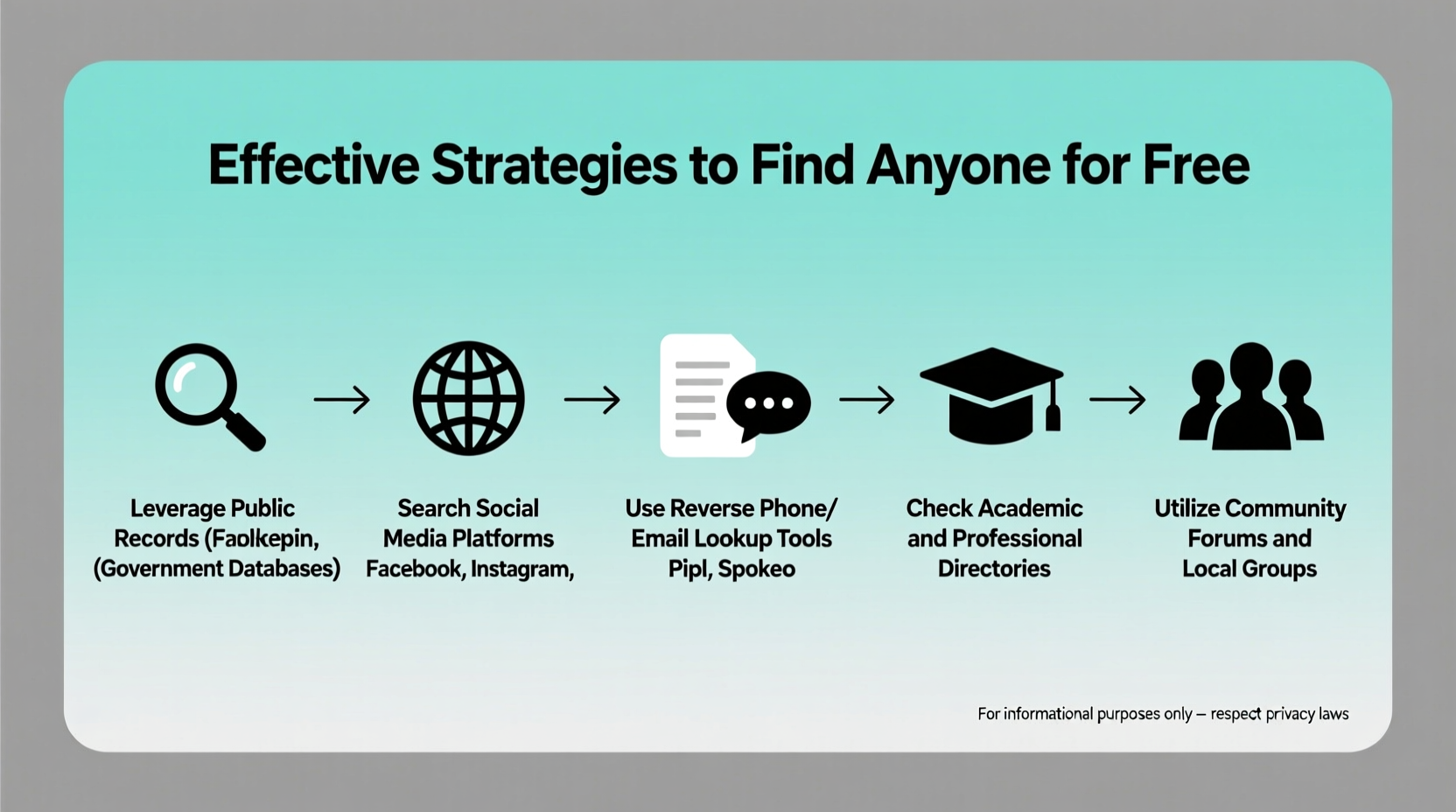
Social media is one of the most effective starting points for locating someone. Platforms like Facebook, LinkedIn, Twitter (X), and Instagram are built on user-generated profiles that often include real names, locations, workplaces, schools, and mutual connections.
Start by entering the person’s full name into the search bar of each platform. Use filters such as location, education, or workplace if available. For example, LinkedIn allows filtering by company and job title, which can help distinguish between individuals with common names.
On Facebook, use the “People You May Know” feature after viewing a mutual friend’s profile. Even if the target individual has privacy settings enabled, their name might appear in friends lists or tagged photos.
Use Advanced Search Operators for Precision
Google and other search engines offer advanced operators that refine results and uncover hidden information. These commands allow you to filter results based on specific criteria, dramatically increasing your chances of success.
For instance:
\"John Smith\" \"New York\" \"software engineer\"— Finds pages containing all these exact terms.site:linkedin.com \"Maria Garcia\" nurse California— Limits results to LinkedIn only.intitle:\"Jane Doe\" resume OR CV— Searches for resumes or CVs with Jane Doe in the title.
These techniques bypass generic results and surface more relevant data. Combine them with known details—such as past employers, schools, or hobbies—for better targeting.
“Advanced search syntax transforms casual browsing into investigative research. It’s the difference between hoping and knowing.” — Daniel Reeves, Digital Privacy Analyst
Explore Public Records and Government Databases
Many government agencies maintain publicly accessible records that can assist in locating individuals. While some services charge fees, numerous databases are free to search.
Examples include:
- Voter registration rolls – Available in some states via election board websites.
- Property ownership records – County assessor or recorder offices often provide online access.
- Court records – Federal and state court systems host searchable dockets for civil, criminal, and family cases.
- Professional licenses – State boards (e.g., medical, legal, teaching) list licensed individuals and their credentials.
Visit the official website of the relevant jurisdiction or licensing body. For example, the Florida Department of Health offers a free license lookup tool for healthcare providers.
| Resource Type | Free Access? | What You Can Find |
|---|---|---|
| County Property Records | Yes (varies by county) | Name, address, property value |
| State Professional Licenses | Yes | Name, license number, employer |
| Federal Court Records (PACER) | Limited free access | Cases involving the individual |
| Public Marriage/Divorce Records | Sometimes | Name changes, spouse info, dates |
Step-by-Step Guide: Locating a Missing Relative
Consider this realistic scenario: You’re trying to find your cousin, David Miller, who moved from Ohio to Texas over a decade ago. Here’s how to proceed methodically:
- Gather known information: Full name, birth year, last known city, parents’ names, siblings, schools attended.
- Search social media: Look up “David Miller” + “Ohio” on Facebook and LinkedIn. Check mutual connections.
- Run a Google search: Use
\"David Miller\" \"Columbus\" \"Ohio State University\". - Check public records: Visit the Texas county property database and search his name. Also try the Ohio Department of Health for marriage records.
- Review obituaries: Search legacy.com or local newspaper archives; sometimes surviving relatives are listed.
- Contact shared connections: Reach out to old family friends or coworkers who may have stayed in touch.
Avoid Common Pitfalls and Respect Privacy
While finding someone is often well-intentioned, it’s crucial to act ethically. Avoid stalking, harassment, or using deceptive tactics. Not everyone wants to be found—and that choice should be respected.
Some key do’s and don’ts:
| Do’s | Don’ts |
|---|---|
| Use information to reconnect respectfully | Share private details publicly |
| Verify identity before contacting | Impersonate others or create fake profiles |
| Start with non-intrusive outreach (e.g., message) | Surprise someone in person uninvited |
| Document sources for accuracy | Assume guilt or intent from public records |
“The ability to find someone doesn’t always mean you should. Consider the context, history, and potential impact of your search.” — Sarah Lin, Cyberethics Researcher at Stanford University
FAQ
Can I find someone with just a first name and city?
Possibility decreases with limited details, but combining the name with social media filters, school groups, or local forums can help narrow results. Try adding interests (“Mark Denver hiking”) or employment sectors (“Linda Austin teacher”).
Are reverse phone lookups really free?
Truly free reverse phone lookup services are limited. Some sites offer basic info at no cost, but detailed reports usually require payment. Free options like Truecaller (basic tier) or searching the number in quotes on Google (\"+1-555-123-4567\") may reveal associated names or profiles.
What if the person changed their name?
Focus on life events that predate the change—school records, childhood photos, or family announcements. Marriage records, adoption documents, or court filings for legal name changes may be accessible through county clerks or state archives.
Essential Checklist for a Successful Search
Before beginning your search, prepare with this actionable checklist:
- ✅ Collect all known details: full name, aliases, birth date, last known address, workplace, school, relatives
- ✅ Search major social networks using exact phrases and filters
- ✅ Use Google with advanced operators to uncover niche mentions
- ✅ Check free public record databases relevant to the person’s history
- ✅ Review professional licensing or alumni directories
- ✅ Contact mutual acquaintances discreetly
- ✅ Verify findings across multiple sources to avoid errors
- ✅ Approach contact with empathy and clarity about your intentions
Conclusion
Finding someone for free is not only possible—it’s within reach for anyone willing to invest time and care into the process. By combining smart search techniques, public resources, and respectful communication, you can reconnect with people who matter without compromising ethics or privacy. Technology empowers us to bridge distances, heal old rifts, and rebuild relationships. If you’ve been wondering where someone went, start today with one search, one message, one step forward.




 浙公网安备
33010002000092号
浙公网安备
33010002000092号 浙B2-20120091-4
Comments
No comments yet. Why don't you start the discussion?