
Finding someone can be more complicated than typing a name into Google. Whether it’s a long-lost friend, a missing relative, or a professional contact, standard search engines often return outdated, incomplete, or misleading results. Relying solely on public records or social media profiles rarely suffices in today’s fragmented digital landscape. To truly locate someone with accuracy and efficiency, you need a layered approach—one that combines digital tools, human networks, behavioral insight, and methodical verification.
The most effective searches go beyond keywords. They involve understanding where people leave traces of their lives—online and offline—and how to interpret those clues without violating privacy or ethics. This guide outlines actionable, proven techniques used by investigators, researchers, and reconnecting individuals alike.
Leverage Reverse Search Tools Strategically
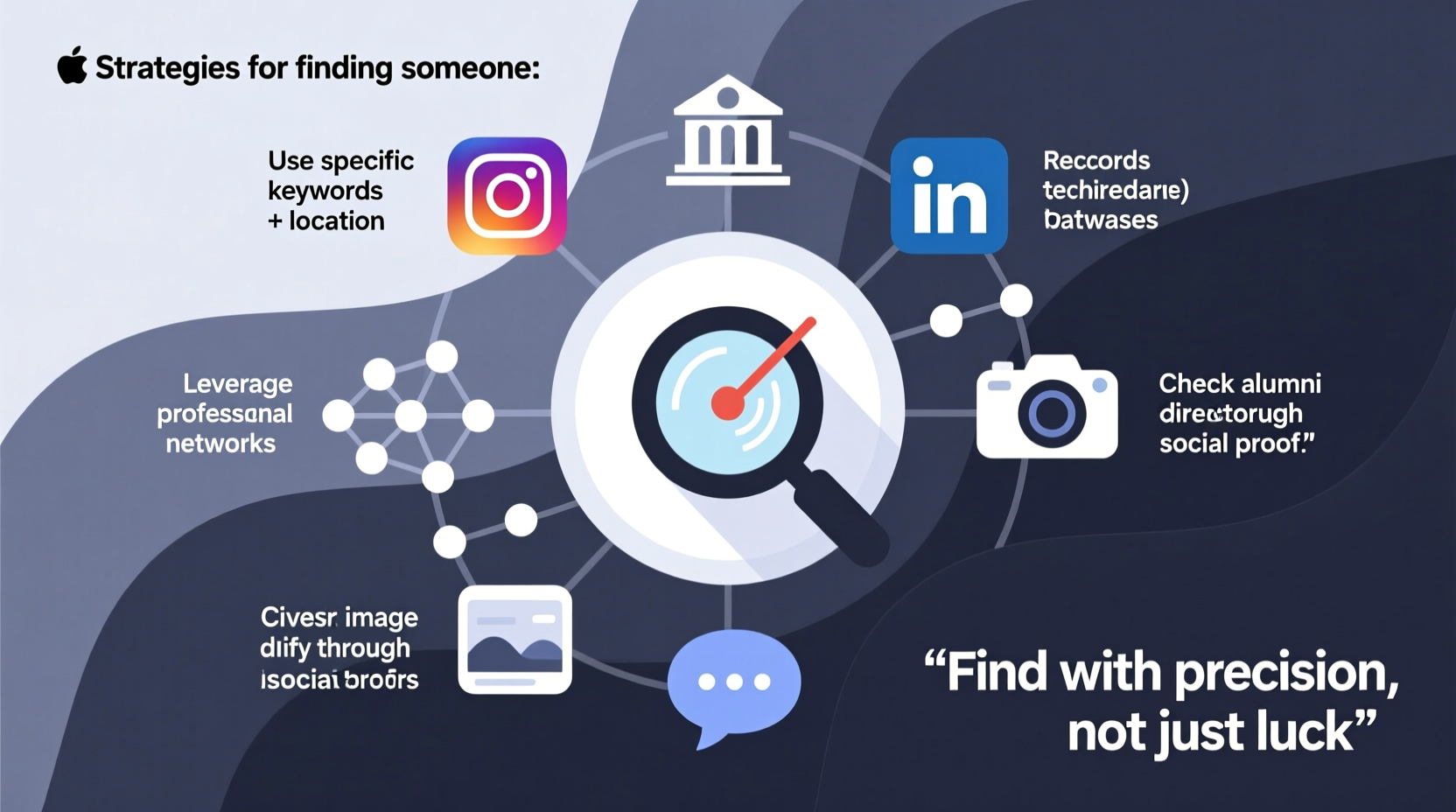
While most people start with a person’s name, reversing the process using known details like phone numbers, email addresses, or images often yields better results. Reverse image search, for example, can identify where a photo has been posted online—even if it was shared without attribution.
Upload a photo to Google Images or use specialized tools like TinEye to trace its origin. If the person has ever appeared in news articles, event pages, or social media posts, these platforms may surface matches even if their profile is private.
For emails and phone numbers, use reverse lookup services such as Truecaller (for mobile numbers) or Hunter.io (for professional emails). These tools cross-reference vast databases of public directories, domain registrations, and user-submitted information.
Map Digital Footprints Across Platforms
People rarely exist on just one platform. A robust search strategy involves tracking a subject’s footprint across multiple ecosystems—social media, forums, public records, job sites, and even niche communities.
Begin by compiling every piece of verified information: full name variations, past locations, workplaces, schools, hobbies, or relatives’ names. Then, search combinations of these terms on platforms like LinkedIn, Reddit, GitHub, or industry-specific forums. For instance, a software developer might have contributed to open-source projects under their real name, while staying anonymous elsewhere.
Pay attention to usernames. Many people reuse handles across platforms. Try searching “username” + “site:twitter.com” or “site:instagram.com” in Google to see where else a particular ID appears.
“Digital exhaust—the trail people leave through accounts, posts, and metadata—is often more revealing than direct searches.” — Dr. Lena Torres, Cyber Intelligence Researcher at Stanford University
Use Public Records and Government Databases
Publicly available records remain one of the most reliable sources for locating individuals—especially when digital presence is limited. These include property ownership, marriage licenses, court filings, voter registrations, and business affiliations.
In the U.S., many of these are accessible via state or county websites. For example:
- County Assessor Sites: Reveal current address and property value.
- Clerk’s Office Portals: Provide access to marriage, divorce, and probate records.
- Department of Motor Vehicles (limited access): While full reports aren’t public, some states allow third-party verification for legal purposes.
Commercial aggregators like BeenVerified or Intelius compile this data into searchable formats—but always verify findings against primary sources, as errors do occur.
Step-by-Step Guide: Tracing Through Public Records
- Gather all known identifiers (full name, DOB, past cities).
- Search free public record portals (e.g., FamilySearch.org, state archives).
- Cross-check with paid services for deeper access.
- Verify any new address or relative connection through secondary sources.
- Document each source for accuracy and future reference.
Analyze Social Networks and Mutual Connections
Sometimes the best way to find someone isn’t to look directly—but through their circle. People maintain invisible ties through family, coworkers, classmates, and neighbors. Mapping these relationships can reveal indirect pathways.
Start with mutual contacts on Facebook or LinkedIn. Even if the target profile is hidden, their connections may appear in your network. Look for patterns: shared employers, overlapping hometowns, or frequent interactions with certain users.
If you’re reconnecting with an old friend, consider posting a respectful message in alumni groups or community forums. Instead of asking “Has anyone seen X?”, try: “Looking to reconnect with former students from Lincoln High Class of 2005—anyone still in touch?” This invites engagement without sounding intrusive.
| Method | Best For | Limitations |
|---|---|---|
| Reverse Image Search | Finding untagged photos or impersonation | Low success with edited or cropped images |
| Email/Phone Lookup | Verifying identity or contact info | May not reflect current usage |
| Public Records | Physical location, legal status | Delayed updates; varies by jurisdiction |
| Social Network Mapping | Reconnecting through trusted channels | Privacy settings limit visibility |
Mini Case Study: Locating a Missing Relative
A woman in Oregon sought her half-brother, separated at birth. With only his first name and approximate age, initial searches failed. She expanded her search by:
- Using ancestry DNA matching to identify shared relatives.
- Contacting a cousin listed in the match who confirmed the brother’s last known city.
- Searching property records under possible surnames tied to their father.
- Eventually finding him listed as a co-owner of a home in Idaho.
She reached out through a mutual acquaintance, avoiding cold contact. The reunion succeeded because she combined genetic data, public records, and relational networking—without relying on social media alone.
Checklist: How to Find Someone Beyond Basic Searches
- ✅ Collect all known details: full name, aliases, birth date, past locations.
- ✅ Perform reverse searches on photos, emails, and phone numbers.
- ✅ Scan social media platforms using username consistency.
- ✅ Explore public records: property, court, voter, and business filings.
- ✅ Use genealogy or DNA services if familial connection is involved.
- ✅ Identify and reach out to mutual contacts respectfully.
- ✅ Verify findings across multiple independent sources.
- ✅ Document each step to avoid duplication and track progress.
Frequently Asked Questions
Is it legal to search for someone using public records?
Yes, accessing publicly available information—such as property deeds, marriage licenses, or court records—is legal. However, using that information for harassment, fraud, or stalking is not. Always respect privacy boundaries and intent.
What should I do if I find outdated or incorrect information?
Discrepancies are common. Cross-reference multiple sources to confirm accuracy. For example, if a person’s listed address is five years old, check recent utility filings, vehicle registrations, or neighborhood social media groups for signs of current residency.
Can I find someone without knowing their last name?
It’s challenging but possible. Combine other identifiers—location, age, workplace, or relatives—with image searches or community forums. On platforms like Reddit or Nextdoor, describing context (“teacher at Westside Middle School in 2018”) can prompt recognition from others.
Final Thoughts: Persistence Meets Precision
Finding someone isn’t about one magic tool—it’s about building a coherent picture from scattered fragments. The most successful searches combine technical resources with emotional intelligence. Respect for privacy, patience in verification, and strategic outreach increase your chances far more than aggressive digging.
Technology gives us unprecedented access to information, but human judgment remains irreplaceable. Whether you're reuniting families, reconnecting professionally, or resolving personal matters, the key lies in methodical, ethical investigation.




 浙公网安备
33010002000092号
浙公网安备
33010002000092号 浙B2-20120091-4
Comments
No comments yet. Why don't you start the discussion?