
Dogs chew for a variety of reasons—boredom, anxiety, teething, or simply because they find the texture of rugs appealing. While it’s natural behavior, unchecked rug chewing can damage your home and potentially harm your pet if fibers are ingested. The key is not to punish but to redirect and manage the behavior with patience and consistency. This guide outlines proven, humane strategies that focus on prevention, enrichment, and training to stop rug chewing before it becomes a habit.
Understand Why Your Dog Chews Rugs
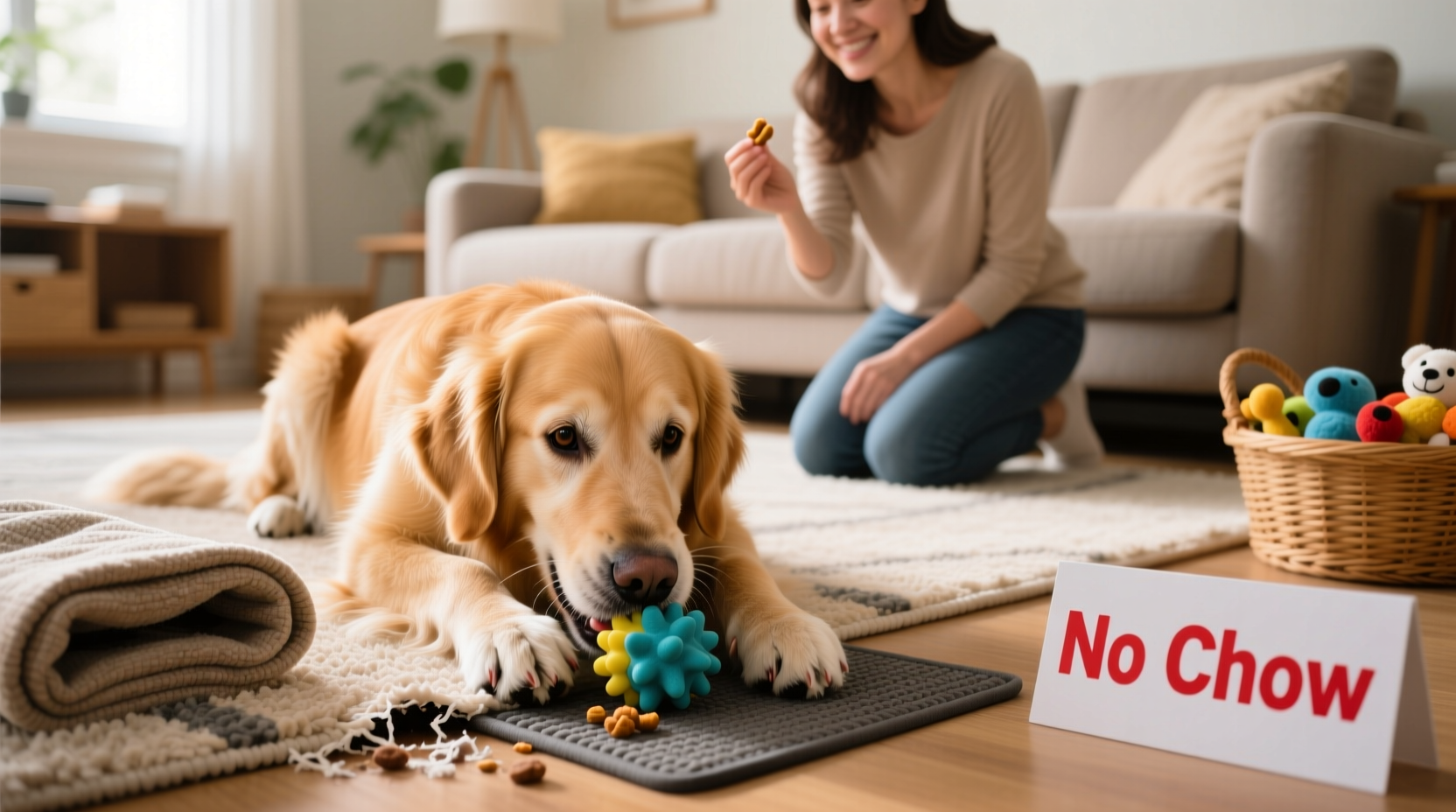
Before addressing the behavior, it's essential to identify the root cause. Dogs don’t chew rugs out of spite—they do so due to instinctual or emotional needs. Common reasons include:
- Teething (puppies under 6 months): Puppies explore the world through their mouths and may chew to relieve gum discomfort.
- Boredom or lack of stimulation: Dogs left alone for long periods without toys or activity may resort to destructive behaviors.
- Anxiety or stress: Separation anxiety, noise phobias, or changes in routine can trigger chewing as a coping mechanism.
- Attention-seeking: If chewing once earned a reaction—even negative—the dog may repeat the behavior to get attention.
- Taste or texture appeal: Some rugs have residual food scents, laundry fragrances, or fibrous textures that attract dogs.
“Chewing is a normal canine behavior. The goal isn’t to eliminate it entirely, but to redirect it appropriately.” — Dr. Karen Becker, DVM, Integrative Veterinary Expert
Step-by-Step Prevention Plan
Stopping rug chewing requires a multi-pronged approach. Follow this timeline-based strategy over 2–4 weeks to create lasting change:
- Week 1: Assess and Secure
Identify which rugs are targeted and when chewing occurs. Remove access by closing doors or using baby gates. Apply bitter-tasting deterrent sprays on affected areas. - Week 2: Increase Mental & Physical Stimulation
Add two 20-minute walks daily and introduce puzzle toys or chew-specific games. Rotate toys weekly to maintain interest. - Week 3: Introduce Positive Alternatives
Place durable chew toys near common chewing zones. Reward your dog generously when they choose the toy over the rug. - Week 4: Reinforce and Monitor
Gradually reintroduce rugs while supervising. Use verbal cues like “Leave it” and reward compliance. Expand freedom only when consistent success is observed.
Effective Training Techniques That Work
Training should focus on teaching what to do, not just stopping what not to do. Use positive reinforcement to build new habits:
- Leave-it command: Hold a treat in a closed fist, say “Leave it,” and wait until your dog stops trying to get it. Reward with a different treat when they back away. Practice near rugs to reinforce impulse control.
- Trade-up method: When you catch your dog chewing a rug, calmly offer a high-value chew toy in exchange. Praise enthusiastically when they take it.
- Environmental cueing: Place durable chew toys in the same spots where rugs are chewed. Over time, your dog will associate those areas with acceptable chewing options.
Consistency across all family members is critical. Everyone must respond the same way—no mixed signals. Avoid yelling or physical punishment, which can increase anxiety and worsen the behavior.
Do’s and Don’ts: Rug-Chewing Management Table
| Do’s | Don’ts |
|---|---|
| Provide safe, durable chew toys (e.g., rubber Kongs, nylon bones) | Use physical punishment or scolding after the fact |
| Rotate toys weekly to prevent boredom | Leave your dog unsupervised in rug-prone areas too soon |
| Apply vet-approved bitter sprays to rugs | Use human repellents like hot sauce (can irritate mouth) |
| Exercise your dog daily to reduce excess energy | Ignore signs of anxiety or stress-related chewing |
| Consult a veterinarian or behaviorist if chewing persists | Assume the dog is acting out of malice |
Real-Life Example: How Max the Terrier Stopped Chewing the Hallway Runner
Max, a 10-month-old Jack Russell Terrier, began chewing the hallway rug every time his owner left for work. The family initially tried spraying water and yelling, but the behavior continued. After consulting a trainer, they implemented a new plan:
- They installed a baby gate to block hallway access when unsupervised.
- Max was given a frozen peanut butter-stuffed Kong each morning before departure.
- The hallway rug was sprayed with a pet-safe bitter solution.
- His owner practiced short departures, rewarding calm behavior.
Within three weeks, Max no longer showed interest in the rug. The combination of environmental management, mental stimulation, and positive reinforcement resolved the issue without stress for either dog or owner.
Essential Checklist: Stop Rug Chewing in 7 Steps
- ✅ Identify the underlying cause of chewing (teething, boredom, anxiety)
- ✅ Remove or restrict access to rugs when unsupervised
- ✅ Provide multiple durable chew toys suited to your dog’s size and chewing strength
- ✅ Apply a pet-safe bitter spray to targeted rugs
- ✅ Increase daily exercise and mental enrichment
- ✅ Train the “Leave it” command using positive reinforcement
- ✅ Consult a professional if chewing persists beyond 4 weeks
Frequently Asked Questions
Can I use vinegar to stop my dog from chewing rugs?
Vinegar has a strong smell that some dogs dislike, so a diluted white vinegar spray may act as a temporary deterrent. However, it’s less reliable than commercial bitter sprays designed specifically for pets. Test on a small area first to avoid fabric damage.
How long does it take to stop a dog from chewing rugs?
With consistent effort, most dogs show improvement within 2–4 weeks. Puppies may take longer due to teething, while adult dogs with anxiety-related chewing may need additional behavioral support.
Are certain dog breeds more prone to chewing rugs?
High-energy breeds like Border Collies, Australian Shepherds, and terriers are more likely to chew due to boredom. Teething puppies of any breed are also at higher risk. However, environment and training play a bigger role than genetics.
Final Thoughts: Patience and Prevention Are Key
Preventing rug chewing doesn’t require extreme measures or harsh discipline. It calls for understanding your dog’s needs, managing their environment, and reinforcing better choices. Most importantly, progress takes time. Celebrate small wins—like your dog choosing a chew toy over the rug—and remain consistent. With the right tools and mindset, you can protect your home and strengthen your bond with your dog in the process.




 浙公网安备
33010002000092号
浙公网安备
33010002000092号 浙B2-20120091-4
Comments
No comments yet. Why don't you start the discussion?