
In an age where smartphones are extensions of our hands, constant checking has become second nature. The average person unlocks their phone over 100 times a day, often without conscious intent. This reflexive behavior fragments attention, diminishes productivity, and erodes mental well-being. Reclaiming focus isn’t about eliminating technology—it’s about reshaping the relationship with it. By applying behavioral insights and practical interventions, it’s possible to reduce digital dependency and restore sustained attention.
The Hidden Cost of Constant Phone Checking
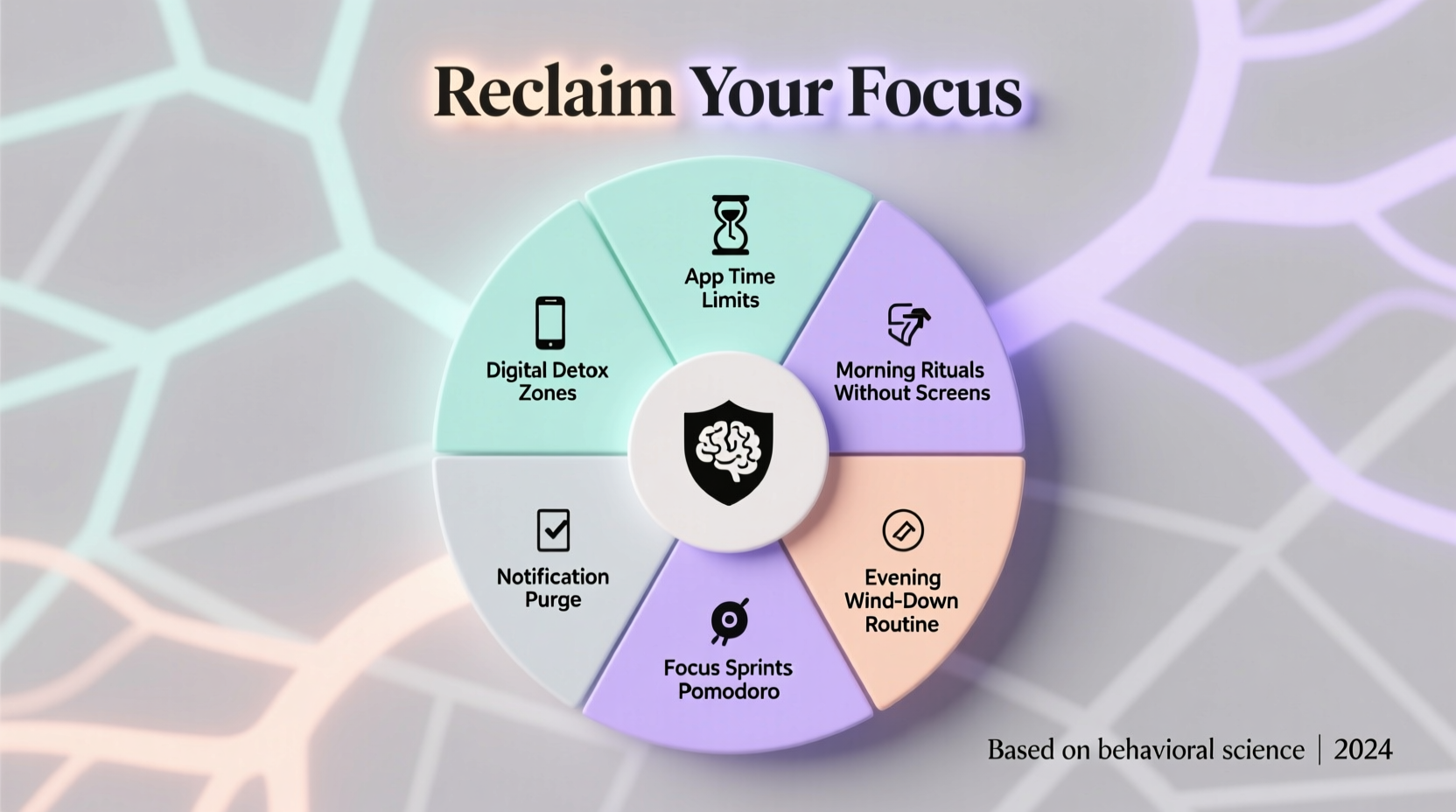
Every glance at a notification triggers a micro-interruption. Research from the University of California, Irvine shows that it takes an average of 23 minutes to regain deep focus after a single distraction. Over time, these interruptions accumulate, leading to cognitive fatigue and reduced work quality. Worse, habitual phone use conditions the brain to crave novelty, weakening impulse control and increasing anxiety when separated from the device.
The problem is not the phone itself, but the design of apps engineered to exploit psychological vulnerabilities. Infinite scroll, push notifications, and variable reward systems mimic gambling mechanisms, making disengagement difficult. Awareness of these forces is the first step toward regaining autonomy.
Design Your Environment for Focus
Behavioral psychology emphasizes that environment shapes action more than willpower. Instead of relying on self-control, redesign your physical and digital spaces to support intentional phone use.
- Physical separation: Keep your phone in another room during focused work or meals.
- Use grayscale mode: Switching your screen to black-and-white reduces visual appeal, making mindless scrolling less enticing.
- Designate a charging station: Choose a spot outside the bedroom to charge your phone overnight, reducing temptation before sleep and upon waking.
A study published in the Journal of Consumer Research found that simply having a phone nearby—even if turned off—reduces available cognitive capacity. Distance creates mental space.
Implement Behavioral Triggers and Routines
To break automatic phone habits, replace them with deliberate routines. The brain thrives on patterns, so structured alternatives can override unconscious behaviors.
- Start your day without your phone: Delay checking messages for at least 30 minutes after waking. Use this time for mindfulness, journaling, or exercise.
- Create “focus blocks”: Schedule 90-minute periods of uninterrupted work using a timer. Place your phone in airplane mode or use app blockers like Freedom or Forest.
- Use tactile cues: Place a notebook or book on your desk as a visual reminder to stay present. When you reach for your phone, let the object redirect your attention.
“Your environment should make the right behavior easy and the wrong one hard.” — BJ Fogg, Behavior Scientist, Stanford University
Track and Reflect on Usage Patterns
Self-awareness is critical. Most people underestimate their screen time by up to 50%. Built-in tools like iOS Screen Time or Android Digital Wellbeing provide objective data on usage, revealing which apps dominate attention and when spikes occur.
Review weekly reports with curiosity, not judgment. Ask: When do I check my phone most? What emotional state precedes the habit—boredom, stress, loneliness? Identifying triggers allows for targeted intervention.
| Time of Day | Common Trigger | Alternative Action |
|---|---|---|
| Morning (7–9 AM) | Checking messages immediately | Practice 10 minutes of meditation |
| Lunch Break | Boredom or habit | Read a book or walk outside |
| Evening (8–10 PM) | Stress or procrastination | Write tomorrow’s to-do list |
| Before Bed | Scrolling to unwind | Listen to calming music or journal |
Mini Case Study: A Week Without Notifications
Sarah, a project manager in Toronto, found herself checking her phone every few minutes, especially during team meetings. After analyzing her Screen Time report, she discovered she spent nearly 4 hours daily on her phone, mostly on email and Slack.
She implemented a 7-day experiment: disabling all notifications except calls and texts, storing her phone in a drawer during work hours, and scheduling two designated 15-minute “check-in” periods each afternoon. By day three, she noticed improved concentration during tasks. By the end of the week, her reported stress levels dropped, and she completed a long-overdue presentation ahead of schedule.
“I didn’t realize how much mental energy was being drained by constant pings,” she said. “Now I feel more in control of my time and attention.”
Actionable Checklist to Reduce Phone Dependence
- Turn off non-essential app notifications
- Set your phone to grayscale
- Designate a charging station outside the bedroom
- Schedule two daily “phone check” windows
- Use a physical alarm clock instead of your phone
- Install a focus app (e.g., Forest, Freedom)
- Review screen time data weekly
- Replace bedtime scrolling with reading or journaling
FAQ
How long does it take to break a phone-checking habit?
Habit formation varies, but research suggests consistent replacement behaviors can rewire automatic responses within 3 to 4 weeks. The key is consistency and environmental design, not sheer willpower.
What if my job requires constant phone access?
Even in high-responsiveness roles, batching communication improves efficiency. Set specific intervals to respond (e.g., every 90 minutes), communicate availability to colleagues, and use status updates (“In focus mode until 11 AM”). Employers increasingly recognize deep work as a performance multiplier.
Is it better to delete apps or just limit them?
Deletion removes temptation entirely and is effective for non-essential apps like social media. For essential tools (email, calendar), limiting usage through built-in controls or third-party apps offers balance without sacrificing functionality.
Conclusion: Reclaim Your Attention, Reclaim Your Life
Every moment spent mindlessly scrolling is a moment taken from deeper thinking, meaningful conversation, or creative exploration. Reducing phone checking isn’t about deprivation—it’s about intentionality. By restructuring your environment, understanding behavioral triggers, and building sustainable routines, you can shift from reactive consumption to purposeful engagement.
Start small: choose one strategy from the checklist and implement it tomorrow. Track the impact on your focus and mood. As these changes compound, you’ll find not only increased productivity but a renewed sense of presence in your own life.




 浙公网安备
33010002000092号
浙公网安备
33010002000092号 浙B2-20120091-4
Comments
No comments yet. Why don't you start the discussion?