
Dogs bark for many reasons—territorial defense, excitement, fear, or learned behavior. One of the most common yet frustrating scenarios occurs when a dog erupts into a frenzy every time the mail carrier approaches the front door. While this may seem harmless at first, repeated barking can escalate anxiety, strain neighbor relations, and reinforce unwanted behaviors. The good news is that with patience, consistency, and the right techniques, you can significantly reduce or even eliminate your dog’s reactive barking toward the mailman.
The key lies not in suppressing the bark itself, but in addressing the underlying cause: your dog’s perception of the mail carrier as a threat. By reshaping their emotional response through training and environmental management, you can turn a daily outburst into calm indifference.
Understanding Why Dogs Bark at the Mailman
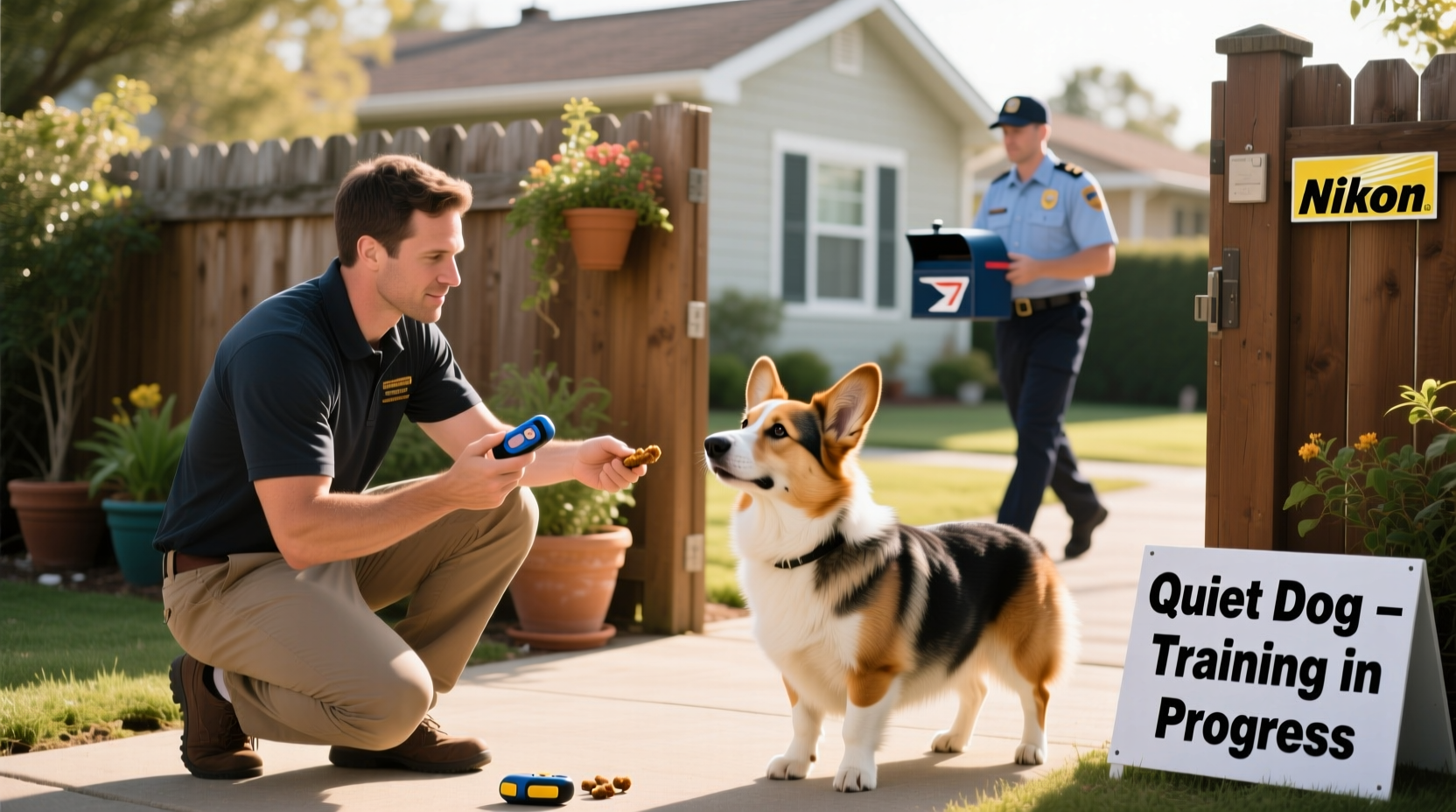
Dog barking at visitors, especially uniformed personnel like postal workers, is deeply rooted in instinct. Most dogs view their home as territory. When someone unfamiliar approaches the doorstep—even if they’re just doing their job—the dog interprets this as an intrusion. The sudden movement, distinct uniform, and brief presence of the mailman create a predictable pattern that dogs quickly learn to anticipate and react to.
This behavior often starts as alert barking but can become compulsive over time. Each delivery reinforces the cycle: the person appears → the dog barks → the person leaves → the dog believes their barking caused the retreat. This perceived success strengthens the behavior, making it more intense and harder to reverse.
It's important to recognize that your dog isn’t being “bad.” They are simply fulfilling what they believe is their duty: protecting you and your home. Punishing them for barking typically backfires, increasing anxiety and potentially worsening aggression. Instead, focus on retraining their association with the mail carrier.
Step-by-Step Training Plan to Reduce Reactivity
Changing your dog’s reaction to the mailman requires systematic desensitization and counter-conditioning. These methods work by gradually exposing your dog to the trigger (in this case, the sight or sound of the mail carrier) at a low intensity while pairing it with something positive—like treats or praise.
- Identify your dog’s threshold: Determine how far away the mailman must be before your dog notices but doesn’t react. For some dogs, this might be 50 feet; for others, it could be across the street.
- Create a controlled simulation: Have a friend mimic the mailman’s actions—walking up the driveway, wearing a similar uniform, carrying a clipboard—at a distance below the threshold.
- Pair appearance with rewards: As soon as your dog sees the “mailman” but remains calm, give high-value treats (like chicken or cheese). Continue feeding as long as the person is in view, stopping when they leave.
- Gradually decrease distance: Over several sessions, bring the decoy closer only if your dog stays relaxed. If barking resumes, increase distance and repeat.
- Add real-world exposure: Once your dog responds calmly to simulations, begin practicing during actual deliveries. Use curtains or gates to manage visibility initially.
This process may take weeks or months depending on your dog’s temperament and history. Consistency is crucial—everyone in the household should follow the same protocol.
“Dogs don’t generalize well. Just because your dog stops barking at one mail carrier doesn’t mean they’ll ignore another. Generalization takes repetition across multiple people and contexts.” — Dr. Sarah Jensen, Certified Applied Animal Behaviorist
Environmental Adjustments to Minimize Triggers
While training addresses the behavioral root, modifying your dog’s environment can dramatically reduce opportunities for rehearsal of unwanted barking. Prevention is a powerful tool—fewer barking incidents mean fewer reinforcements of the behavior.
- Block visual access: Close blinds, use opaque window film, or install a privacy screen on windows facing the street. Preventing your dog from seeing approaching figures removes a major trigger.
- Use baby gates or closed doors: Restrict access to the front hallway or entryway during typical delivery hours. Redirect your dog to a quieter room with a chew toy or puzzle feeder.
- Mask auditory cues: Play calming music or white noise near delivery times. Some owners use a sound machine or TV to drown out footsteps and gate latches.
- Leverage outdoor space wisely: If your dog is in the yard during deliveries, consider installing a barrier so they can’t rush the fence line. Alternatively, bring them inside 15 minutes before expected delivery.
These changes don’t replace training—they support it. Think of environmental controls as training aids that buy you time to work on long-term solutions without constant setbacks.
Practical Checklist: Daily Actions to Stop Barking
- ☑ Note the usual mail delivery time each day
- ☑ Close curtains or cover windows 30 minutes before arrival
- ☑ Confine your dog to a back room or crate with a food-stuffed toy
- ☑ Practice \"quiet\" or \"settle\" commands during quiet moments (not during barking)
- ☑ Reward calm behavior when the mail is delivered
- ☑ Avoid letting your dog see or chase the departing mail carrier
- ☑ Log progress weekly—note reductions in intensity or duration of barking
Do’s and Don’ts When Handling Mailman-Related Barking
| Do | Don’t |
|---|---|
| Reward calm behavior before, during, and after deliveries | Yell, punish, or jerk the leash when your dog barks |
| Use high-value treats during training sessions | Ignore the problem and assume it will go away on its own |
| Block visual access to the front door | Allow your dog to rehearse barking multiple times daily |
| Practice obedience commands during neutral times | Let strangers approach and interact during reactive episodes |
| Be consistent across all family members | Give mixed signals (e.g., saying “quiet” then giving attention) |
Real Example: How Max the Border Collie Learned Calmness
Max, a 3-year-old Border Collie in suburban Denver, used to sprint from room to room barking wildly whenever the mail truck turned onto his street. His owner, Lisa, was embarrassed by the noise and worried about potential aggression. She began by observing patterns: Max reacted within 90 seconds of the truck’s arrival, triggered by both the vehicle sound and the carrier’s approach.
Lisa started by closing the living room blinds and gating Max into the kitchen with a frozen peanut butter Kong 15 minutes before delivery. She paired this with daily training sessions where her husband played the role of the mailman. At first, he stood at the end of the driveway while Lisa fed Max boiled chicken. Over three weeks, she reduced the distance slowly, always ensuring Max remained relaxed.
She also coordinated with her local carrier (via a polite note in the mailbox) to avoid direct interaction. After six weeks, Max no longer rushed the door. Now, he occasionally lifts his head when the mail drops, sniffs the air, and returns to his chew toy.
“I didn’t realize how much I was accidentally rewarding the barking by reacting myself,” Lisa said. “Once I stayed calm and gave him something better to do, everything changed.”
Advanced Techniques: Command Training and Distraction
In addition to desensitization, teaching reliable commands gives you direct tools to manage behavior. Focus on two key skills: “Go to place” and “quiet.”
“Go to place” trains your dog to go to a designated spot (like a mat or bed) and stay there on cue. Begin in a quiet environment, lure your dog to the mat with a treat, say “go to place,” and reward. Gradually add duration and distractions. Eventually, use this command when you hear the mail truck approaching.
“Quiet” works best when taught separately from barking. First, encourage a bark on command (“speak”), then wait for your dog to pause, say “quiet,” and immediately reward silence. Do not attempt this during real-life barking fits—practice during calm training sessions only.
Distraction is equally effective. Automatic feeders timed to dispense kibble during delivery, durable chew toys like bully sticks, or interactive puzzles filled with yogurt can redirect focus. The goal is to make ignoring the mailman more rewarding than reacting to them.
Frequently Asked Questions
Can I train an older dog to stop barking at the mailman?
Yes. While puppies learn faster, adult dogs are fully capable of changing behavior with consistent training. Older dogs may have more ingrained habits, but their maturity often makes them easier to focus during structured sessions. Start with environmental controls to reduce rehearsal, then introduce gradual training.
What if my dog is aggressive toward the mail carrier?
If your dog shows signs of aggression—lunging, growling, snapping—do not attempt correction alone. Consult a certified professional dog trainer or veterinary behaviorist. Aggression poses safety risks and often stems from fear, requiring careful, individualized intervention. In the meantime, ensure physical barriers prevent contact.
Will getting a “Beware of Dog” sign help?
No. Such signs may deter intruders but do nothing to reduce barking—and might even reinforce territorial behavior. Your dog already knows they’re protecting the home; the sign adds no benefit and could signal to carriers that extra caution is needed, potentially increasing tension.
Conclusion: Patience, Consistency, and Positive Change
Stopping your dog from barking at the mailman isn’t about quick fixes or dominance—it’s about empathy, understanding, and steady effort. Dogs thrive on predictability and clear communication. When you replace fear and reactivity with calm routines and positive associations, you’re not just solving a nuisance—you’re improving your dog’s emotional well-being.
Success won’t happen overnight. There will be days when the mail arrives unexpectedly, or your dog slips back into old habits. That’s normal. What matters is persistence. Celebrate small wins: a delayed reaction, shorter barking, or choosing to look at you instead of the window.
Start today. Close the blinds, prepare a stuffed toy, and commit to one five-minute training session. Over time, those small actions compound into lasting change. Your dog doesn’t need to bark to protect you. They need to trust that you’ve got things under control—and that peace is more rewarding than panic.




 浙公网安备
33010002000092号
浙公网安备
33010002000092号 浙B2-20120091-4
Comments
No comments yet. Why don't you start the discussion?