
Transitioning a cat away from the litter box is not about eliminating its use entirely—after all, most cats rely on it for life—but rather about addressing unwanted behaviors such as inappropriate elimination outside the box, resistance to certain types of litter, or over-dependence in multi-cat households. Whether you're dealing with a kitten learning proper habits or an adult cat exhibiting sudden changes in bathroom behavior, understanding the root causes and applying targeted solutions can make all the difference. This guide outlines practical, veterinarian-backed strategies to help you guide your cat toward consistent, stress-free litter box use.
Understanding Why Cats Avoid the Litter Box
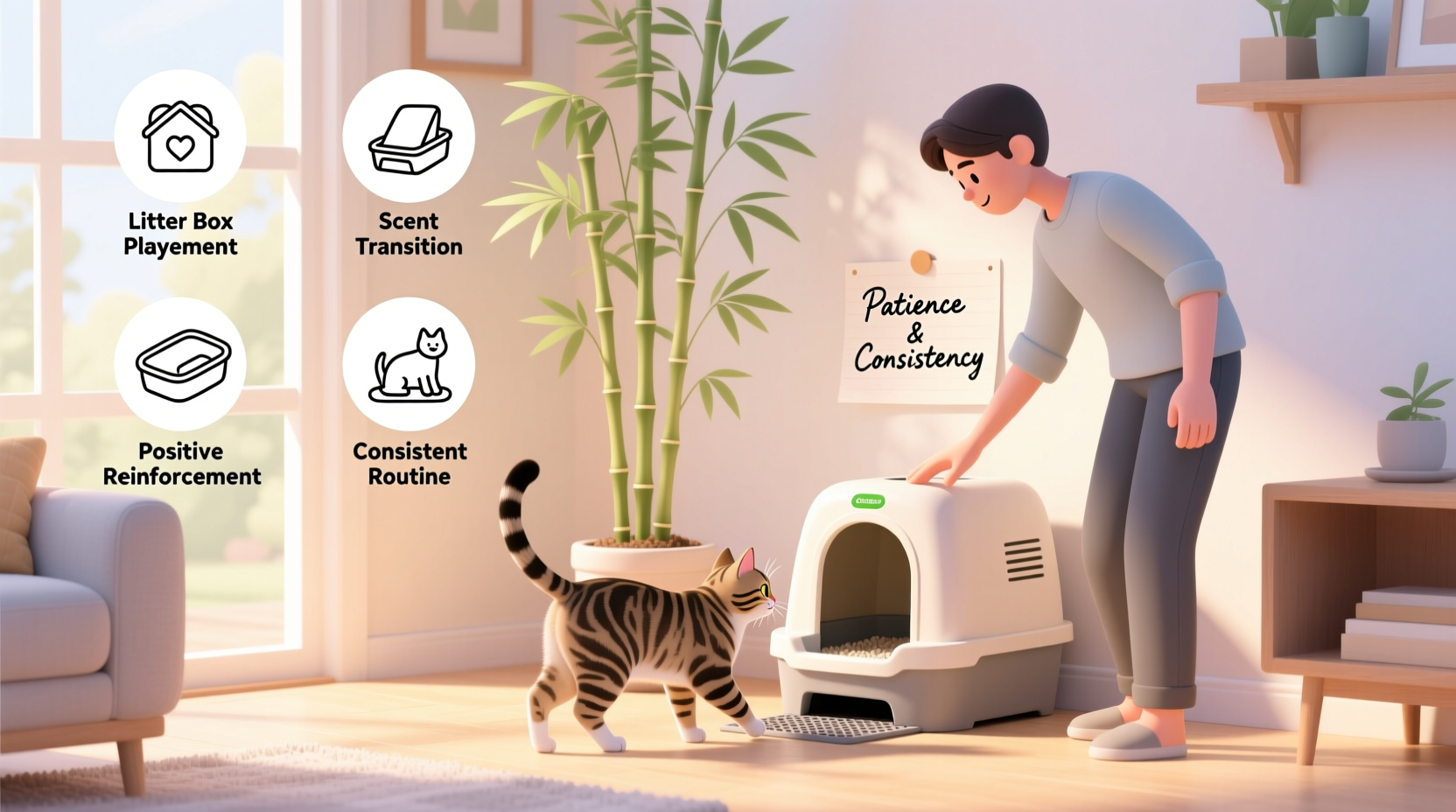
Cats are naturally fastidious animals. When they begin eliminating outside the litter box, it's rarely out of spite—it's usually a signal that something is wrong. Common reasons include medical issues, stress, poor litter box maintenance, or environmental changes.
Before implementing any behavioral strategy, rule out health problems. Urinary tract infections, kidney disease, arthritis, or gastrointestinal discomfort can all lead a cat to associate the litter box with pain. A visit to the vet should be the first step in any transition plan.
“Over 40% of cats presenting with inappropriate elimination have an underlying medical condition. Always start with a veterinary exam.” — Dr. Lena Torres, Feline Behavior Specialist
Once medical concerns are ruled out, focus shifts to environmental and behavioral factors. These include:
- Litter box location (too noisy, isolated, or hard to access)
- Number of boxes (fewer than the number of cats plus one)
- Type of litter (scented, textured, or changed abruptly)
- Box cleanliness (not scooped daily or deep-cleaned weekly)
- Competition or bullying in multi-cat homes
Step-by-Step Guide to Rebuilding Litter Box Confidence
Re-establishing proper litter box use requires patience, consistency, and a structured approach. Follow this six-step timeline to guide your cat back to reliable habits:
- Day 1–3: Assess and Adjust Environment
Evaluate current litter box setup. Ensure there’s one box per cat plus one extra. Place boxes in quiet, low-traffic areas with easy access. Remove hoods if your cat seems hesitant—they can trap odors and limit escape routes. - Day 4–7: Deep Clean Accident Sites
Use an enzymatic cleaner on all spots where your cat has eliminated outside the box. Regular cleaners leave scent markers that encourage repeat offenses. - Day 8–14: Introduce New Litter Gradually
If changing litter type, mix increasing amounts of the new with the old over 7–10 days. Sudden changes often trigger avoidance. - Day 15–21: Reinforce Positive Use
Praise quietly or offer a treat immediately after your cat uses the box correctly. Avoid overexcitement, which may startle them. - Day 22–30: Monitor and Modify
Track usage patterns. If one box is consistently avoided, relocate it. If accidents recur, consider adding more boxes or trying different styles (open vs. top-entry). - Day 31+: Maintain Consistency
Stick to daily scooping, weekly washing, and stable litter. Predictability reduces anxiety.
Do’s and Don’ts When Transitioning Litter Habits
| Do’s | Don’ts |
|---|---|
| Provide multiple litter boxes in different locations | Use only one box regardless of household size |
| Scoop waste at least once daily | Wait several days between cleanings |
| Choose unscented, clumping litter unless vet advises otherwise | Switch litter types suddenly or use heavily perfumed varieties |
| Keep boxes away from loud appliances or foot traffic | Place boxes in basements or laundry rooms with unpredictable noise |
| Consult your vet if behavior changes occur | Punish or scold your cat for accidents |
Real-Life Example: Resolving Multi-Cat Tension
Sarah adopted a second cat, Luna, to keep her older cat Milo company. Within weeks, Milo began urinating on the bedroom rug. Initially, Sarah assumed it was territorial marking. After a vet visit ruled out UTIs, she observed their interactions and noticed Luna often guarded the single litter box.
Following expert advice, Sarah added two additional boxes in separate rooms, switched to uncovered models, and began scooping three times a day. She also used pheromone diffusers to reduce household stress. Within three weeks, Milo returned to using the boxes exclusively. The key wasn't punishment or restriction—it was addressing resource competition.
Expert Strategies for Special Cases
Some situations require tailored approaches:
- Kittens under 12 weeks: They may not yet fully control bladder function. Confine them to a small area with a low-sided box for easy access.
- Senior cats: Arthritis may make high-sided boxes difficult. Consider a ramp or a box with a cut-out entrance.
- Cats with anxiety: Noise, visitors, or moving homes can trigger regression. Use Feliway diffusers and maintain routines during transitions.
- Outdoor-access cats: Some prefer soil or grass. If transitioning indoors full-time, mimic natural texture with soft, sand-like litter.
“Cats don’t forget training—they react to comfort, safety, and predictability. Fix the environment, and the behavior often follows.” — Dr. Alan Prescott, Veterinary Ethologist
Frequently Asked Questions
Can I train my cat to use the toilet instead of a litter box?
While some commercial systems claim to teach cats to flush, success is rare and often stressful. Most veterinarians discourage it because it removes the cat’s ability to express natural digging and covering behaviors. It also makes monitoring health through stool and urine more difficult.
How long does it take to retrain a cat to use the litter box?
With consistent effort, most cats improve within 3–4 weeks. However, chronic cases—especially those rooted in long-term stress or medical history—may take months. Patience and persistence are essential.
Should I confine my cat during retraining?
Short-term confinement in a “safe room” with food, water, toys, and a litter box can help reset habits, especially for kittens or newly adopted cats. Ensure the space is comfortable and enriched. Gradually reintroduce access to the rest of the home as reliability improves.
Checklist: Key Actions for Successful Transition
- ✔ Schedule a veterinary check-up to rule out medical causes
- ✔ Provide one litter box per cat, plus one extra
- ✔ Scoop waste daily and deep-clean boxes weekly
- ✔ Place boxes in quiet, accessible, low-traffic areas
- ✔ Use unscented, clumping litter unless otherwise advised
- ✔ Clean accident sites with enzymatic cleaner
- ✔ Introduce litter changes gradually over 7–10 days
- ✔ Avoid punishment; focus on positive reinforcement
- ✔ Monitor behavior and adjust placement or number of boxes as needed
- ✔ Consider pheromone diffusers for stressed or multi-cat households
Conclusion: Building Trust One Step at a Time
Successfully transitioning your cat back to proper litter box use isn’t about control—it’s about creating an environment where your cat feels safe, respected, and understood. By addressing physical needs, reducing stress, and maintaining consistency, you lay the foundation for lasting change. Every small improvement reflects deeper trust between you and your pet.




 浙公网安备
33010002000092号
浙公网安备
33010002000092号 浙B2-20120091-4
Comments
No comments yet. Why don't you start the discussion?