
A headless screw—often the result of a broken, stripped, or snapped fastener—can be one of the most frustrating obstacles in repair work. Whether you're fixing furniture, working on electronics, or repairing machinery, encountering a screw with no head means standard tools like screwdrivers are useless. However, with the right approach, even the most stubborn headless screws can be removed cleanly and safely. The key lies in understanding the nature of the damage, selecting appropriate tools, and applying methodical techniques that minimize risk to both the material and the user.
Understanding the Challenge of Headless Screws
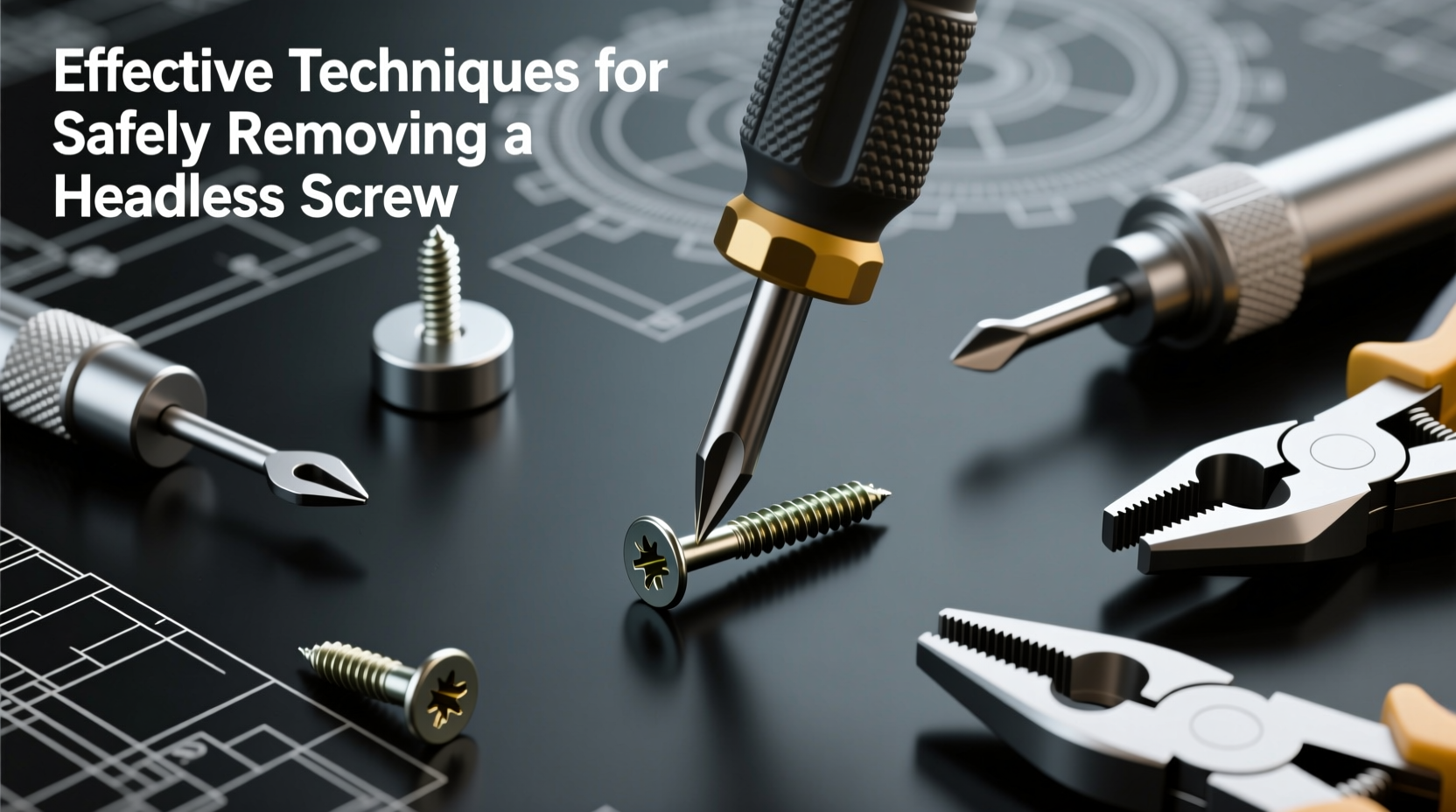
Headless screws typically occur when excessive torque causes the screw head to shear off, or corrosion weakens the metal over time. Without a drive slot or recess, conventional removal methods fail. Attempting brute force with pliers or drilling blindly often leads to damaged threads, ruined surfaces, or personal injury. The goal is not just removal, but preservation of the threaded hole and surrounding area for potential re-tapping or replacement.
The success of any removal strategy depends on several factors: the screw’s material (steel, brass, aluminum), its diameter, depth of embedment, and the base material (wood, metal, plastic). Each variable influences tool selection and technique. For example, a small stainless steel screw embedded in aluminum requires more finesse than a larger bolt in softwood.
Essential Tools for Headless Screw Removal
No single tool works universally. A well-prepared toolkit increases your chances of success. Below are the most effective instruments used by professionals:
- Center Punch and Hammer: Used to create a dimple for precise drill alignment.
- Left-Hand Drill Bits: Specially designed to rotate counterclockwise; often extract the screw during drilling.
- Screw Extractor Set (Easy Out): Hardened bits that grip inside drilled holes and reverse out the screw.
- Pin Vise or Hand Drill: Offers better control for small or delicate applications.
- Rotary Tool (e.g., Dremel): Useful for cutting new slots or grinding access points.
- Needle-Nose Pliers or Locking Pliers: Can grip protruding fragments if present.
- Magnetic Pickup Tool: Helps retrieve small metal debris after extraction.
Investing in high-quality, cobalt or titanium-coated bits ensures durability, especially when dealing with hardened steel. Cheap bits may shatter under pressure, worsening the situation.
Step-by-Step Guide to Removing a Headless Screw
Follow this proven sequence to maximize success while minimizing damage:
- Stabilize the Workpiece: Secure the object in a vise or clamp to prevent movement during drilling.
- Mark the Center: Use a fine-tip marker or scribe to identify the exact center of the broken shaft.
- Punch the Center: Tap gently with a center punch and hammer to create a starting point for the drill bit.
- Select a Pilot Bit: Choose a small left-hand drill bit (1/16” or 2mm) slightly smaller than the screw core.
- Drill Slowly: Use low speed and steady pressure. Let the bit do the work—rushing can cause breakage.
- Assess Progress: If using a left-hand bit, the screw may begin to back out during drilling. Stop immediately if rotation begins.
- Use a Screw Extractor (if needed): Drill a shallow pilot hole per extractor instructions, then tap the extractor in with a hammer and turn counterclockwise with a wrench.
- Clean the Thread: Once removed, use a thread chaser or tap to clean residual debris from the hole.
This process is particularly effective for screws broken flush or slightly below the surface. For deeply embedded screws, multiple stages of incremental drilling may be required.
“Patience and precision matter more than power when removing broken screws. Rushing leads to broken bits and damaged parts.” — Carlos Mendez, Industrial Maintenance Technician
Alternative Methods When Standard Extraction Fails
If drilling doesn’t work or isn't feasible, consider these alternative approaches:
Cutting a New Slot with a Rotary Tool
Using a thin cutoff wheel on a rotary tool, carefully cut a straight groove across the screw stump. This creates a new slot for a flathead screwdriver. Apply light pressure and make multiple shallow passes to avoid overheating or slipping.
Welding a Nut Onto the Stub
In metalworking environments, a nut can be welded directly onto the remaining shaft. Once cooled, use a wrench to unscrew it. This method requires skill and proper safety gear but is highly effective for large bolts.
Epoxy-Based Grip Method
For small, non-structural screws, apply two-part epoxy into a hex nut and press it over the exposed end. Allow full cure, then use a wrench to turn the nut. The epoxy bonds to the shaft, transferring torque effectively.
Do’s and Don’ts: Best Practices Summary
| Do’s | Don’ts |
|---|---|
| Use a center punch for accurate drilling | Start drilling without marking the center |
| Apply lubricant before and during drilling | Use excessive force or speed |
| Choose left-hand drill bits when possible | Use dull or incorrect-sized bits |
| Work in a well-lit, stable environment | Attempt removal without eye protection |
| Test extractor fit before tapping | Force an extractor that doesn’t seat properly |
Real-World Example: Removing a Broken Hinge Screw from an Antique Cabinet
A woodworker was restoring a 19th-century cabinet when two hinge screws snapped during disassembly. The heads sheared off flush with the oak surface, leaving no grip. After applying penetrating oil overnight, he marked the centers and used a 1/16” left-hand cobalt bit in a pin vise. On the second screw, the bit caught mid-drill—the screw began backing out on its own. The first required a screw extractor, which successfully removed the fragment without splitting the wood. The original holes were cleaned with a thread chaser, allowing reuse of matching hardware. This case highlights how combining patience with the right tools preserves both function and aesthetics.
Frequently Asked Questions
Can I remove a headless screw without drilling?
Yes, if any portion of the shaft protrudes. Use locking pliers to grip and twist it out. For flush breaks, drilling is usually necessary unless you can weld a handle or cut a new slot.
What should I do if the extractor breaks inside the screw?
Broken extractors are extremely hard and difficult to remove. Options include EDM (electrical discharge machining) in industrial settings or carefully grinding away surrounding material to free the piece. Prevention—using sharp bits and proper pilot holes—is critical.
Will heat help loosen a stuck headless screw?
In metal assemblies, controlled heating of the surrounding material can expand it slightly, breaking corrosion bonds. Use a torch cautiously and avoid nearby flammable materials. Never apply heat to plastics or laminates.
Final Checklist Before You Begin
- Wear safety glasses and protective gloves
- Secure the workpiece firmly
- Mark and center-punch the screw axis
- Gather all necessary tools and bits
- Apply penetrating oil and wait at least 30 minutes
- Verify drill rotation direction (especially for left-hand bits)
- Test-fit extractor before use
Conclusion
Removing a headless screw doesn’t have to mean scrapping the entire part or damaging expensive components. With careful planning, the right tools, and a methodical approach, even the most stubborn broken fasteners can be extracted cleanly. Mastery comes not from force, but from understanding mechanics, material behavior, and precision technique. Every successful removal builds confidence and skill for future challenges.




 浙公网安备
33010002000092号
浙公网安备
33010002000092号 浙B2-20120091-4
Comments
No comments yet. Why don't you start the discussion?