
Tree sap is a sticky, resinous substance produced by trees as a natural defense mechanism. While it plays a vital role in protecting trees from pests and injuries, it can be a nightmare when it ends up on clothing. Whether you've brushed against a pine trunk during a hike or your child picked up a sap-covered branch at the park, removing this stubborn residue without harming delicate fabrics requires care and the right approach. Unlike common stains, tree sap doesn’t dissolve in water and often hardens over time, making it more difficult to remove. However, with proper techniques and household items, it’s entirely possible to restore your garments to their original condition—without compromising the integrity of the fabric.
Understanding Tree Sap and Its Impact on Fabric
Tree sap consists primarily of terpenes, sugars, and resins, which give it its adhesive quality. When exposed to air, it hardens into a thick, amber-like substance that bonds tightly to fibers. The longer it remains on fabric, the more it sets in, increasing the risk of permanent staining or fiber degradation if harsh chemicals are used. Different fabrics react differently: cotton and denim may tolerate stronger solvents, while silk, wool, or synthetic blends require gentler treatment to avoid discoloration or weakening.
Attempting to peel off dried sap can pull at threads and cause pilling or tears. Washing the garment immediately in hot water may set the stain further. Therefore, understanding the composition of both the sap and the fabric is essential before beginning any removal process.
Step-by-Step Guide to Removing Tree Sap Safely
Removing tree sap effectively involves softening the resin, lifting it from the fabric, and then treating any residual stain. Follow these steps carefully to minimize risk and maximize success.
- Act quickly. The sooner you treat the stain, the easier it will be to remove.
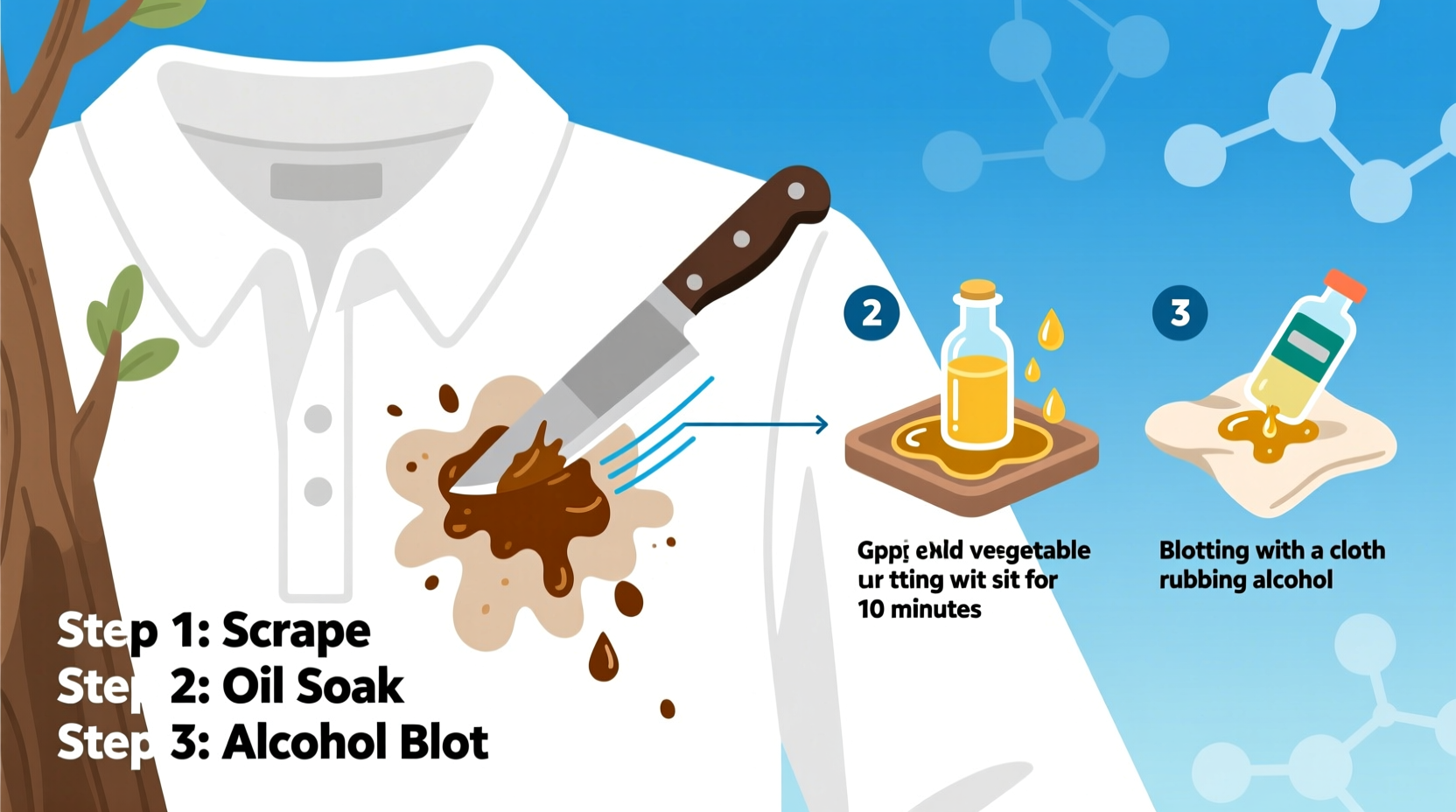
- Scrape off excess sap gently. Use a blunt knife or spoon to lift off as much hardened sap as possible without rubbing or spreading it.
- Chill the area (if needed). If the sap is still soft and sticky, place the garment in the freezer for 30–60 minutes to harden it, making it easier to scrape.
- Apply a safe solvent. Choose one based on fabric type (see table below) and test on an inconspicuous area first.
- Blot, don’t rub. Use a clean cloth to dab the area and lift dissolved sap.
- Wash according to care instructions. After sap removal, launder the garment in cold water to eliminate any remaining residue.
- Air dry and inspect. Avoid using a dryer until you’re certain the sap is gone, as heat can permanently set any leftover residue.
Recommended Solvents and Their Uses
| Solvent | Fabric Compatibility | Application Method | Caution |
|---|---|---|---|
| Isopropyl Alcohol (70%+) | Cotton, denim, polyester | Dampen cloth, blot stain, rinse after | May bleach colors; not for silk or acetate |
| Peanut Butter (unsalted) | Most washable fabrics | Apply thin layer, let sit 10 mins, wipe off | Test for oil stains; avoid on delicate weaves |
| Hairspray (alcohol-based) | Durable synthetics and cotton | Spray lightly, wait 5 mins, blot | Not all formulas work; check ingredients |
| Dish Soap + Warm Water | All washable fabrics | Pre-treat with soapy solution before washing | Ineffective on hardened sap alone |
| Goo Gone (original formula) | Tough fabrics only | Apply sparingly, wait 5–10 mins, rinse thoroughly | Strong odor; use in ventilated area |
Real Example: A Hiker’s Dilemma
Mark, an avid hiker from Oregon, returned from a weekend trail adventure with pine sap smeared across the sleeve of his favorite flannel shirt. He tried rinsing it with water, which did nothing. Fearing he’d ruined the garment, he researched solutions and opted for the peanut butter method—a tip he found from outdoor enthusiasts online. He applied a thin layer of unsalted peanut butter to the stain, waited 12 minutes, then wiped it off with a damp cloth. The sap lifted easily. After washing the shirt in cold water with mild detergent, the fabric emerged clean and undamaged. “I was skeptical,” Mark said later, “but it worked better than any chemical cleaner I’ve used.”
Expert Insight on Fabric Preservation
“Using aggressive solvents like acetone or gasoline on clothing might remove sap, but they also strip fibers of natural oils and weaken structural integrity. Opt for food-grade oils or alcohol-based removers at low concentrations—they break down resin without sacrificing fabric longevity.” — Dr. Lena Peterson, Textile Conservation Specialist, Pacific Institute of Garment Care
Common Mistakes to Avoid
- Rubbing the stain aggressively – This pushes sap deeper into fibers and spreads the affected area.
- Using hot water prematurely – Heat activates sap’s stickiness and can bond it permanently to fabric.
- Skipping the patch test – Always test solvents on a hidden seam or hem to check for discoloration or texture changes.
- Putting clothes in the dryer too soon – Residual sap can melt and re-adhere under high heat, making it nearly impossible to remove later.
- Ignoring fabric type – Delicate materials like rayon or lace require milder treatments than rugged denim or canvas.
Checklist: Quick Reference for Sap Removal
Keep this checklist handy for future incidents:
- ☐ Scrape off excess sap with a dull edge
- ☐ Freeze garment if sap is too sticky
- ☐ Identify fabric type and check care label
- ☐ Test chosen solvent on a hidden area
- ☐ Apply solvent with a clean cloth—dab, don’t rub
- ☐ Rinse treated area with cold water
- ☐ Launder as usual in cold water
- ☐ Air dry and inspect before rewashing or storing
Frequently Asked Questions
Can I use hand sanitizer to remove tree sap?
Yes, most hand sanitizers contain high concentrations of alcohol, which helps dissolve sap. Apply a small amount directly to the stain, let it sit for 5–7 minutes, then blot with a cloth. Rinse thoroughly before washing. This method works well on cotton and polyester but should be avoided on silk or wool.
What if the sap has already been washed and dried?
If the garment has gone through the dryer, the sap has likely melted and re-bonded to the fabric. Place the item in the freezer to harden the sap again, then gently scrape. Follow up with isopropyl alcohol or Goo Gone, depending on fabric durability. You may need to repeat the process and wash multiple times, but complete removal is still possible.
Is vinegar effective for removing tree sap?
Vinegar alone is generally ineffective against tree sap due to its low alcohol content and weak solvent properties. However, combining white vinegar with baking soda may help lift surface residue after primary treatment with alcohol or oil-based removers. It’s best used as a secondary rinse rather than a standalone solution.
Final Thoughts and Action Steps
Tree sap doesn’t have to mean the end of your favorite shirt or jacket. With prompt action and the right technique, even the stickiest residues can be removed safely. The key is patience—rushing the process with harsh chemicals or heat can do more harm than good. Start with the gentlest method suitable for your fabric, escalate only if necessary, and always prioritize fabric preservation over speed.
Now that you’re equipped with proven strategies, you can confidently tackle sap stains wherever they appear—whether from camping trips, backyard play, or seasonal gardening. Don’t let nature’s sticky defenses ruin your wardrobe.




 浙公网安备
33010002000092号
浙公网安备
33010002000092号 浙B2-20120091-4
Comments
No comments yet. Why don't you start the discussion?