
Leash walking should be a shared pleasure between you and your dog—not a daily tug-of-war. Yet, millions of pet owners struggle with dogs that lunge, pull, and strain forward at every scent or squirrel sighting. The good news: pulling is not an inevitable behavior. With patience, consistency, and the right training methods, any dog can learn to walk politely by your side. This guide breaks down science-backed strategies, practical tools, and real-world applications to help transform chaotic walks into calm, connected experiences.
Understanding Why Dogs Pull
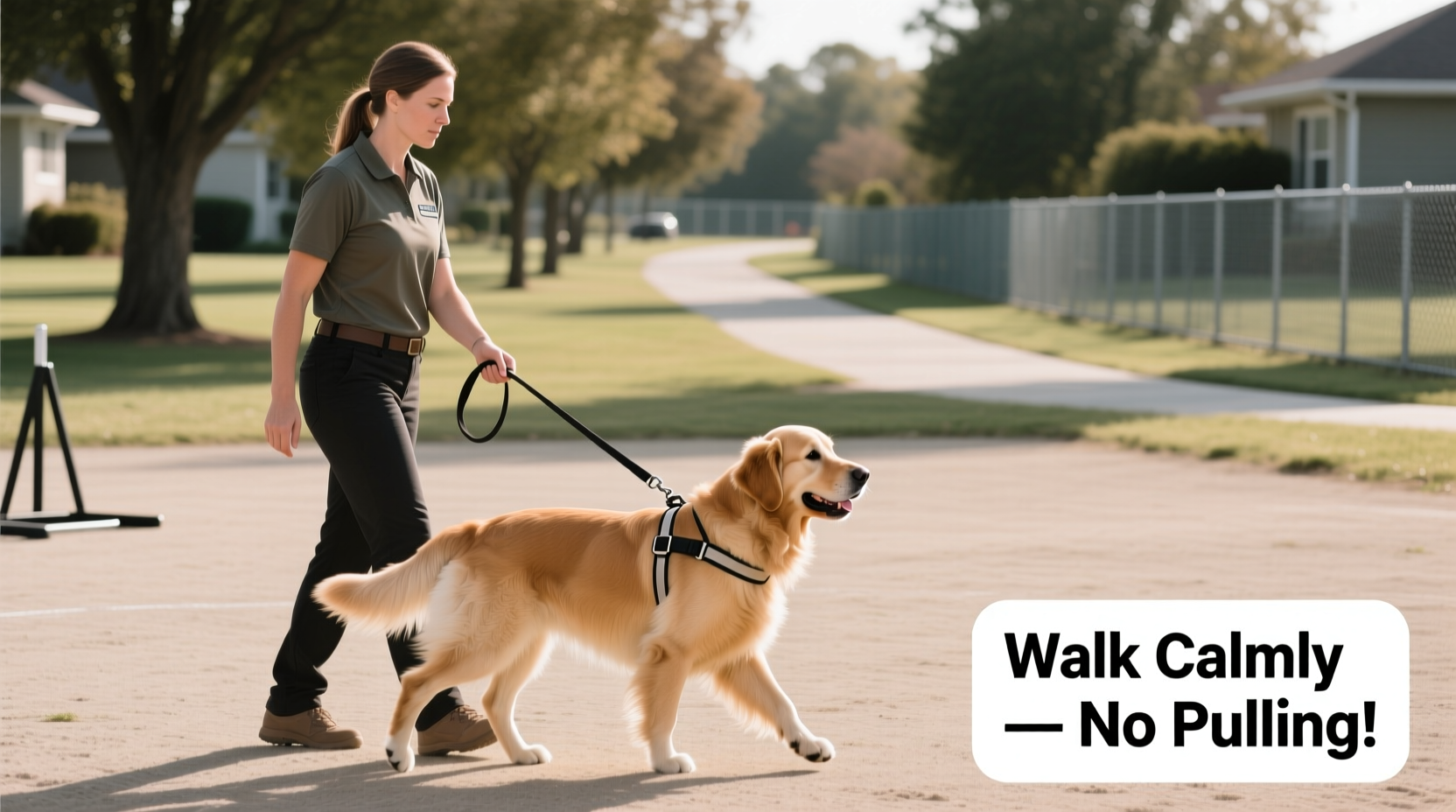
Dogs are naturally curious and driven by scent, movement, and exploration. When a dog pulls on the leash, it’s usually not out of defiance—it’s because they’ve learned that pulling gets them where they want to go faster. Every time your dog moves forward while pulling, even slightly, they’re being rewarded by progress. This unintentional reinforcement makes the behavior self-sustaining.
Traditional corrections like yanking back or using choke collars may suppress pulling temporarily but often increase anxiety and damage trust. Modern canine behaviorists emphasize reward-based training that teaches dogs what *to do* instead of punishing what not to do.
“Dogs don’t pull because they’re stubborn—they pull because they’ve been reinforced for it, even accidentally.” — Dr. Sophia Yin, Veterinary Behaviorist
Step-by-Step Guide to Loose-Leash Walking
Training a dog to walk without pulling requires structure, repetition, and positive reinforcement. Follow this timeline-based approach for best results:
- Start in a low-distraction environment (e.g., your backyard or quiet hallway). Use high-value treats your dog loves.
- Begin with attention cues. Say your dog’s name or use a marker word like “yes” when they look at you. Reward immediately.
- Take one step forward. If your dog follows without pulling, mark the behavior (“yes!”) and treat. If they surge ahead, stop moving.
- Wait for slack in the leash. The moment the leash goes loose—even briefly—mark and reward. This teaches that loose = reward.
- Change direction frequently. If your dog starts to pull, turn and walk the opposite way. Reward when they catch up and walk beside you.
- Gradually increase complexity. Once consistent indoors, move to sidewalks, then parks, always matching difficulty to your dog’s success level.
- Add duration and distractions. Practice near controlled stimuli (e.g., another dog at a distance) and reinforce calm behavior consistently.
Training sessions should be short—5 to 10 minutes—and frequent. Multiple daily sessions yield faster progress than one long walk filled with frustration.
Essential Tools That Support Calm Walking
While technique matters most, the right gear can make a significant difference. Not all equipment is created equal—some can cause physical harm or increase reactivity.
| Tool | Best For | Benefits | Risks / Cautions |
|---|---|---|---|
| Front-clip harness | Dogs who pull strongly | Gentle steering, reduces strain on neck | Avoid poorly fitted models that restrict shoulder motion |
| No-pull harness (e.g., Freedom Harness) | Medium to large breeds | Controls pullers humanely, encourages focus | Requires proper sizing and introduction |
| Head halter (e.g., Gentle Leader) | Reactive or strong dogs | Offers gentle head guidance | Must be introduced slowly; never force |
| Standard collar + flat leash | Well-trained dogs | Simple, comfortable for compliant walkers | Can encourage pulling if used incorrectly |
Never use prong, shock, or choke collars. These tools rely on pain or fear and can worsen behavioral issues over time.
Common Mistakes That Sabotage Progress
Even well-intentioned owners unknowingly reinforce pulling. Recognizing these pitfalls is half the battle:
- Moving forward when the leash is tight: This tells your dog that pulling works.
- Inconsistent rewards: If you only reward occasionally, the dog learns to work harder (i.e., pull more) to get paid.
- Allowing pulling during “real” walks: Training only in isolation won’t generalize. Apply techniques every time you leash up.
- Yelling or jerking the leash: Creates fear and confusion, undermining trust and focus.
- Expecting perfection too soon: Learning takes time. Celebrate small improvements.
Real Example: Transforming Max, the Excitable Labrador
Max, a two-year-old Labrador Retriever, pulled so hard on walks that his owner developed shoulder pain. Walks were stressful, and Max ignored commands once outside. His owner began training using a front-clip harness and started in the driveway with five-minute sessions.
At first, Max lunged forward constantly. His owner stopped every time the leash tightened and waited. After three days, Max began glancing back when he felt tension. Each glance was marked with a “yes!” and a piece of chicken. Within ten days, Max walked ten steps without pulling. By week four, he could walk calmly around the block, turning with his owner and checking in regularly.
The key? Consistency. Every outing—even bathroom breaks—became a training opportunity. Over time, Max learned that walking beside his person led to treats, praise, and freedom to sniff as a reward.
Checklist: Building a Pull-Free Walking Habit
Use this checklist to stay on track during your training journey:
- ✅ Choose a humane harness or head halter suited to your dog
- ✅ Use high-value treats (e.g., boiled chicken, cheese, hot dog bits)
- ✅ Train in low-distraction areas before advancing
- ✅ Stop immediately when the leash tightens
- ✅ Reward the instant the leash goes slack
- ✅ Practice changing directions to regain attention
- ✅ Keep sessions short and positive
- ✅ Be consistent—apply training on every walk
- ✅ Gradually introduce distractions as skills improve
- ✅ Celebrate progress, no matter how small
Frequently Asked Questions
How long does it take to train a dog not to pull?
Most dogs show improvement within 2–4 weeks of consistent daily training. However, full reliability in distracting environments may take several months. Puppies and younger dogs often learn faster, but older dogs can succeed with patience.
Can I train an older dog to stop pulling?
Absolutely. Age doesn’t prevent learning. Older dogs may have stronger habits, but with consistent positive reinforcement, they can unlearn pulling just like younger dogs. Start where your dog is, not where you wish they were.
What if my dog ignores treats during walks?
If distractions outweigh food motivation, try higher-value rewards like freeze-dried liver or tuna. You can also use environmental rewards—allow your dog to sniff or explore briefly after walking nicely. This reinforces calm behavior with natural dog pleasures.
Conclusion: A Calmer Walk Is Within Reach
Teaching your dog to walk without pulling isn’t just about convenience—it’s about building communication, trust, and mutual respect. Every time your dog chooses to stay close, they’re choosing you over distraction. That connection is worth the effort.
Start today. Pick one technique, gather some treats, and begin in your living room. Small steps lead to big changes. Your dog doesn’t need perfection—just clear guidance and consistent support. With time, your walks will become peaceful, enjoyable moments you both look forward to.




 浙公网安备
33010002000092号
浙公网安备
33010002000092号 浙B2-20120091-4
Comments
No comments yet. Why don't you start the discussion?