
PVC slippers are a staple in many households—lightweight, affordable, and often stylish. Their transparent or translucent design adds a modern touch to casual wear. However, over time, these slippers can become cloudy, yellowed, or scratched, diminishing their visual appeal and perceived quality. Unlike fabric footwear, PVC is a plastic material that reacts poorly to certain environmental factors and cleaning agents. But with proper care, it’s entirely possible to maintain their clarity or even restore them when they’ve lost their shine. This guide provides actionable, science-backed strategies to preserve and revive the transparency of your PVC slippers.
Understanding PVC and Why It Clouds
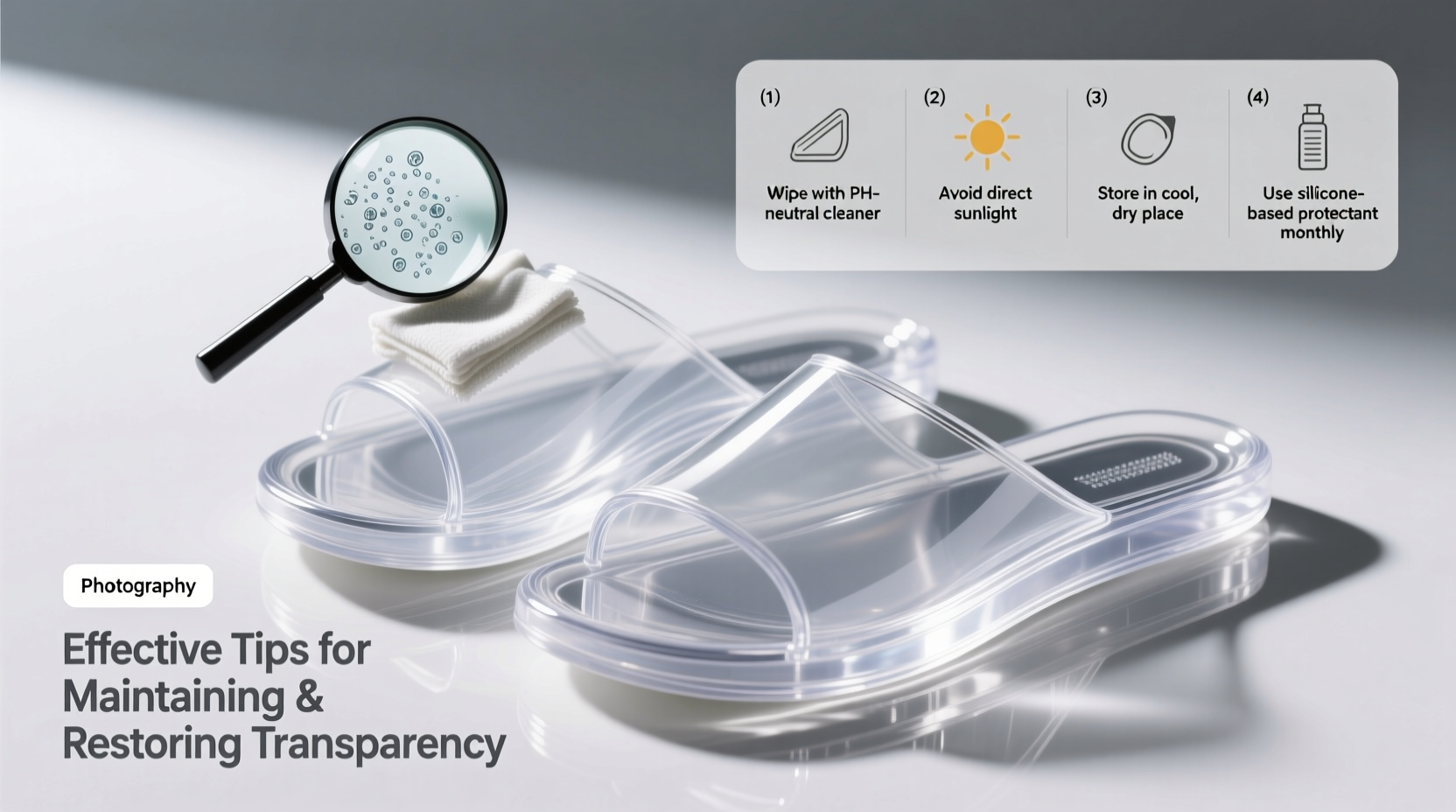
Polyvinyl chloride (PVC) is a synthetic plastic polymer widely used in footwear due to its flexibility, water resistance, and low production cost. While durable, PVC is not immune to degradation. The primary reasons for loss of transparency include:
- UV exposure: Prolonged sunlight breaks down plasticizers in PVC, leading to brittleness and yellowing.
- Oxidation: Contact with oxygen, especially in warm environments, accelerates surface clouding.
- Dirt and oil buildup: Skin oils, dust, and grime accumulate on the surface, creating a hazy film.
- Improper cleaning: Harsh detergents or abrasive tools scratch the surface, scattering light and reducing clarity.
- Chemical exposure: Chlorine, perfumes, and solvents can react with PVC, causing discoloration.
Knowing the root causes allows for targeted prevention and restoration. Unlike natural materials, PVC doesn’t absorb stains but rather accumulates residues on its surface—making cleaning both critical and relatively straightforward if done correctly.
Step-by-Step Guide to Cleaning PVC Slippers
Regular cleaning prevents long-term damage and maintains clarity. Follow this detailed process to safely clean your slippers without scratching or warping them:
- Remove loose debris: Use a soft-bristle brush or dry microfiber cloth to wipe off surface dust and dirt.
- Prepare a mild cleaning solution: Mix one cup of lukewarm water with a few drops of gentle dish soap (avoid bleach or ammonia-based cleaners).
- Clean with a soft cloth: Dip a lint-free cloth into the solution, wring it out well, and gently wipe the entire surface in circular motions.
- Rinse thoroughly: Wipe with a damp cloth using clean water to remove any soap residue.
- Dry properly: Air-dry away from direct sunlight or heat sources. Do not use a hairdryer or towel-rub vigorously.
- Buff for shine: Once completely dry, use a dry microfiber cloth to lightly buff the surface, enhancing clarity.
This routine should be performed every 1–2 weeks with regular use, or immediately after exposure to sand, saltwater, or lotions.
Restoring Yellowed or Cloudy PVC
If your slippers have already lost their transparency, all is not lost. Several restoration methods can reverse mild to moderate discoloration. The key is patience and avoiding aggressive treatments that could worsen the condition.
Method 1: Baking Soda Paste (For Surface Haze)
Mix two tablespoons of baking soda with one tablespoon of water to form a thick paste. Apply with a soft cloth using gentle pressure in small circles. Rinse and dry thoroughly. This method works best for superficial cloudiness caused by mineral deposits or film buildup.
Method 2: Hydrogen Peroxide Soak (For Yellowing)
Submerge the slippers in a solution of 3% hydrogen peroxide and water (1:1 ratio) for 2–4 hours in a sealed container, placed in indirect sunlight. The UV-assisted oxidation helps break down yellowing compounds. Remove, rinse, and dry completely. Repeat if necessary.
Method 3: Commercial Plastic Polish
Use a non-abrasive plastic restorer or automotive polish designed for clear coatings. Apply sparingly with a microfiber pad, buff lightly, and wipe off excess. Test on a small area first.
“PVC transparency loss is often reversible with oxidative treatment and careful polishing. Avoid sanding—it creates micro-scratches that scatter light and worsen haze.” — Dr. Lena Torres, Polymer Materials Scientist
Do’s and Don’ts: Maintenance Table
| Do’s | Don’ts |
|---|---|
| Store in a cool, dark place away from sunlight | Leave them near windows or in hot cars |
| Clean regularly with mild soap and water | Use alcohol, acetone, or window cleaners |
| Wear socks to reduce oil transfer from feet | Wear them barefoot for extended periods |
| Use a fabric protector spray made for plastics | Apply silicone-based shoe polishes |
| Rotate between multiple pairs to reduce wear | Wear the same pair daily without rest |
Real Example: Reviving Summer Footwear After Beach Season
Sarah, a coastal resident in Florida, noticed her favorite transparent PVC slippers had turned milky white after a summer of beach outings. Sand, salt, and sunscreen had left a stubborn film, and partial sun exposure caused yellowing along the straps. Instead of discarding them, she followed a restoration routine: first, she cleaned them with soapy water and a toothbrush. Then, she soaked them in a hydrogen peroxide solution for three hours. After rinsing and drying, she applied a thin layer of plastic-safe polish. Within a day, the slippers regained nearly 90% of their original clarity. Sarah now cleans them weekly and stores them in a breathable cotton bag during off-seasons, significantly extending their life.
Preventative Care Checklist
To keep your PVC slippers looking new, follow this monthly maintenance checklist:
- ☐ Inspect for scratches, cloudiness, or discoloration
- ☐ Clean with mild soap and water
- ☐ Dry completely in a shaded, ventilated area
- ☐ Buff with a microfiber cloth for shine
- ☐ Check storage conditions—ensure no direct sunlight or moisture
- ☐ Rotate usage if you own multiple pairs
- ☐ Reapply protective coating if previously used
Sticking to this simple routine prevents most common issues and reduces the need for intensive restoration later.
Frequently Asked Questions
Can I put PVC slippers in the dishwasher?
No. The high heat and strong detergents in dishwashers can warp PVC and strip its surface, accelerating cloudiness. Hand washing with mild soap is always safer.
Why do my transparent slippers turn yellow over time?
Yellowing occurs due to UV radiation breaking down stabilizers in the PVC compound. Heat and exposure to certain chemicals amplify this effect. Storing them in darkness and using UV protectants can slow the process.
Are all transparent slippers made of PVC?
Most are, but some may be made from TPU (thermoplastic polyurethane) or EVA. These materials behave differently—TPU is more scratch-resistant, while EVA is softer but less transparent. Always check manufacturer labels for care instructions.
Conclusion: Clarity Starts with Consistent Care
Transparent PVC slippers don’t have to be disposable fashion items. With mindful handling and regular maintenance, their lifespan—and aesthetic appeal—can be dramatically extended. The secret lies in understanding the material’s vulnerabilities and responding with gentle, informed care. Whether you’re refreshing a beloved pair or preventing future damage, the steps outlined here offer a practical roadmap to lasting clarity. Small habits—like wiping them down after wear or storing them properly—compound into significant results over time.




 浙公网安备
33010002000092号
浙公网安备
33010002000092号 浙B2-20120091-4
Comments
No comments yet. Why don't you start the discussion?