
Communicating with a large group via email presents unique challenges. When too many people are copied, messages can become diluted, overlooked, or misinterpreted. The subject line might get buried under dozens of other notifications, and recipients may assume someone else will respond. Yet, in modern workplaces—especially across departments, remote teams, and project-based collaborations—group emails remain essential. The key to effective communication lies not just in what you say, but how you address your audience from the very first line.
A well-crafted opening sets tone, establishes relevance, and encourages accountability. Poorly structured group emails lead to confusion, duplicated efforts, or worse—critical actions being missed entirely. By refining how you address large audiences, you improve readability, response rates, and overall collaboration.
1. Know Your Audience and Segment When Possible
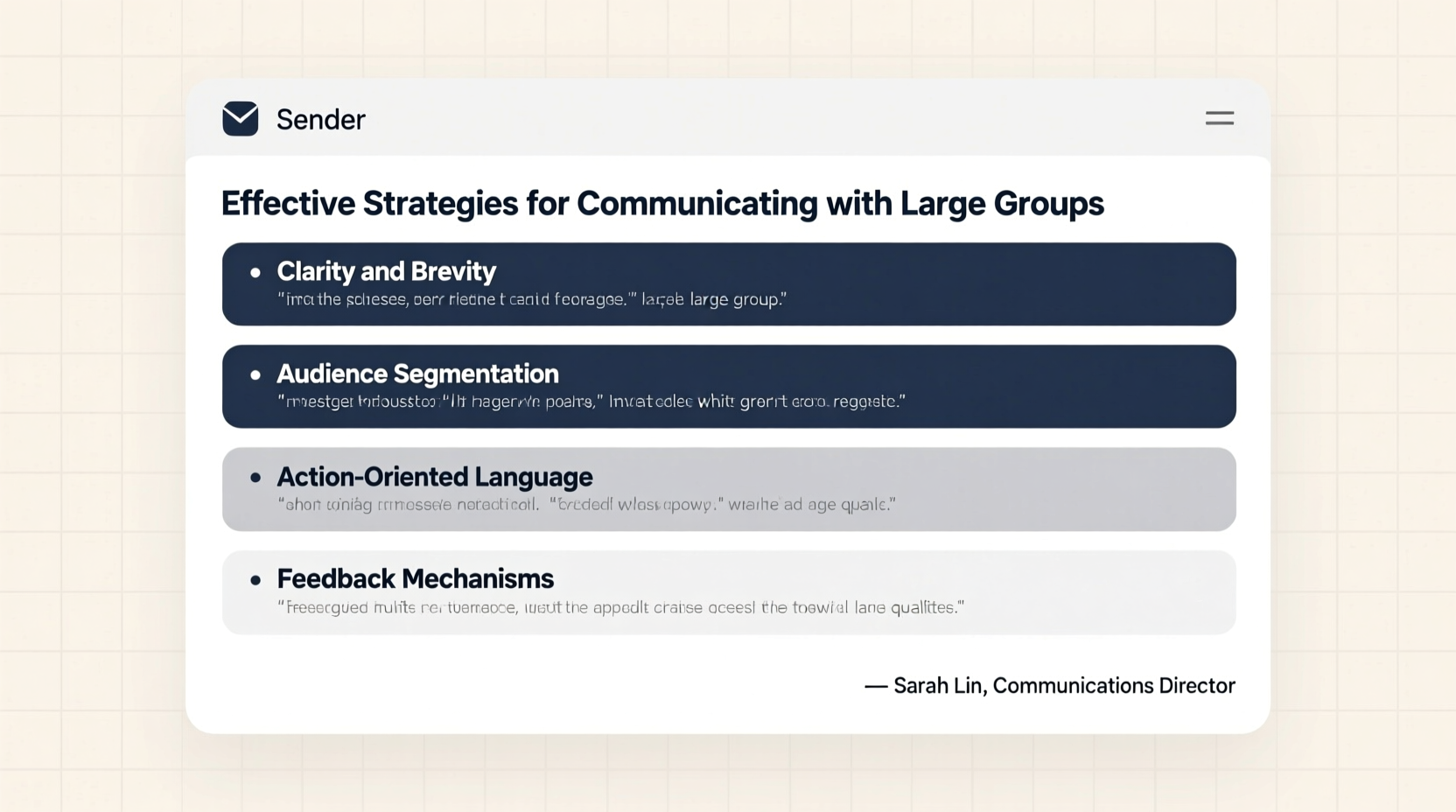
Before hitting \"send,\" ask: Who *really* needs to be on this email? In large organizations, it’s common to default to “reply all” or include entire departments out of caution. But over-inclusion breeds disengagement. People tune out when they receive messages that don’t apply to them.
Instead, segment your audience based on roles, responsibilities, or interest levels. For example, an update about software migration may only require technical leads and project managers—not every member of IT. Use BCC strategically when informing a broad group without requiring action, preserving privacy and reducing inbox clutter.
2. Craft a Clear and Inclusive Salutation
The greeting is your first opportunity to signal purpose and inclusion. Avoid vague openings like “Hi All” or “To Whom It May Concern,” which feel impersonal and detached. Instead, tailor your salutation to reflect the nature of the group and the message’s intent.
For cross-functional teams, use role-based greetings such as:
- “Dear Project Team Members,”
- “Hello Marketing and Sales Leads,”
- “Greetings to the Q3 Planning Committee,”
This approach acknowledges collective effort while subtly reinforcing shared responsibility. When addressing senior stakeholders alongside junior staff, maintain neutrality and professionalism—avoid favoring one subgroup over another in tone or title.
When Hierarchy Matters
In formal or international contexts, hierarchy influences tone. In such cases, begin with the highest-ranking individual or department, then broaden outward:
“Dear Dr. Patel, esteemed colleagues, and team members,”
This shows respect while maintaining inclusivity across levels.
3. Structure Messages for Skimmability and Accountability
Large groups often skim emails. To ensure key points aren’t missed, structure your message so critical information stands out immediately. Use formatting tools wisely: bullet points, bold headers, and numbered lists guide attention efficiently.
Most importantly, clarify who is responsible for what. Ambiguity leads to inaction. Instead of saying, “We need feedback by Friday,” specify:
“Please submit your departmental updates by Friday, June 14th. Design team → Sarah Kim; Engineering → Raj Mehta; Finance → please confirm budget alignment.”
| Do | Don’t | Why |
|---|---|---|
| Use role-specific calls to action | Say “someone should…” | Assigns ownership clearly |
| Group related topics under subheadings | Write long paragraphs without breaks | Improves scannability |
| Summarize key takeaways at the top (executive summary style) | Hide important info mid-email | Respects time and attention |
| Indicate urgency level: Low/Medium/High | Assume everyone knows priority | Prevents misalignment |
4. Real-World Example: Streamlining a Cross-Department Rollout
At Nexora Technologies, a product launch email was initially sent to 47 employees across five departments with the subject: “Launch Update.” The body contained dense text, no assigned owners, and ended with “Let me know if you have questions.” Result? Only 12 replies, delayed deliverables, and confusion over timelines.
After training on group communication, the same team revised their approach. The next rollout email included:
- Subject line: “Action Required: Final Review for Client Portal Launch – Due Fri 5 PM”
- Opening: “Dear Product, UX, DevOps, and Customer Support Leads,”
- Bullet-point summary of changes
- Clear table of tasks with owners and deadlines
- Link to a shared document for non-urgent comments
Response rate jumped to 94%. Deadlines were met, and post-mortem feedback highlighted improved clarity and reduced follow-up emails.
“Clarity isn’t just about words—it’s about design, structure, and intention. A well-addressed group email acts like a meeting agenda: focused, respectful, and outcome-driven.” — Laura Mendez, Organizational Communication Consultant
5. Step-by-Step Guide to Writing Effective Group Emails
Follow this sequence before sending any message to a large audience:
- Define the Purpose: Is this informational, consultative, or action-oriented?
- Identify Essential Recipients: Remove anyone who doesn’t need to act or be informed now.
- Choose the Right Salutation: Match tone to audience type (team, leadership, mixed groups).
- Lead with Key Information: First paragraph should summarize why the email matters.
- Break Down Actions Clearly: Use bullets or a table to assign tasks.
- Set Expectations for Response: Specify if replies are needed, optional, or discouraged.
- Review Tone and Length: Trim redundancies. Aim for under 300 words when possible.
- Test Send: Forward to a colleague first to check clarity and formatting.
FAQ: Common Questions About Group Email Etiquette
How do I politely exclude people from a thread without offending them?
You can write: “For ongoing updates, we’ll keep this thread limited to core team members. A monthly summary will be shared separately with broader stakeholders.” This respects boundaries while acknowledging others’ interest.
Is it okay to use “Hi Everyone” in professional settings?
It depends on culture and context. In startups or informal teams, “Hi Everyone” works fine. In global corporations or formal environments, opt for more precise greetings like “Dear Colleagues” or “Hello Team Leads.” Consistency builds professionalism.
What should I do if no one responds to a group email?
Wait 24–48 hours, then send a concise follow-up. Name individuals with pending actions: “Following up on feedback needed from Legal and QA teams—please share input by EOD tomorrow.” Directness prevents drift.
Final Thoughts: Elevate Clarity, Not Volume
Email remains one of the most powerful tools for workplace coordination—but its effectiveness hinges on thoughtful delivery. Addressing large groups isn’t about broadcasting to everyone; it’s about connecting meaningfully with the right people at the right time. Every word you choose, from the salutation to the closing line, shapes perception, drives action, and reflects leadership.
By applying these strategies consistently, you reduce noise, increase accountability, and foster a culture where communication is valued—not endured.




 浙公网安备
33010002000092号
浙公网安备
33010002000092号 浙B2-20120091-4
Comments
No comments yet. Why don't you start the discussion?