
Bracelet layering is more than a trend—it’s a form of self-expression. When done well, a curated stack of bracelets adds sophistication, personality, and subtle glamour to any outfit. Yet, many people hesitate to layer due to fear of clutter or imbalance. The secret lies not in how many you wear, but in how you combine them. With thoughtful selection and intentional arrangement, you can achieve an effortlessly elegant look that feels both polished and personal.
Understand Your Wrist Profile
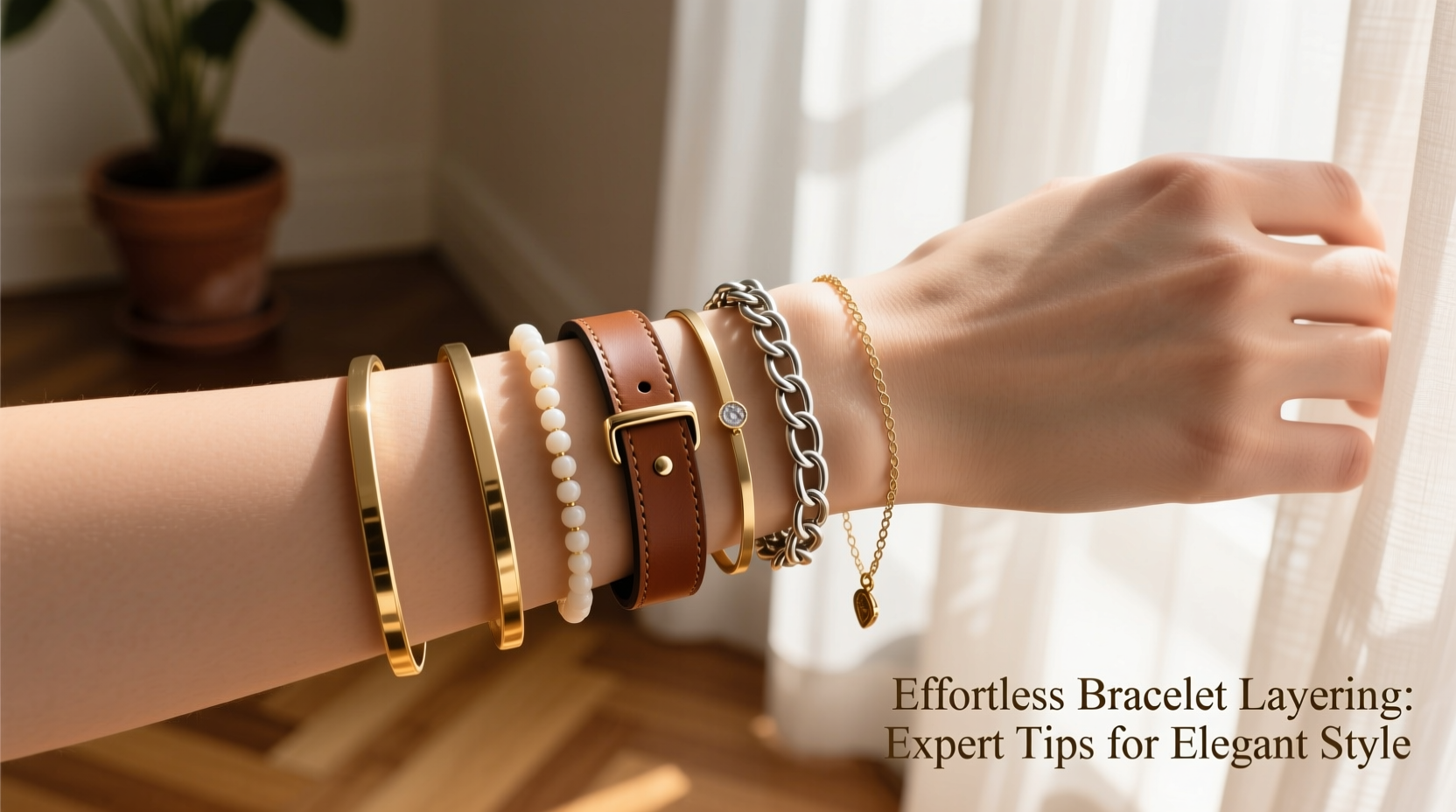
Before selecting bracelets, consider your wrist size and shape. This foundational step ensures comfort and visual harmony. Those with slender wrists may find that too many thick pieces overwhelm their proportions, while individuals with broader wrists can carry bolder stacks with ease.
Measure your wrist circumference and note whether your arm tapers sharply or maintains a consistent width. This helps determine spacing and stacking potential. For example, a 6-inch wrist might suit three to five delicate chains, whereas a 7.5-inch wrist can comfortably accommodate mixed widths and textures without appearing crowded.
Build a Balanced Bracelet Wardrobe
Think of your collection like a capsule wardrobe—each piece should serve a purpose and pair well with others. A balanced mix includes:
- Focal Point Pieces: Chunky cuffs, engraved bangles, or statement charms that anchor the stack.
- Transitional Chains: Medium-weight links or beaded strands that bridge gaps between bold and delicate items.
- Delicate Layers: Thin chains, minimalist beads, or dainty tennis bracelets that add texture without dominance.
Varying thickness prevents monotony. Aim for at least three different widths in a single stack. For instance, pair a 10mm hammered cuff with a 4mm chain and a 2mm rope link to create depth and rhythm.
“Layering isn’t about quantity—it’s about contrast. Mix metals, textures, and volumes to tell a story on your wrist.” — Lena Torres, Jewelry Stylist & Founder of Forma Collective
The Art of Mixing Metals and Materials
Gone are the days of strict metal matching. Modern styling embraces mixed metals as a sign of intentionality, not error. The key is consistency in tone and finish. Combine warm golds with rose gold, or cool silvers with platinum tones. Avoid clashing finishes—matte and high-polish together can work, but only if intentional.
Materials matter just as much. Leather cords, ceramic beads, silk threads, and gemstone accents each bring unique energy. To maintain cohesion:
- Limits natural materials (wood, stone) to one or two per stack.
- Anchor organic textures with metallic bands to prevent a bohemian overload.
- Match clasp styles when possible—toggle clasps with toggle, lobster claws with spring rings.
| Metal Type | Best Paired With | Avoid Pairing With |
|---|---|---|
| Yellow Gold | Rose gold, amber beads, vintage charms | Bright chrome, neon threads |
| Sterling Silver | Onyx, lapis, matte ceramics | Warm brass tones (unless aged) |
| Rose Gold | Pearls, blush stones, woven silk | Heavy gunmetal or oxidized silver |
| Mixed Metals | Neutral tones, monochrome outfits | Overly busy prints or costume jewelry |
Step-by-Step Guide to Building Your Stack
Follow this sequence to craft a cohesive, elegant arrangement every time:
- Start with a base: Choose one defining piece—a favorite watch, heirloom bangle, or wide cuff—and place it first.
- Add structure: Introduce one or two medium-weight bracelets to frame the focal point.
- Incorporate movement: Slide in flexible chains or hinged bangles that shift slightly when worn.
- Introduce texture: Weave in a bead strand, braided cord, or hammered metal band for tactile interest.
- Finish with finesse: Layer 1–2 ultra-thin chains or micro-bangles near the ends for subtle shimmer.
- Step back and assess: Rotate your wrist under natural light. Adjust spacing or swap one element if the eye doesn’t flow smoothly.
Real Example: Olivia’s Everyday Elegance
Olivia, a graphic designer in Portland, wanted a professional yet artistic look for client meetings. She started with a slim silver watch, added a brushed gold bangle engraved with her initials, then layered a black leather cord with a small turquoise charm. She finished with two fine-linked chains—one silver, one white gold—positioned closer to her hand. The result? A stack that felt personal, polished, and conversation-worthy. Clients often compliment her wrist, and she reports feeling more confident wearing it daily.
Common Pitfalls and How to Avoid Them
Even experienced stylists make mistakes. Recognizing these common errors ensures your layers elevate rather than distract:
- Overcrowding: More than seven bracelets on one wrist risks looking chaotic. Stick to 3–6 for most occasions.
- Neglecting proportion: Petite wrists can’t support oversized pieces. Scale matters.
- Ignoring function: If you type all day, avoid sharp edges or dangling pendants that snag keyboards.
- Forgetting symmetry: When layering both wrists, mirror the volume—not necessarily the pieces. One side can be bolder if balanced by sleeve length or accessory placement.
Checklist: Perfecting Your Bracelet Stack
- ✅ Measured wrist size for proper fit
- ✅ Selected one focal piece
- ✅ Included variation in width and texture
- ✅ Mixed metals thoughtfully (if applicable)
- ✅ Ensured comfortable movement and no pinching
- ✅ Tested stack with typical clothing sleeves
- ✅ Removed any redundant or overly similar pieces
When and Where to Wear Layered Bracelets
Context shapes style. Adapt your stack to occasion and environment:
- Workplace: Opt for quiet luxury—thin chains, discreet charms, neutral stones. Avoid jingling bangles in quiet offices.
- Casual Outings: Embrace playful combinations—leather wraps, beaded strands, or colorful thread bracelets.
- Evening Events: Go bold with metallic shine, gem accents, or linked cuffs. Consider sparkle that catches candlelight.
- Travel: Prioritize sentimental or durable pieces. Avoid irreplaceable heirlooms on long trips.
FAQ
Can I layer bracelets with a watch?
Absolutely. Place the watch as your base layer and build around it. Allow space so the watch face remains visible and functional. Most stylists recommend stacking above or below, not directly over, the timepiece.
How do I keep my bracelets from tangling?
Alternate rigid and flexible designs, use varying lengths, and avoid excessive thin chains. When not worn, store them flat in a divided jewelry tray or individual pouches.
Is it okay to wear different metals on each wrist?
Yes, especially if balanced visually. For example, warm metals on one side with a rust-toned sweater sleeve, cool metals on the other with a crisp white cuff. Just ensure overall harmony with your outfit palette.
Final Thoughts
Elegant bracelet layering is not about following rules—it’s about curating confidence through detail. Each piece you choose reflects a facet of your identity. When combined with care, they form a narrative that speaks before words. Whether you prefer minimalist symmetry or eclectic abundance, the goal remains the same: to wear your stack with intention and ease.
Start small. Try one new combination today. Notice how it makes you feel when you glance at your wrist. Over time, your collection will evolve into a signature expression—quiet, powerful, and uniquely yours.




 浙公网安备
33010002000092号
浙公网安备
33010002000092号 浙B2-20120091-4
Comments
No comments yet. Why don't you start the discussion?