
Wireless Bluetooth glasses are redefining personal audio and visual experiences. Whether you're walking through a city, taking calls on the go, or enjoying music during a workout, these sleek devices blend style with functionality. But for all their innovation, the real value comes from seamless connectivity. Pairing them with your smartphone should be quick and frustration-free—not a technical puzzle. This guide walks you through every step, common pitfalls, and expert-backed tips to ensure your Bluetooth glasses connect reliably across Android, iOS, and future devices.
Understanding Bluetooth Glasses: What Makes Them Different?
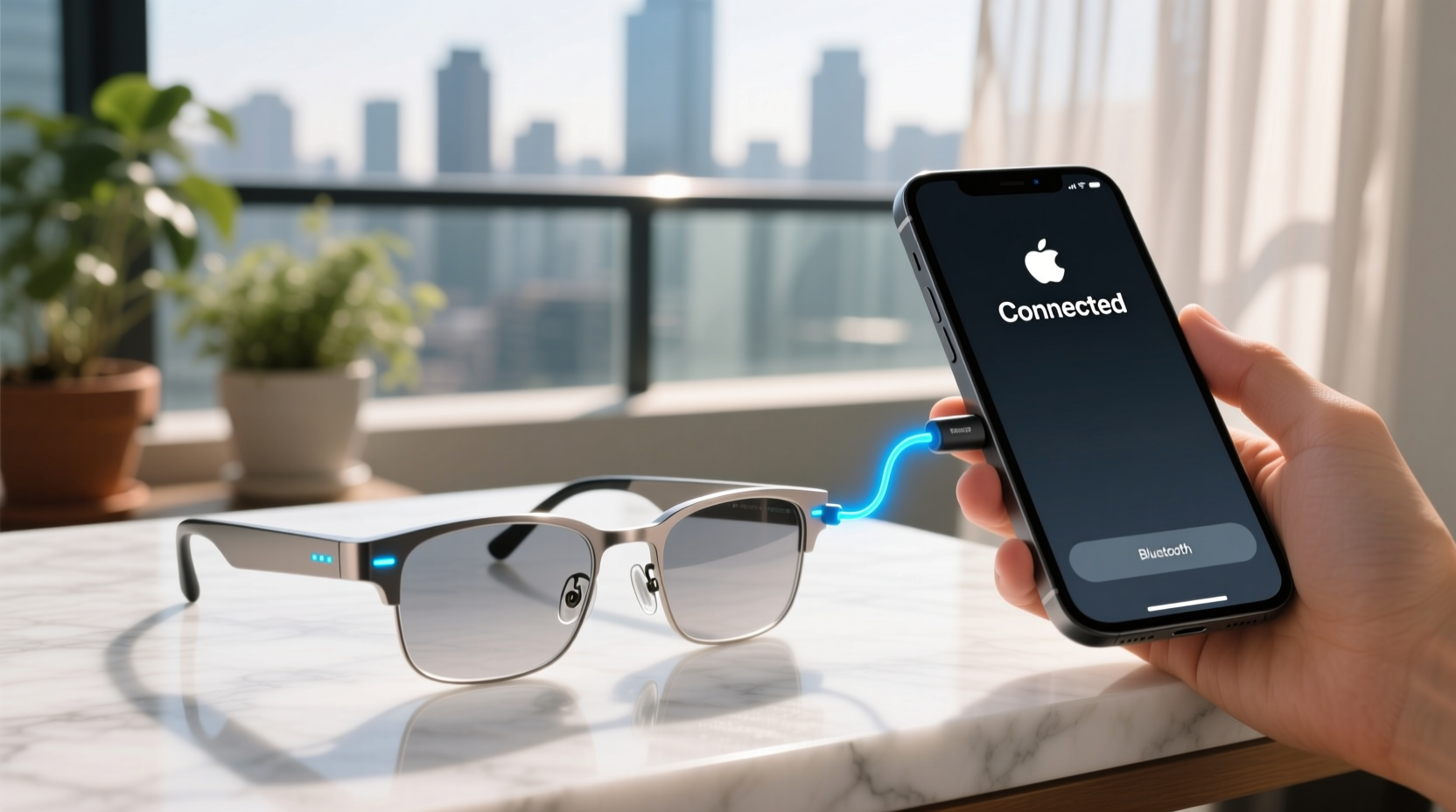
Unlike standard headphones or earbuds, Bluetooth glasses integrate speakers and microphones directly into the frame. Some models even include cameras, touch controls, or voice assistants. Because of their compact design, pairing behavior can differ slightly from traditional audio devices. Most operate in “discoverable mode” only briefly after power-on, and many require specific activation gestures—like tapping the temple or holding a button—to initiate pairing.
Despite variations between brands like Ray-Ban Meta, Bose Frames, or Alibaba’s Targus line, the underlying Bluetooth protocol remains consistent. That means once you understand the fundamentals, switching between smartphones or upgrading devices becomes second nature.
“Bluetooth glasses represent the next evolution in wearable tech—convenience meets discretion. But their success hinges on intuitive connectivity.” — Dr. Lena Patel, Wearable Technology Researcher at MIT Media Lab
Step-by-Step Guide to Pairing Your Bluetooth Glasses
Follow this universal process regardless of your smartphone OS. These steps apply to 95% of current Bluetooth-enabled smart glasses on the market.
- Power On and Activate Pairing Mode
Press and hold the multifunction button (usually on the right temple) for 5–7 seconds until you hear a voice prompt like “Pairing mode” or see a blinking LED. If no sound occurs, consult your user manual—some models require a double-tap followed by a long press. - Enable Bluetooth on Your Smartphone
Navigate to Settings > Bluetooth and ensure it’s turned on. Disable any active connections temporarily to avoid interference. - Wait for Device Discovery
Your glasses should appear in the “Available Devices” list within 10–20 seconds. Names typically follow formats like “Ray-Ban Stories,” “Bose Frames Tempo,” or “SmartGlass_X1.” - Select and Connect
Tap the device name. Some phones will automatically finalize pairing; others may prompt you to confirm a passcode (usually 0000 or 1234). - Test Audio and Microphone
Play a short audio clip or make a test call to verify both earpieces and mic are functioning. Adjust volume via the glasses’ controls or phone settings.
Do’s and Don’ts When Pairing Bluetooth Glasses
| Do’s | Don’ts |
|---|---|
| Charge your glasses fully before first use | Ignore firmware update prompts after pairing |
| Keep your phone within 3 feet during pairing | Attempt pairing in areas with heavy Wi-Fi/Bluetooth congestion |
| Use voice-guided setup if available (e.g., Meta Assistant) | Assume compatibility without checking manufacturer specs |
| Forget old devices from your phone’s Bluetooth list | Force restart glasses mid-pairing unless instructed |
Real-World Example: Maria’s Seamless Upgrade
Maria switched from an iPhone 13 to an iPhone 15 and initially struggled to reconnect her Ray-Ban Meta glasses. The device appeared in her Bluetooth list but wouldn’t connect. After reviewing the app, she realized iOS had retained an outdated profile. She went to Settings > Bluetooth, tapped the info icon next to her glasses, and selected “Forget This Device.” She powered off the glasses, restarted her phone, and repeated the standard pairing process. Within 90 seconds, they connected successfully—and synced with Facebook View app features as expected.
This case highlights a common issue: legacy device profiles interfering with new connections. Clearing old data is often the missing step.
Troubleshooting Common Connection Issues
Even with careful execution, hiccups occur. Here’s how to resolve frequent problems:
- Glasses won’t enter pairing mode: Check battery level. Low power can disable Bluetooth functions. Charge for at least 20 minutes before retrying.
- Phone sees device but can’t connect: Restart Bluetooth on your phone. Toggle it off/on, then attempt discovery again.
- Audio cuts out or lags: Ensure no other Bluetooth devices are actively transmitting nearby. Interference from smartwatches or car systems can degrade signal quality.
- No voice feedback: Verify that audio prompts are enabled in the companion app (if applicable). Some models allow muting of system sounds.
Frequently Asked Questions
Can I pair Bluetooth glasses with multiple phones?
Yes, most models support pairing with up to eight devices. However, only one device can stream audio at a time. Switching between phones requires disconnecting from the current device or selecting the glasses manually from the new phone’s Bluetooth menu.
Are Bluetooth glasses compatible with both Android and iPhone?
Virtually all modern Bluetooth glasses work with both platforms due to standardized Bluetooth 5.0+ protocols. However, advanced features like camera control, voice assistant integration, or AR filters may require specific apps available only on one ecosystem (e.g., Facebook View for Meta glasses on iOS/Android).
Why does my phone say “Connected” but no audio plays?
This usually indicates incorrect audio routing. Go to your phone’s Bluetooth settings and ensure “Media Audio” is toggled on for the glasses. On some Android devices, you may need to tap the gear icon next to the device and enable audio profiles manually.
Pro Checklist: Mastering Bluetooth Glass Connectivity
Use this checklist each time you pair or troubleshoot:
- ✅ Charge glasses to at least 50%
- ✅ Enable Bluetooth on smartphone
- ✅ Activate pairing mode using correct gesture
- ✅ Confirm visibility in “Available Devices”
- ✅ Select device and complete connection
- ✅ Test media playback and microphone
- ✅ Install companion app (if available)
- ✅ Run firmware updates immediately
- ✅ Forget old connections if switching phones
- ✅ Store paired device info for future use
Future-Proofing Your Experience
As Bluetooth standards evolve—especially with LE Audio and Auracast broadcasting on the horizon—today’s pairing process will become even more streamlined. Future glasses may auto-pair when near a registered device, similar to Apple’s AirPods. But until then, understanding the current system gives you control and confidence.
Manufacturers are also improving out-of-box experiences. Many now offer QR code scanning for instant setup, reducing reliance on manual searches. Staying updated via official apps ensures you benefit from these enhancements as they roll out.
Conclusion
Pairing wireless Bluetooth glasses doesn’t require technical mastery—just attention to detail and awareness of common pitfalls. With the right approach, you can connect your smart eyewear to any smartphone in under two minutes, whether you’re setting up for the first time or transitioning to a new device. These tools are designed to enhance your life quietly and efficiently; mastering their setup ensures they do exactly that.




 浙公网安备
33010002000092号
浙公网安备
33010002000092号 浙B2-20120091-4
Comments
No comments yet. Why don't you start the discussion?