
Boiling water is one of the most routine kitchen tasks—whether for tea, coffee, instant meals, or cooking pasta. For decades, the stovetop has been the default method. But electric kettles have surged in popularity, especially in regions like the UK and Japan, where they’re standard in nearly every home. The central claim? Speed. Electric kettles boil water significantly faster than stovetop pots. But does that single advantage justify replacing a tried-and-true method? Or are there deeper factors at play—efficiency, safety, convenience, and long-term costs—that make the decision more nuanced?
This article breaks down the real-world differences between electric kettles and stovetop boiling, evaluates whether speed alone should drive your choice, and helps you determine if switching is truly worth it.
How Fast Is an Electric Kettle Compared to a Stovetop?
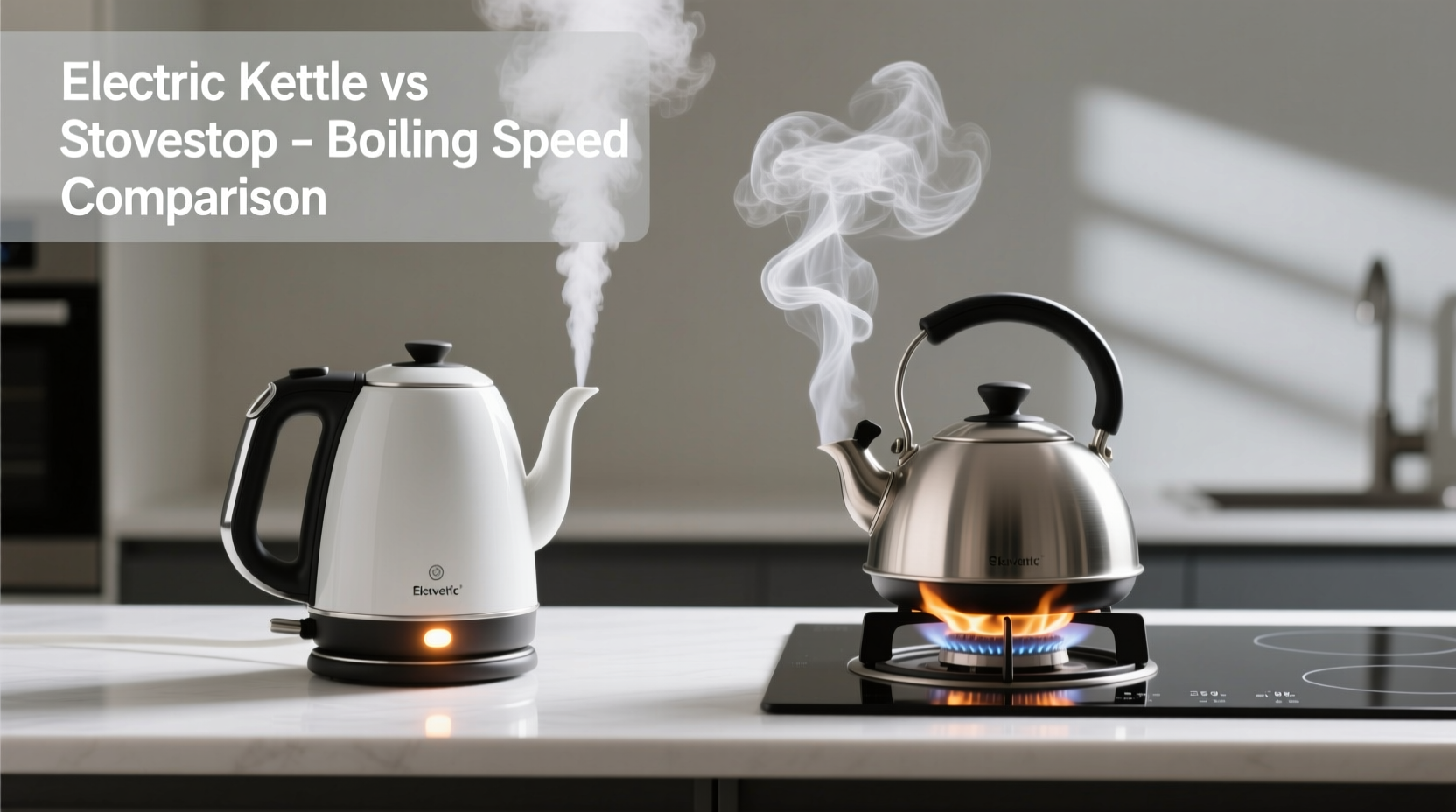
The most commonly cited benefit of electric kettles is their speed. On average, an electric kettle can bring 1 liter of water to a boil in **3 to 4 minutes**. A stovetop pot, depending on heat output and material, takes **7 to 10 minutes** on a gas stove and slightly less on induction. That’s a difference of nearly half the time.
The reason lies in design. Electric kettles use immersion heating elements directly in contact with the water, maximizing heat transfer. Stovetop pots rely on indirect conduction—from flame or coil to pot base, then to water—resulting in greater energy loss.
Energy Efficiency: Which Method Uses Less Power?
Speed isn’t just about convenience—it often correlates with energy efficiency. Boiling water quickly means less time spent drawing power or burning fuel, which translates to lower consumption.
A study by the UK Energy Saving Trust found that electric kettles are approximately **80% efficient** at converting electricity into heat. In contrast, gas stoves operate at around **30–40% efficiency**, meaning over half the energy from the flame escapes as ambient heat. Even electric coil stoves hover around 70%, still below most modern kettles.
However, efficiency depends on usage habits. Boiling a full kettle when you only need a cup of water wastes energy. Similarly, covering a stovetop pot reduces boiling time and improves efficiency.
“Even high-efficiency gas burners lose a lot of heat to the air. Direct-contact electric heating is inherently more efficient for small-scale water heating.” — Dr. Laura Chen, Energy Systems Researcher, University of Manchester
Comparative Breakdown: Electric Kettle vs Stovetop
| Factor | Electric Kettle | Stovetop Pot |
|---|---|---|
| Boil Time (1L) | 3–4 minutes | 7–10 minutes (gas), 5–7 minutes (induction) |
| Energy Efficiency | ~80% | 30–40% (gas), ~70% (electric coil) |
| Precision Control | Variety of temp settings (on premium models) | Manual flame/coil adjustment |
| Safety | Auto shut-off, cool-touch handles | Risk of burns, no auto-off |
| Cost (Upfront) | $30–$100 | $20–$50 (pot only) |
| Lifespan | 2–5 years (depends on build) | 5–15+ years (stainless steel) |
| Maintenance | Descaling needed; plastic models may retain odors | Dishwasher safe; easy cleaning |
| Capacity Flexibility | Fixed max capacity (usually 1.5–1.8L) | Can scale up with larger pots |
While electric kettles win in speed and efficiency, stovetop methods offer durability and versatility. If you regularly cook large batches or need boiling water for soups and sauces, a pot remains indispensable. But for daily beverages, the electric kettle’s targeted functionality shines.
Real-World Impact: Is the Time Savings Worth It?
Let’s quantify the time saved. Suppose you boil water twice a day—for morning coffee and evening tea. Using a stovetop, that’s roughly 16–20 minutes per day. With an electric kettle, it drops to 6–8 minutes. That’s a daily saving of 10–12 minutes, or about **60 hours per year**.
But is that meaningful? For someone with a flexible schedule, perhaps not. However, for busy professionals, parents, or anyone optimizing their morning routine, those minutes add up. Shaving 5 minutes off a rushed morning can reduce stress and improve consistency.
Mini Case Study: The Morning Routine Upgrade
Sarah, a project manager in Toronto, used a stovetop kettle for years. Her mornings involved waiting for water to boil while packing lunches and answering emails. After switching to an electric kettle with variable temperature settings, she reduced her morning prep time by nearly 15 minutes. “It sounds small,” she says, “but now I actually sit down with my tea instead of gulping it at my desk. That quiet moment changed my whole morning.”
Her experience reflects a broader trend: small efficiencies compound into noticeable lifestyle improvements. The switch wasn’t just about speed—it was about reclaiming time and intentionality.
Safety and Convenience Features You Can’t Ignore
Beyond speed, electric kettles offer built-in safety mechanisms that stovetop pots lack. Most models feature:
- Automatic shut-off when water reaches boiling point
- Boil-dry protection that disables heating if the kettle is empty
- Cool-touch exteriors and ergonomic handles
- 360-degree swivel bases for cord-free pouring
These features are particularly valuable in homes with children or elderly users. A forgotten stovetop pot can boil dry, damage the cookware, or even start a fire. Electric kettles eliminate that risk entirely.
Additionally, many modern electric kettles offer temperature presets—ideal for different types of tea. Green tea, for example, brews best at 70–80°C (160–175°F), not boiling. With a stovetop, achieving this requires guesswork or a separate thermometer. Electric kettles with variable controls deliver precision with the press of a button.
Environmental and Cost Considerations
While electric kettles are more energy-efficient, their environmental footprint includes manufacturing, materials, and disposal. Most are made with plastic components and electronic circuits, which are harder to recycle than stainless steel pots.
From a cost perspective:
- An electric kettle costs $30–$100 upfront and lasts 2–5 years.
- A quality stainless steel pot costs $20–$50 and can last over a decade.
However, the energy savings of an electric kettle can offset its higher initial price. Assuming 500 boils per year and average electricity rates, a household could save $10–$15 annually in energy costs compared to gas. Over five years, that’s $50–$75—making the investment break even or profitable, especially on induction or electric stoves.
Checklist: Should You Switch to an Electric Kettle?
Use this checklist to evaluate whether making the switch makes sense for your lifestyle:
- Do you boil water more than once a day?
- Do you value time-saving appliances in your routine?
- Are you using a gas stove (where efficiency is lowest)?
- Do you drink tea or coffee that benefits from precise temperatures?
- Is counter space available for a small appliance?
- Are safety features like auto shut-off important to you?
- Are you willing to descale the kettle every few months?
If you answered “yes” to four or more, switching likely offers tangible benefits.
Step-by-Step Guide to Making the Switch
If you’ve decided to adopt an electric kettle, follow these steps to integrate it smoothly into your kitchen:
- Choose the right model: Opt for stainless steel or glass over plastic to avoid odor retention and chemical concerns.
- Measure your space: Ensure you have a nearby outlet and enough clearance for the kettle and its base.
- Start with one use case: Replace your morning coffee water routine first to test convenience.
- Adjust portion sizes: Only fill the kettle with the amount you need to maximize efficiency.
- Set a maintenance schedule: Descale monthly if you have hard water; every 2–3 months otherwise.
- Evaluate after 30 days: Assess time saved, ease of use, and overall satisfaction before fully retiring your stovetop method.
Frequently Asked Questions
Does boiling water in an electric kettle affect taste?
Some users report a slight metallic or plastic aftertaste, especially with low-quality models. Stainless steel or glass kettles minimize this. Regular descaling also prevents mineral buildup that can alter flavor.
Can I use an electric kettle for purposes other than boiling water?
Manufacturers advise against boiling soup, milk, or other liquids, as they can cause overflow, damage heating elements, or create hard-to-clean residues. Use only for water unless the model explicitly allows otherwise.
Are electric kettles safe to leave plugged in?
Yes. They draw no power when not in use, and safety features prevent overheating. However, unplugging during extended absences is a good precaution.
Conclusion: Speed Matters—But So Do the Details
Boiling water faster isn’t just a convenience—it’s a gateway to improved efficiency, safety, and ritual quality. While the stovetop remains a versatile and durable tool, the electric kettle excels in its specific role: rapidly and efficiently heating water for drinks.
The decision to switch shouldn’t be based solely on speed. Consider your daily habits, energy source, safety needs, and how much you value precision and automation. For many, the cumulative benefits—time saved, energy reduced, burns avoided—make the upgrade not just logical, but transformative.
You don’t have to abandon your stovetop pot. Instead, think of the electric kettle as a specialized partner: fast, smart, and reliable for the tasks it’s designed for. When used together, they complement rather than compete.




 浙公网安备
33010002000092号
浙公网安备
33010002000092号 浙B2-20120091-4
Comments
No comments yet. Why don't you start the discussion?