
When it comes to international football, national team kits are more than just uniforms—they're symbols of identity, pride, and heritage. The rivalry between England and Denmark extends beyond the pitch, into the realm of design, tradition, and cultural expression. While both nations have rich footballing histories, their approach to jersey design differs significantly. This article explores the evolution, aesthetics, functionality, and cultural resonance of England and Denmark’s national team kits to determine which side truly wears the better jersey.
Design Philosophy: Tradition vs Innovation
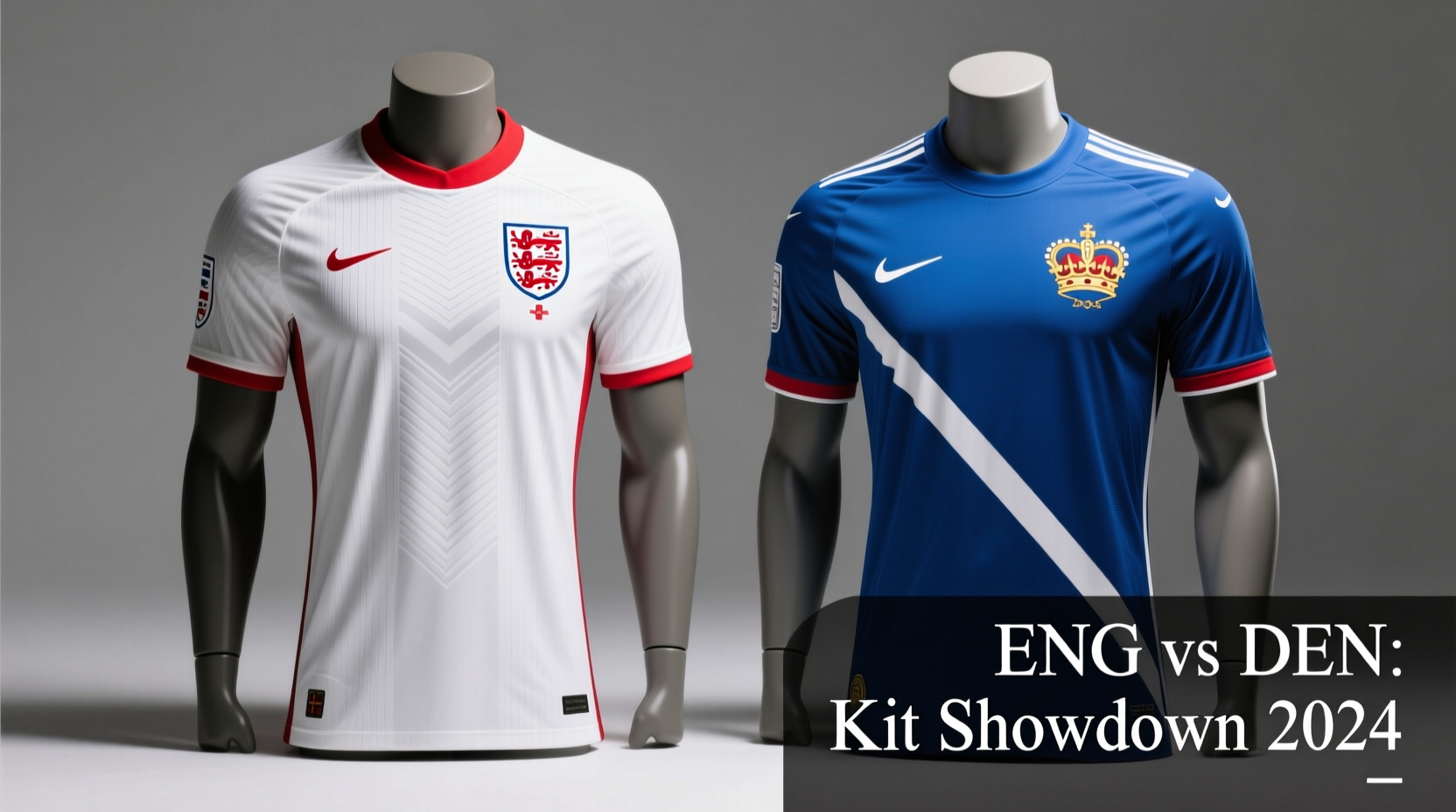
England’s kit has long been defined by simplicity and continuity. The iconic white shirt with navy blue shorts and red socks is one of the most recognizable in world football. The Three Lions crest, a symbol dating back to the 19th century, remains central to every design. Nike, the current kit manufacturer, maintains this minimalist ethos—clean lines, classic colors, and subtle detailing that honors tradition.
In contrast, Denmark embraces boldness and experimentation. Hummel, their long-time kit partner, infuses modern Scandinavian design principles: clean geometry, striking color contrasts, and innovative patterns. Recent Denmark kits have featured diagonal sashes, asymmetrical stripes, and even abstract interpretations of Viking symbolism. Where England leans on legacy, Denmark pushes boundaries.
Historical Evolution of the Kits
England’s kit has undergone minimal changes since the early 1900s. The white home shirt has remained constant, with only minor variations in collar style, sleeve trim, or sponsor placement. Notable exceptions include the 1970 World Cup, when England briefly wore light blue away shirts, and the controversial 2002 away kit—a dark maroon design widely criticized by fans.
Denmark’s kit history is more dynamic. In the 1980s, they introduced the now-iconic red-and-white hooped away jersey, worn during their surprise run at Euro 1984. The 1992 European Championship-winning team donned a simple red shirt with a bold white collar—a look later revived as a retro favorite. Over the past two decades, Denmark has consistently used its kits to make statements, such as the 2020 Euros kit featuring a pattern inspired by wind turbine blades, reflecting the nation’s commitment to renewable energy.
| Aspect | England | Denmark |
|---|---|---|
| Primary Color | White | Red (home), White/Black (away) |
| Traditional Pattern | Solid with minimal trim | Hoops, sashes, geometric accents |
| Kit Manufacturer (Current) | Nike | Hummel |
| Most Iconic Kit | 1966 World Cup (home) | 1992 Euro (home) |
| Innovation Level | Low to moderate | High |
Fan Reception and Cultural Impact
Supporters play a crucial role in shaping a kit’s legacy. England fans generally appreciate the consistency of their home jersey, viewing it as a timeless emblem of English football. However, criticism arises when manufacturers over-accessorize or stray too far from tradition—such as the all-blue third kit introduced in 2016, which many felt diluted the brand.
Denmark’s fanbase tends to embrace change more readily. The 2020 Euros kit, despite initial skepticism about its turbine-inspired print, gained widespread acclaim for its environmental message and sharp look. Danish supporters often treat new kits as cultural events, discussing them in media and fashion circles alike. In fact, several Denmark jerseys have appeared on “best kits of the year” lists by publications like FourFourTwo and Footy Headlines.
“Denmark uses football apparel as a canvas for national storytelling—each kit says something about who they are.” — Lars Madsen, Sportswear Historian, Copenhagen Institute of Design
Performance and Psychological Influence
While aesthetics matter, some argue that kit design can influence player performance and confidence. Research in sports psychology suggests that wearing a uniform perceived as strong or distinctive can boost self-assurance. England’s classic look provides familiarity and gravitas, potentially reinforcing a sense of historical weight and expectation.
Denmark’s bolder designs may serve a different psychological function. Their 2021 Euro campaign saw them reach the semifinals in a high-contrast red home kit with black detailing—described by players as “empowering” and “distinctive under lights.” Goalkeeper Kasper Schmeichel noted in an interview that the visibility and uniqueness of the jersey helped unify the squad visually during high-pressure matches.
A study published in the *Journal of Sports Sciences* found that teams wearing more saturated colors were perceived as more dominant by opponents. By this metric, Denmark’s vibrant red could offer a marginal edge in intimidation factor compared to England’s crisp but neutral white.
Step-by-Step: How National Kits Reflect Identity
- Identify core national symbols – England uses the Three Lions; Denmark incorporates elements like Dannebrog (national flag) motifs.
- Choose a color palette rooted in heritage – England: royal and military associations; Denmark: derived from the flag.
- Determine balance between tradition and innovation – England preserves form; Denmark experiments with form and message.
- Test public perception through focus groups and fan feedback – Both FAs consult supporters before finalizing designs.
- Evaluate real-world impact during tournaments – Sales, media coverage, and player sentiment post-launch.
Mini Case Study: Euro 2020 Kit Launches
The lead-up to UEFA Euro 2020 provided a telling contrast. England unveiled a minimalist white home kit with a subtle pinstripe texture and navy trim. It was well-received for its elegance but labeled “safe” by critics. Sales were strong, driven by nostalgia and patriotism.
Denmark, meanwhile, launched a revolutionary home jersey: bright red with a tonal geometric pattern representing wind turbines. The design sparked conversation far beyond football—appearing in design blogs and sustainability forums. Though initially polarizing, it became a fan favorite after Denmark’s emotional semifinal run, particularly following Christian Eriksen’s collapse and recovery. Fans associated the kit with resilience and unity.
In terms of cultural footprint, Denmark’s kit transcended sport. England’s remained within the expected bounds of football merchandise.
Checklist: What Makes a Great National Team Jersey?
- ✓ Reflects national identity and history
- ✓ Balances aesthetic appeal with functionality
- ✓ Uses meaningful symbolism (colors, patterns, crests)
- ✓ Resonates emotionally with fans and players
- ✓ Stands out visually without being gimmicky
- ✓ Performs well in various lighting and broadcast conditions
- ✓ Has potential for long-term legacy (e.g., retro reissues)
FAQ
Why does England always wear white?
England adopted white shirts in the late 1800s to distinguish themselves from other British teams. Over time, it became synonymous with the national identity. The Football Association has maintained this tradition to preserve continuity and recognition.
Has Denmark ever changed its primary kit color?
No. Since the early 20th century, Denmark has consistently used red as its primary home color, inspired by the Dannebrog, the national flag—one of the oldest in the world. Variations exist in shade and trim, but red remains non-negotiable.
Do kit designs affect match outcomes?
There’s no direct causal link, but studies suggest psychological effects. Players may feel more confident in a distinctive, well-designed kit. Additionally, high-visibility colors can improve teammate recognition on the field.
Conclusion: Which Team Wears the Better Kit?
Judging the “better” kit depends on criteria. If measured by tradition, global recognition, and consistency, England’s jersey stands unmatched. It is instantly identifiable, steeped in history, and resistant to fleeting trends. For purists, this is the gold standard.
However, if evaluated on creativity, cultural relevance, and modern design excellence, Denmark takes the lead. Their willingness to innovate while honoring national symbols results in kits that are not only functional but meaningful. They reflect a nation proud of its past yet engaged with contemporary values like sustainability and inclusivity.
In the end, Denmark edges ahead—not because England’s kit is inferior, but because the Danish approach demonstrates how a national jersey can evolve into a statement piece without losing authenticity. Football kits should do more than cover players; they should tell stories. And right now, Denmark is telling a more compelling one.




 浙公网安备
33010002000092号
浙公网安备
33010002000092号 浙B2-20120091-4
Comments
No comments yet. Why don't you start the discussion?